Solar Flares Active Sun Study Reveals Powerful Magnetic Regions

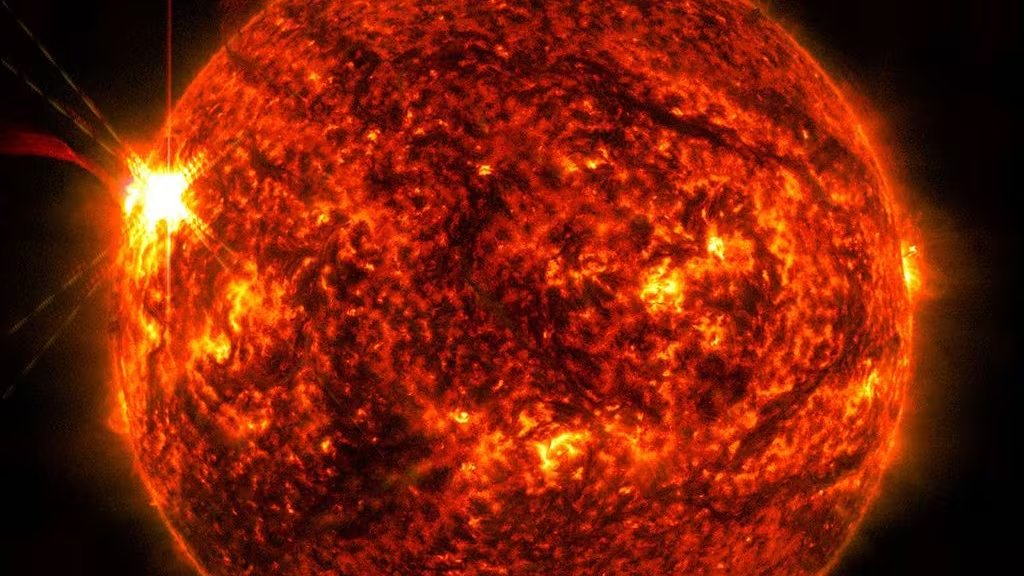
Solar Flares Active Sun Study shows new findings about why some parts of the Sun produce stronger solar flares than others. Scientists used data from NASA’s Solar Dynamics Observatory to understand how magnetic activity affects solar eruptions.
Thank you for reading this post, don't forget to subscribe!Magnetic Activity on the Sun
The surface of the Sun has areas called active regions. These regions have strong magnetic fields. Some of these fields form quickly, but they can last for different lengths of time. The study found that regions with magnetic activity lasting a month or more are more stable and powerful.
Long-Lived Regions Produce Strong Flares
Researchers discovered that long-lasting active regions are more likely to create intense solar flares. In fact, these regions are three to six times more active than short-lived ones. This means the longer the magnetic field stays, the stronger the solar flare it can produce.
Solar Flares Active Sun Study: Role of Citizen Science
The research also used help from the Solar Active Region Spotter project. Volunteers studied images of the Sun and helped scientists identify active regions. This teamwork allowed experts to study a large amount of data more easily and accurately.
Why This Study Matters
Solar flares are sudden bursts of energy from the Sun caused by magnetic activity. Strong flares can affect life on Earth. They can disturb satellites, GPS systems, and even power grids. By knowing which solar regions are more active, scientists can improve space weather forecasts and give early warnings.
Better Understanding of the Sun
This study also helps scientists learn more about how the Sun works from the inside. It shows how deep magnetic processes influence solar activity. Such knowledge is important for future space research and protecting technology on Earth.