



South Shetland Islands Earthquake: 6.7 Magnitude Shock Near Antarctica

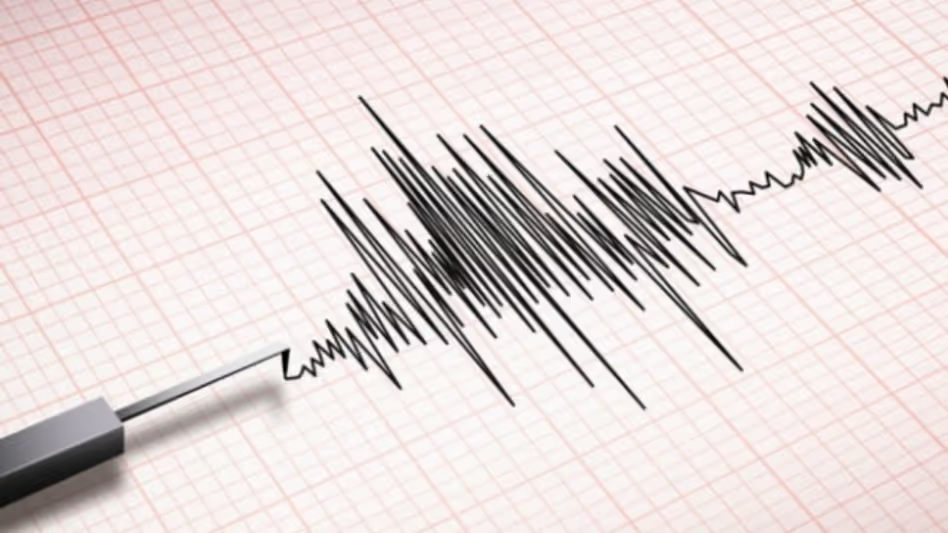
South Shetland Islands Earthquake has drawn global attention after a powerful magnitude 6.7 tremor struck this remote Antarctic region. According to the German Research Centre for Geosciences, the earthquake highlights the active geological nature of the islands despite their icy and isolated environment.
Location and Discovery
The South Shetland Islands are located around 120 kilometres north of the Antarctic Peninsula. These islands were first discovered in 1819 by British mariner William Smith. Known for their scenic beauty, they are often called the “jewel in Antarctica’s crown” and serve as key sites for scientific research.

Geological Features and Activity
The South Shetland Islands were formed mainly through volcanic activity and remain geologically active today. One of the most famous locations is Deception Island, which features a large flooded volcanic caldera. This shows clear evidence of past eruptions. Some islands still have active volcanoes, which is why earthquakes like this recent one occur from time to time.
Climate and Human Presence – South Shetland Islands Earthquake
The region experiences extreme cold, with more than 80% of the land covered in permanent ice. There is no permanent population, but several countries run seasonal research stations. Scientists visit these stations to study glaciers, climate change, and marine life in one of the harshest environments on Earth.
Rich Wildlife in Harsh Conditions
Despite the cold climate, the islands support a wide variety of wildlife. Penguin species such as Gentoo, Chinstrap, Adélie, and Macaroni penguins are commonly found here. The surrounding waters are home to seals like Crabeater, Leopard, and Weddell seals. Large whales, including Fin, Humpback, and Southern Right whales, are also seen in this region, making it ecologically important.
Why This Earthquake Matters
The South Shetland Islands Earthquake shows that even remote polar regions are geologically active. It helps scientists better understand tectonic movements and volcanic processes in Antarctica, which can provide important clues about Earth’s structure and climate systems.