



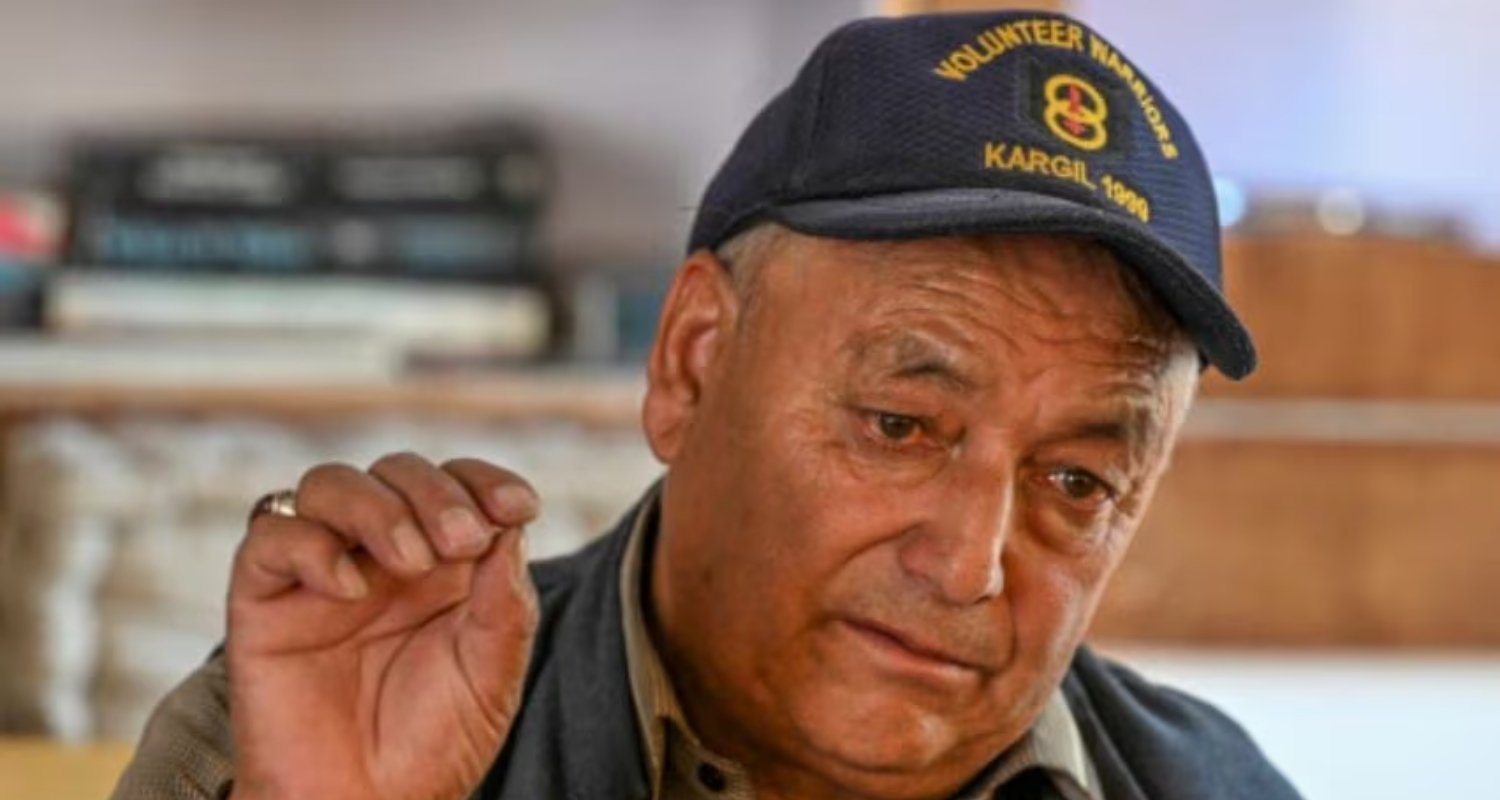
Tashi Namgyal Kargil Hero: The Shepherd Whose Courage Sparked India’s First Alarm in the Kargil War

Tashi Namgyal Kargil Hero is a name that is now echoing across Ladakh and the rest of the country as India remembers a humble shepherd whose bravery helped change the course of history. On Republic Day 2025, the Ladakh administration posthumously honoured Tashi Namgyal with the State Award for Bravery, recognising a courageous act he performed more than two decades ago during the early days of the Kargil War.
Though he never wore a uniform, Tashi Namgyal’s alertness and sense of duty placed him among the silent heroes who protected the nation at a critical moment. His story is one of simplicity, courage, and deep love for the land he called home.

A Simple Life in the Mountains
Tashi Namgyal lived in the remote Batalik sector of Ladakh, close to the Line of Control. Like many families in the region, he depended on traditional pastoral work for his livelihood. He spent his days tending to yaks and sheep, moving through some of the most difficult and high-altitude terrain in the country.
Life in these mountains is harsh. Temperatures drop sharply, oxygen levels are low, and basic facilities are limited. Yet, for Tashi Namgyal, this was home. He knew every ridge, valley, and trail of the region. This deep familiarity with the land would later prove vital for the nation.
A Shocking Discovery in May 1999
In early May 1999, Tashi Namgyal was searching for a few missing yaks in the hills near Batalik. As he moved through the rugged terrain, something unusual caught his attention. He noticed a group of six armed men occupying high positions on the mountain slopes.
They were dressed in Pathani-style clothing and did not resemble local residents. Their presence seemed strange and alarming. From his experience, Tashi Namgyal sensed that something was seriously wrong.
Instead of ignoring what he had seen, he decided to act.
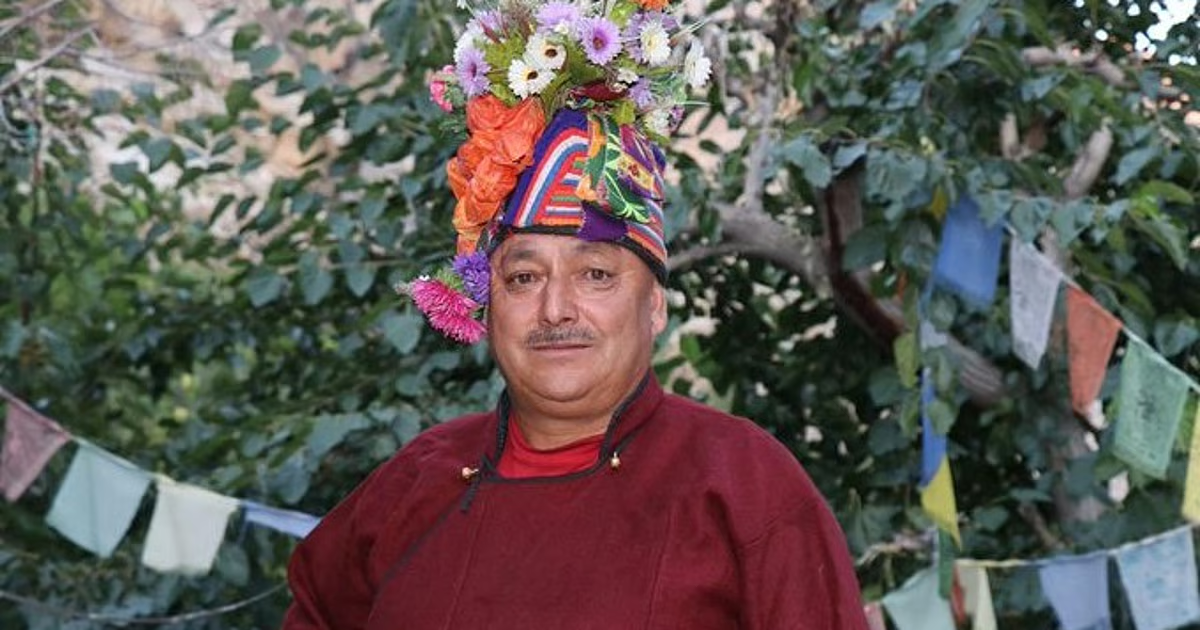
The First Warning to the Indian Army
Tashi Namgyal immediately informed nearby Indian Army personnel about the suspicious movement. He explained what he had seen and pointed out the exact location where the intruders were positioned.
This information became the first crucial alert about the presence of Pakistani forces inside Indian territory. At that time, the scale of infiltration was not yet known. Tashi Namgyal’s message helped the Army realise that the situation was far more serious than initially believed.
His quick thinking gave Indian forces an early advantage. It allowed them to begin assessing the threat and preparing a response before the intrusion spread further.
The Beginning of Operation Vijay
The warning provided by Tashi Namgyal marked the opening chapter of what later became known as Operation Vijay. This was the massive military operation launched by India to evict Pakistani troops and militants from occupied positions along the Line of Control.
From May to July 1999, Indian soldiers fought intense battles in extremely difficult conditions. The conflict took place at altitudes often exceeding 15,000 feet, making it one of the highest-altitude wars in modern history.
Indian forces eventually succeeded in reclaiming the occupied peaks, but at a heavy cost. The nation lost 527 brave soldiers during the conflict. The war also exposed Pakistan’s betrayal, coming shortly after the Lahore Declaration that aimed to improve relations between the two countries.
A Hero Who Never Sought Fame
Despite the importance of his role, Tashi Namgyal returned to his simple life after reporting the intrusion. There were no public ceremonies, no headlines, and no immediate awards.
For years, his contribution remained largely unknown outside his local community. In a 2018 interview, he mentioned that his role in the early detection of the intrusion had not been formally acknowledged. Yet, he never expressed bitterness or anger.
Those who knew him described him as humble and soft-spoken. He believed he had only done what any responsible citizen should do.
Recognition After His Passing
Tashi Namgyal passed away in 2024 at the age of 58. A year later, in January 2025, the Indian Army inaugurated a memorial in his honour in the Batalik sector. This was followed by the Ladakh administration announcing the State Award for Bravery to be conferred posthumously.
The announcement on Republic Day brought national attention to his story. It also served as a reminder that many heroes serve quietly, without expecting recognition.
A Family’s Emotional Moment
For Tashi Namgyal’s family, the award was both an honour and a deeply emotional moment. His daughter, Dolkar Aryan, spoke about her father’s selflessness and courage.
She recalled how he never spoke much about his role in 1999. He continued to live as a shepherd, focusing on his family and daily work. The recognition, she said, validates his sacrifice and ensures that his story will be remembered by future generations.
The Symbol of Civilian Courage
The story of Tashi Namgyal Kargil Hero highlights the important role civilians can play in national security. Not all acts of bravery happen on the battlefield. Sometimes, courage appears in the form of alertness, responsibility, and the willingness to speak up.
In border regions like Ladakh, local residents are often the first to notice unusual movements. Their cooperation with security forces can make a decisive difference.
Tashi Namgyal’s action reminds the nation that patriotism is not limited to those in uniform. It lives in ordinary people who choose to act in extraordinary ways.
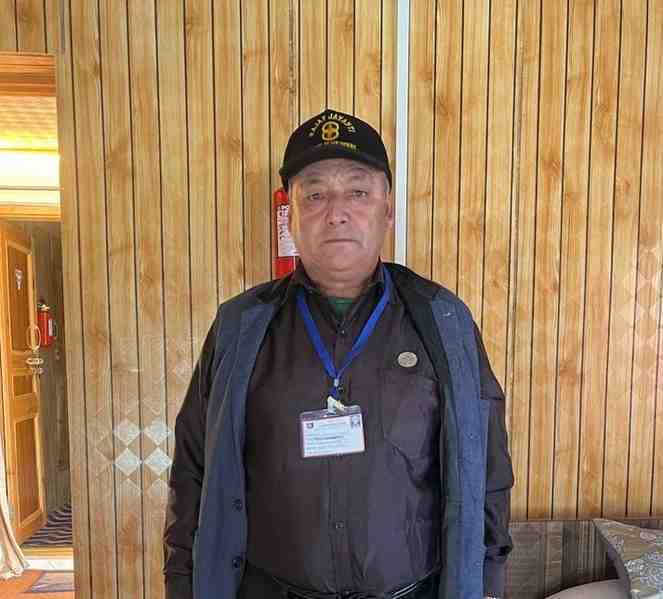
A Legacy That Lives On
Today, Tashi Namgyal’s name stands alongside the many heroes of the Kargil War. His legacy is one of quiet courage, deep love for the land, and an unshakable sense of duty.
As India honours his memory, his story continues to inspire. It tells us that even a humble shepherd can shape the course of history. It also reminds us that behind every major event are countless unsung heroes whose small actions make a big difference.
The recognition of Tashi Namgyal is not just a tribute to one man. It is a tribute to the spirit of the people of Ladakh and to all civilians who stand watch over the nation in their own silent ways.