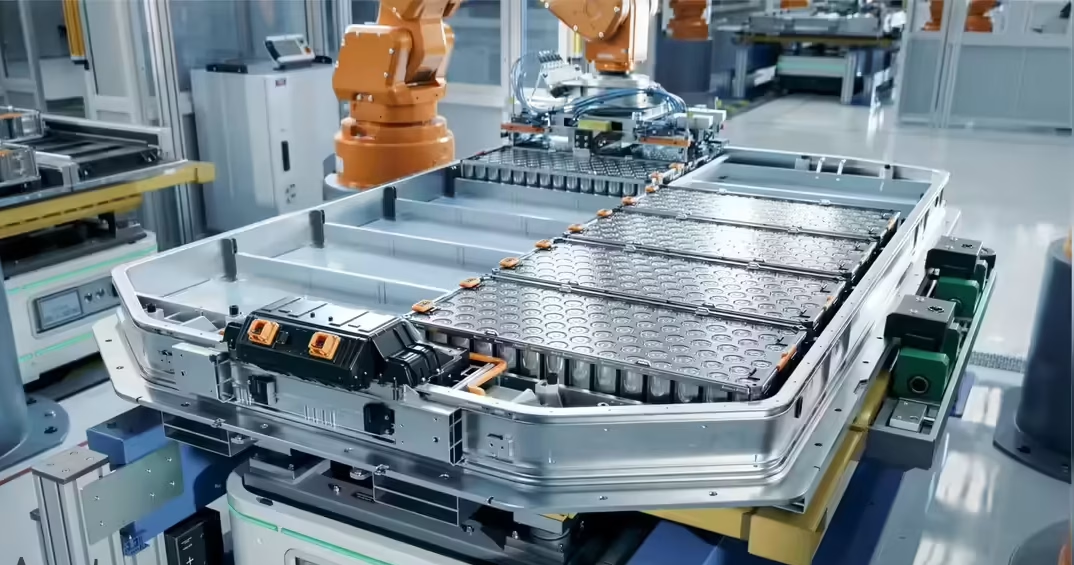
UP Lithium Recycling Facility Boosts India’s Clean Energy Push

Uttar Pradesh has received India’s first integrated recycling plant for lithium-ion batteries and rare earth magnets. The UP Lithium Recycling Facility at the UPSIDC Industrial Area in Sikandrabad is developed by Rocklink India. It marks an important step toward reducing import dependence and supporting India’s clean energy goals.
Thank you for reading this post, don't forget to subscribe!UP Lithium Recycling Facility for Critical Materials
The UP Lithium Recycling Facility is built to recycle lithium-ion batteries, rare earth magnets, and industrial metal waste. This helps create a circular supply chain for key materials used in electric vehicles, renewable energy systems, and advanced industries. By reusing valuable resources, the plant supports sustainable development.
Capacity and Rare Earth Recovery
The plant has an initial recycling capacity of 10,000 tonnes of lithium-ion batteries per year. It can also process 60 tonnes of rare earth magnets every month. A new rare-earth chloride processing unit with a capacity of 1,500 tonnes per year is expected to start in 2026. This will further improve India’s ability to recover critical minerals.
Advanced Technology and EPR Compliance
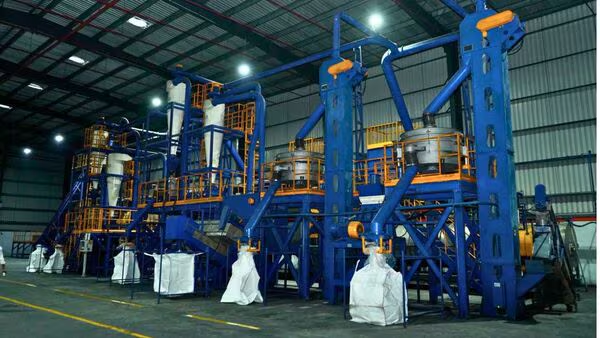
The UP Lithium Recycling Facility follows Extended Producer Responsibility (EPR) rules, which make companies responsible for managing waste from their products. The plant can handle 95 types of battery scrap, including both pre-use and post-use waste. Its advanced R2 recycling process ensures over 98 percent recovery of metals like aluminium, copper, and iron, while also controlling harmful emissions.
Role in Clean Energy and Industry
Rare earth magnets such as NdFeB are widely used in electric vehicles and wind turbines. The recycling process also produces black mass, which contains valuable metals like lithium, cobalt, and nickel. These materials are essential for clean energy technologies and modern manufacturing.
Battery Refurbishment and Circular Economy
The facility also focuses on battery refurbishment by testing and reusing usable cells. This helps extend battery life and reduce waste. Special systems are used to recycle magnets like NdFeB, SmCo, and AlNiCo, improving tracking and reuse of materials. The UP Lithium Recycling Facility plays a key role in building a strong and sustainable critical minerals ecosystem in India.