


Patot Diya Maas: Traditional Assamese Fish Recipe

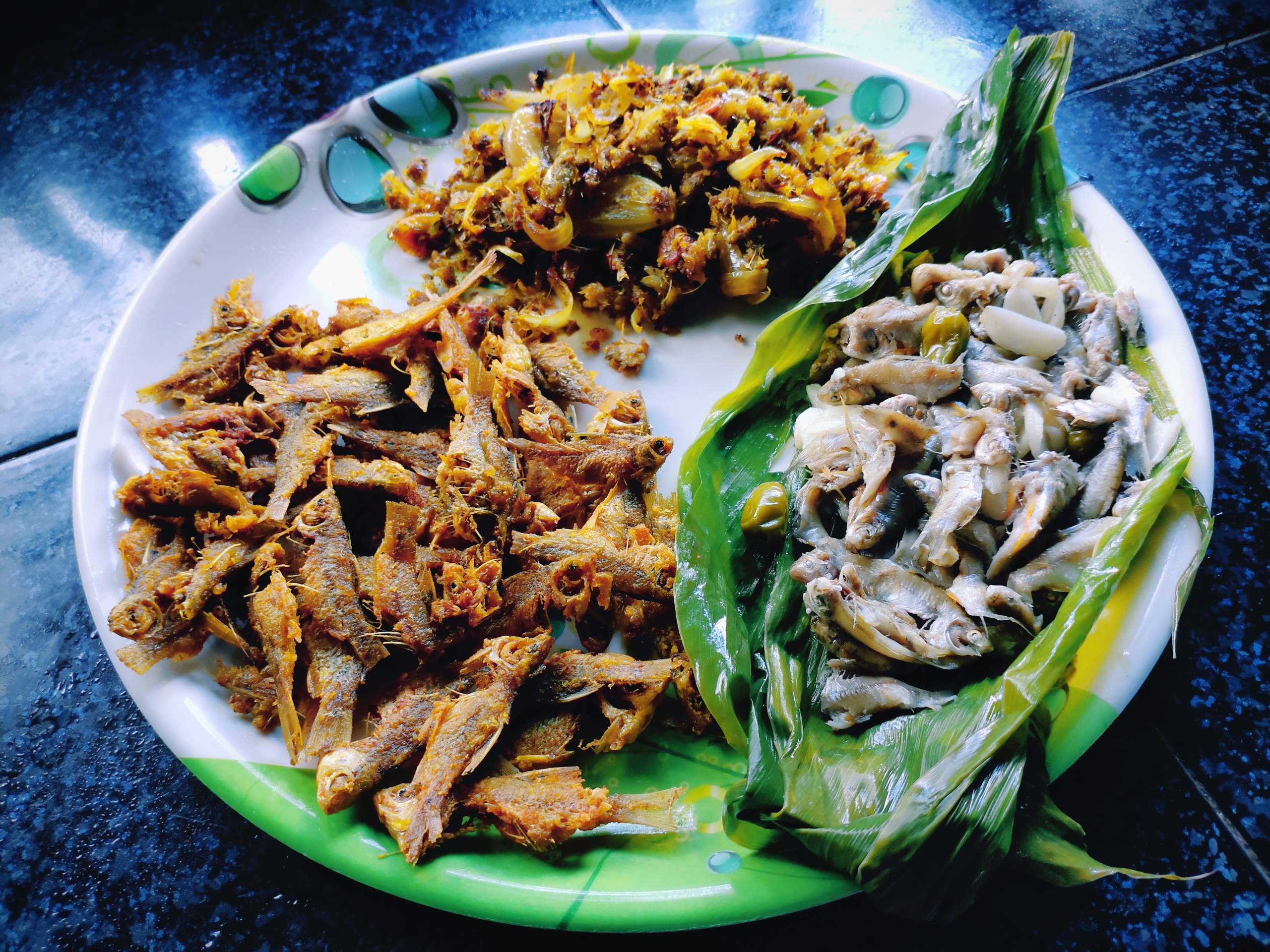
Patot Diya Maas is one of the most traditional and delicious fish dishes of Assam. It is a special Assamese preparation in which fresh fish is marinated with turmeric, mustard oil, salt, green chillies, and simple spices. The marinated fish is then wrapped in a banana leaf and cooked slowly. This traditional cooking method helps keep the fish soft, juicy, and full of flavour.
In Assamese, Patot Diya refers to food prepared or wrapped in leaves, while Maas means fish. Banana leaves are commonly used for wrapping because they provide a natural aroma during cooking. The fish absorbs the flavours of the spices while cooking inside the leaf.

Unlike deep-fried fish or rich fish curries, Patot Diya Maas requires very little oil and does not need heavy spices. Its delicious taste comes from fresh fish, mustard oil, green chillies, and the natural fragrance of banana leaves.
This dish is commonly enjoyed with steamed rice and other traditional Assamese preparations. It represents the simple cooking traditions of rural Assam, where locally available ingredients are used to prepare flavourful meals.
What Makes Patot Diya Maas Special?
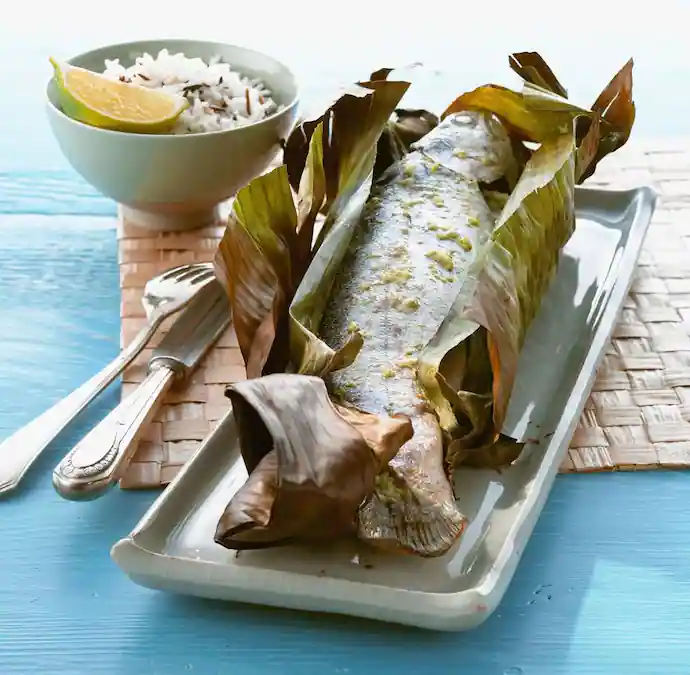
Patot Diya Maas is special because of its traditional leaf-wrapping cooking technique. Instead of frying the fish directly in a pan, the ingredients are wrapped in banana leaves and cooked through steaming, grilling, or gentle roasting.
The banana leaf acts as a natural covering and helps retain moisture inside the fish. It also gives the preparation a mild, earthy aroma.
Freshwater fish such as rohu, catla, and other locally available varieties can be used. Some households prefer adding mustard paste, garlic, ginger, or lemon juice to enhance the flavour, while others keep the recipe simple with mustard oil, turmeric, salt, and green chillies.
Every family may have its own version, but the traditional idea remains the same: prepare fresh fish with simple ingredients and cook it gently inside a leaf.
Ingredients for Patot Diya Maas
This recipe serves approximately four people.
Preparation Time: 15 minutes
Cooking Time: 20–25 minutes
Total Time: 35–40 minutes
Servings: 4 people
Main Ingredients
- 500 grams fresh fish (rohu, catla, or another freshwater fish)
- 1/2 teaspoon turmeric powder
- 1 teaspoon mustard oil
- 1 tablespoon mustard paste
- 2–3 green chillies, chopped or slit
- 1 teaspoon ginger paste
- 1/2 teaspoon garlic paste (optional)
- Salt according to taste
- 1 tablespoon lemon juice (optional)
- Fresh coriander leaves (optional)
For Wrapping
- 2–3 large banana leaves
- Kitchen-safe cotton string or banana-leaf fibre for tying
How to Prepare Patot Diya Maas: Step-by-Step Recipe
Step 1: Clean the Fish
First, take fresh fish and clean the pieces properly under running water. Remove excess water and place the fish in a mixing bowl.
Rohu and catla are popular choices for this recipe because their texture works well with leaf cooking. You can also use other freshwater fish according to availability.
Make sure the fish pieces are not too small because they may break during cooking.
Step 2: Prepare the Fish Marinade
Add turmeric powder, salt, mustard oil, mustard paste, ginger paste, and chopped green chillies to the fish.
You can also add garlic paste and lemon juice if you prefer a stronger flavour.
Mix all the ingredients gently so that every fish piece is properly coated with the marinade. Allow the fish to rest for about 15–20 minutes.
Mustard oil and mustard paste provide a traditional Assamese flavour, while turmeric gives the fish a beautiful colour.
Step 3: Prepare the Banana Leaves
Take fresh banana leaves and wash them properly to remove dirt and dust. Cut them into large pieces according to the size of the fish portions.
Hold each leaf briefly over a low flame or warm it gently in a pan. This makes the leaf soft and flexible, allowing you to fold it without tearing.
Avoid burning the leaves during this process. Keep a few extra pieces ready in case the first leaves break.
Step 4: Wrap the Fish
Place one banana leaf on a clean surface. Put one or two marinated fish pieces in the centre of the leaf.
Add a little extra marinade over the fish. You can also place a green chilli on top for additional flavour.
Fold the sides of the banana leaf carefully to cover the fish completely. Use another leaf if necessary to prevent the marinade from leaking. Tie the packet securely with banana-leaf fibre or kitchen-safe cotton string. Prepare the remaining fish packets in the same way.
Step 5: Cook the Fish
There are different ways to cook Patot Diya Maas. You can choose the method that is convenient for your kitchen.
Traditional steaming method:
- Place the banana-leaf packets in a steamer.
- Add water to the steamer without allowing the water to touch the packets.
- Cover the steamer with a lid.
- Steam for approximately 15–20 minutes, depending on the thickness of the fish pieces.
- Check that the fish is fully cooked before removing the packets.
Traditional charcoal cooking method:
- Prepare a bed of low, steady charcoal heat.
- Place the wrapped fish packets on a suitable grill over the charcoal.
- Turn the packets carefully at intervals.
- Cook until the fish is fully cooked and the banana leaves become lightly charred.
- Remove the packets carefully and allow them to rest briefly.
Cooking time depends on the fish size and heat level. Always ensure that the fish reaches a safe internal temperature of 63°C (145°F).
Step 6: Serve the Patot Diya Maas
Once the fish is cooked, carefully open the banana-leaf packet. You will notice the wonderful aroma of mustard oil, spices, and banana leaves.
Transfer the fish gently to a serving plate. Garnish with fresh coriander leaves if desired.
Serve hot with steamed rice, lemon slices, and traditional Assamese vegetable dishes.
The soft fish and mild smoky aroma make this preparation a wonderful choice for lunch or dinner.
Different Ways to Prepare Patot Diya Maas
Although banana-leaf wrapping is the main feature of this dish, different households prepare it using different ingredients and cooking techniques.
1. Mustard Patot Diya Maas
This version uses mustard paste, mustard oil, turmeric, and green chillies. It has a strong, traditional flavour and is a popular choice for people who enjoy mustard-based fish preparations.
2. Lemon Patot Diya Maas
Lemon juice is added to the fish marinade to give it a refreshing sour taste. This version is suitable for people who prefer a slightly tangy flavour.
3. Spicy Patot Diya Maas
For a spicier version, extra green chillies, ginger, garlic, and a small amount of red chilli powder can be added to the marinade.
4. Smoked Patot Diya Maas
In this preparation, the banana-leaf packets are cooked slowly over charcoal. The gentle smoky aroma gives the fish a distinctive flavour.
Health Benefits of Patot Diya Maas
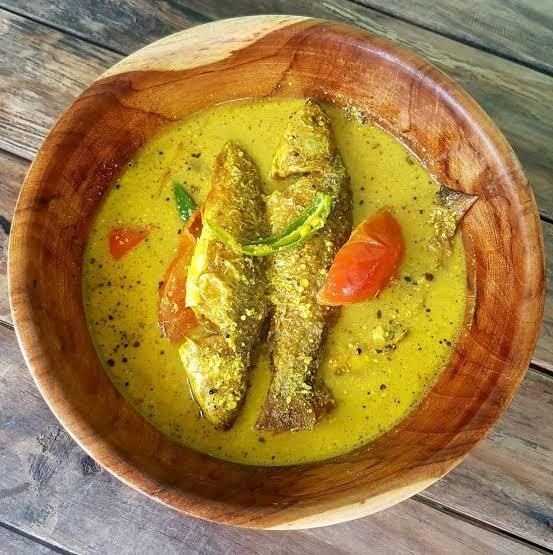
Patot Diya Maas can be part of a balanced diet because it uses fresh fish and generally requires less oil than deep-fried fish preparations.
1. Good Source of Protein: Fresh fish provides protein, which supports muscle growth, tissue repair, and normal body functions.
2. Uses Less Oil: The fish is cooked inside banana leaves rather than being deep-fried. This reduces the need for additional cooking oil.
3. Retains Moisture: The leaf-wrapping method helps prevent the fish from drying out during cooking.
4. Contains Essential Nutrients: Depending on the fish variety, the dish can provide nutrients such as vitamin B12, selenium, and omega-3 fatty acids.
5. A Lighter Meal: Since the recipe does not require a heavy gravy or large amounts of spices, it can be a suitable option for people who prefer simple meals.
The nutritional value depends on the fish variety, portion size, and ingredients used.
Difference Between Patot Diya Maas and Kosu Paat Patot Diya
Both dishes are associated with traditional Assamese leaf-based cooking, but they are different preparations.
Patot Diya Maas is made with fish marinated in mustard oil, turmeric, and spices, wrapped in banana leaves, and cooked by steaming or roasting.
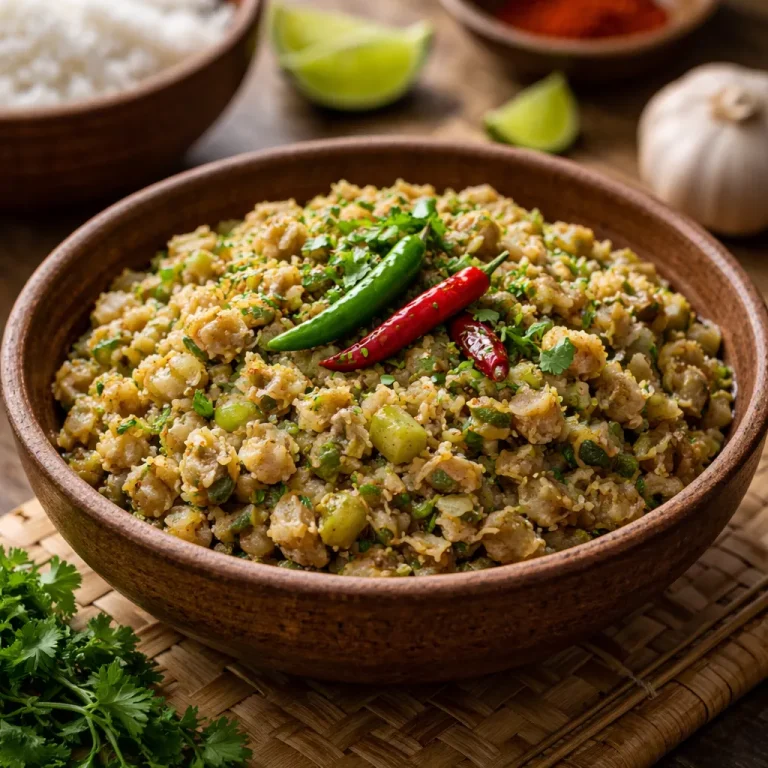
Kosu Paat Patot Diya is a traditional side dish prepared using tender taro (colocasia) leaves. The leaves are wrapped in banana leaves with green chillies, salt, and sometimes raw mango or soaked dried garcinia. They are slowly smoked over charcoal and later mashed with mustard oil.
Taro leaves must be properly prepared and thoroughly cooked because inadequately cooked leaves can cause irritation in the mouth and throat due to naturally occurring calcium oxalate crystals.
Both dishes show how Assamese cooking makes use of local leaves and simple ingredients to create distinctive flavours.
Frequently Asked Questions (FAQs)
1. What is Patot Diya Maas?
Patot Diya Maas is a traditional Assamese fish preparation in which marinated fish is wrapped in banana leaves and cooked through steaming or slow roasting.
2. What does Patot Diya Maas mean?
In Assamese, Patot Diya refers to food prepared or wrapped in leaves, and Maas means fish. Together, the name refers to fish cooked inside leaves.
3. Which fish is best for Patot Diya Maas?
Rohu and catla are popular choices. Other fresh, locally available freshwater fish can also be used.
4. Why are banana leaves used in this recipe?
Banana leaves help retain moisture during cooking and give the fish a mild, earthy aroma.
5. Is Patot Diya Maas a healthy dish?
It can be a nutritious meal because fish provides protein and the cooking method requires relatively little oil compared with deep frying.
6. Can Patot Diya Maas be prepared without mustard paste?
Yes. You can prepare it using mustard oil, turmeric, salt, ginger, and green chillies. Mustard paste is optional.
7. Can I cook Patot Diya Maas without charcoal?
Yes. A steamer or covered steaming arrangement can be used to cook the banana-leaf packets.
8. How long does it take to cook Patot Diya Maas?
It generally takes around 15–20 minutes to steam the fish, depending on the thickness of the pieces. Preparation and marination take additional time.
9. What is the best side dish for Patot Diya Maas?
Steamed rice is the traditional accompaniment. It can also be served with dal, seasonal vegetables, and Assamese side dishes.
10. What is the difference between Patot Diya Maas and Kosu Paat Patot Diya?
Patot Diya Maas is made with fish wrapped in banana leaves. Kosu Paat Patot Diya is made with tender taro leaves, which are wrapped in banana leaves, smoked, and mashed with mustard oil.
11. Can I use other leaves instead of banana leaves?
Banana leaves are traditionally preferred because they are flexible and suitable for wrapping. Other food-safe leaves may be used in some regional preparations, but the aroma and cooking results may differ.
12. Why should banana leaves be heated before wrapping?
Gently heating banana leaves makes them soft and flexible. This prevents them from tearing when you fold them around the fish.
Experience the Traditional Taste of Assam
Patot Diya Maas is a beautiful example of the simplicity and richness of Assamese food culture. Its traditional banana-leaf cooking method, fresh fish, mustard flavour, and natural aroma make it different from ordinary fish curries.
Prepared with ingredients commonly found in Assamese kitchens, this dish brings together traditional cooking knowledge and local food habits. Whether you steam it at home or prepare it over charcoal, Patot Diya Maas offers a delicious way to enjoy the authentic taste of Assam.