


BRICS Health Meeting Held in India

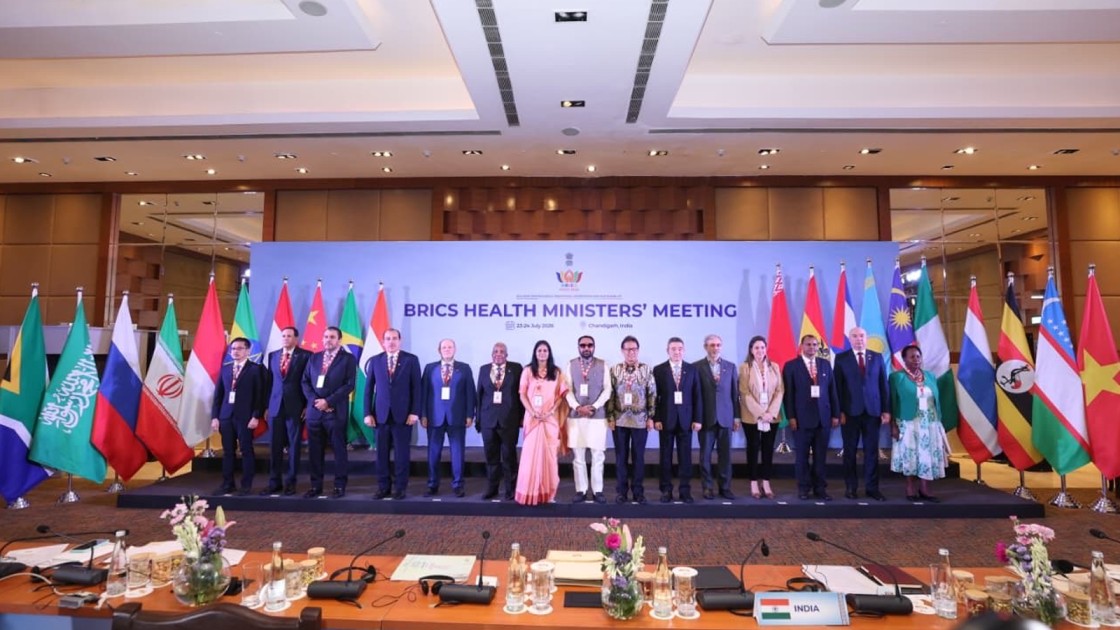
BRICS Health Meeting was hosted by India from 22 to 24 July 2026 in Chandigarh under India’s BRICS Chairship 2026. Health ministers, senior government officials, and healthcare experts from all 11 BRICS member countries took part in the meeting. The event focused on improving healthcare cooperation, strengthening health systems, promoting digital health, and preparing for future health emergencies. The meeting also highlighted the importance of innovation, research, and international partnerships to improve healthcare services for people around the world.
The three-day meeting became an important platform for member countries to share ideas, discuss health challenges, and work together on common healthcare goals.

India Leads the BRICS Health Discussions
As the Chair of BRICS in 2026, India hosted the 16th BRICS Health Ministers’ Meeting in Chandigarh. The meeting brought together representatives from the following member countries:
- Brazil
- Russia
- India
- China
- South Africa
- Egypt
- Ethiopia
- Iran
- Saudi Arabia
- United Arab Emirates
- Indonesia
These countries discussed ways to improve healthcare cooperation and strengthen public health systems through joint efforts.
India’s leadership during the meeting reflected its growing role in promoting international healthcare partnerships and sharing successful health initiatives with other developing countries.
What Is BRICS?
BRICS is a group of major emerging economies that work together on economic development, trade, science, technology, health, education, and global cooperation.
The organisation originally included five countries Brazil, Russia, India, China, and South Africa. South Africa became a member in 2010, changing the group’s name from BRIC to BRICS.
In recent years, the organisation expanded further. Egypt, Ethiopia, Iran, Saudi Arabia, the United Arab Emirates, and Indonesia joined the group during the 2024 and 2025 expansion process, making BRICS an 11-member organisation.
Today, BRICS represents a large share of the world’s population and plays an important role in discussing global development issues.
Main Theme of the Meeting
The official theme of the meeting was:
“Building for Resilience, Innovation, Cooperation and Sustainability.”
This theme focused on creating stronger healthcare systems that can respond effectively to future health challenges.
The discussions covered several important topics, including:
- Better healthcare services for everyone.
- Pandemic preparedness.
- Digital healthcare technology.
- Equal access to medicines.
- Medical research cooperation.
- Mental wellness.
- Traditional medicine.
Member countries agreed that stronger cooperation can improve healthcare quality and make health systems more resilient.
Health Ministers Adopt Joint Declaration
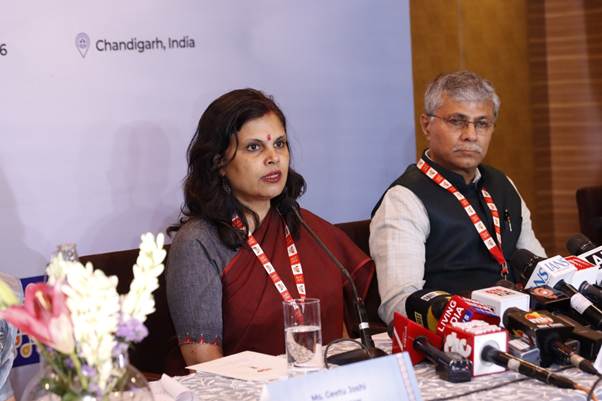
Union Health Minister J. P. Nadda chaired the main ministerial meeting on 23 July 2026.
During the event, all BRICS member countries unanimously adopted the 16th BRICS Health Ministerial Declaration.
The declaration supports several important healthcare goals, including:
- Universal health coverage.
- Better preparedness for future pandemics.
- Digital health development.
- Equal access to affordable medicines.
- Stronger international cooperation.
- Sustainable healthcare systems.
The declaration reflects the shared commitment of BRICS countries to work together in addressing global health challenges.
India Proposes Mental Wellness Network
One of the major announcements during the meeting was India’s proposal to establish a BRICS Network of Centres of Excellence on Mental Wellness.
The proposed network aims to improve mental healthcare through research, training, and knowledge sharing among member countries.
India also announced that the National Institute of Mental Health and Neuro Sciences (NIMHANS) in Bengaluru will serve as the coordinating institution for this initiative.
NIMHANS is one of India’s leading medical institutions specialising in mental health, neuroscience, and advanced medical research.
The proposal reflects the growing global importance of mental health as an essential part of overall healthcare.
Traditional Medicine Gets More Attention
Another important outcome of the meeting was the approval of a new BRICS working group on traditional medicine.
Traditional medicine includes healthcare systems that have been used for centuries in different countries. Some well-known examples are:
- Ayurveda
- Siddha
- Unani
- Traditional Chinese Medicine
- Other recognised indigenous healthcare systems
The working group will encourage research, cooperation, and the exchange of knowledge while supporting safe and evidence-based healthcare practices.
Many countries are now exploring how traditional medicine can complement modern healthcare systems.
Focus on Digital Health
Digital healthcare remained one of the main discussion points throughout the meeting.
Modern healthcare increasingly depends on digital technology to improve patient care and healthcare management.
Some important digital health tools discussed included:
- Electronic Health Records (EHR).
- Telemedicine services.
- Digital health databases.
- Health information exchange systems.
- Artificial intelligence in healthcare.
Digital health can help doctors provide faster treatment, improve medical record management, and increase access to healthcare services in remote areas.

High-Level Dialogue on Artificial Intelligence
On 24 July 2026, India hosted a high-level dialogue focusing on digital health infrastructure and responsible use of artificial intelligence (AI).
The discussion highlighted the importance of creating interoperable health systems.
Interoperability means that different hospitals, healthcare providers, and government health platforms can safely exchange and use patient information whenever needed.
Experts also discussed responsible AI, which focuses on using artificial intelligence in a safe, transparent, and ethical manner while protecting patient privacy.
Many countries are investing heavily in AI-powered healthcare solutions, making this topic increasingly important worldwide.
Research and Disease Prevention
The meeting also encouraged stronger cooperation in medical research.
Member countries discussed joint research projects on tuberculosis, one of the world’s major infectious diseases.
Other important areas included:
- Prevention of infectious diseases.
- Faster response to future outbreaks.
- Sharing scientific knowledge.
- Improving laboratory cooperation.
- Strengthening public health surveillance.
International research partnerships can help countries develop better medicines, vaccines, and healthcare strategies more quickly.
Growing Importance of Global Health Cooperation
Recent global health emergencies have shown that diseases can spread rapidly across borders.
Because of this, countries are placing greater importance on sharing medical knowledge, improving emergency preparedness, and strengthening healthcare partnerships.
The BRICS Health Meeting demonstrated how international cooperation can support better healthcare systems, encourage innovation, and improve access to quality medical services.
As healthcare continues to evolve with new technologies, artificial intelligence, digital platforms, and medical research, partnerships between countries are becoming more valuable than ever in addressing future public health challenges.