


ACITI Partnership Strengthens Technology Cooperation

ACITI Partnership has opened a new chapter in technology cooperation between India, Australia, and Canada. On 9 July 2026, the three countries officially launched the Australia-Canada-India Technology and Innovation Partnership (ACITI) to work together in important sectors such as artificial intelligence (AI), green energy, critical minerals, and secure supply chains.
Thank you for reading this post, don't forget to subscribe!The partnership aims to encourage innovation, strengthen technology development, and build reliable global supply chains. It also reflects the growing cooperation among the three countries as they work together on modern technologies and sustainable economic growth.
What Is the ACITI Partnership?
The Australia-Canada-India Technology and Innovation Partnership (ACITI) is a trilateral initiative that brings together the strengths of the three countries in technology, research, and industrial development.
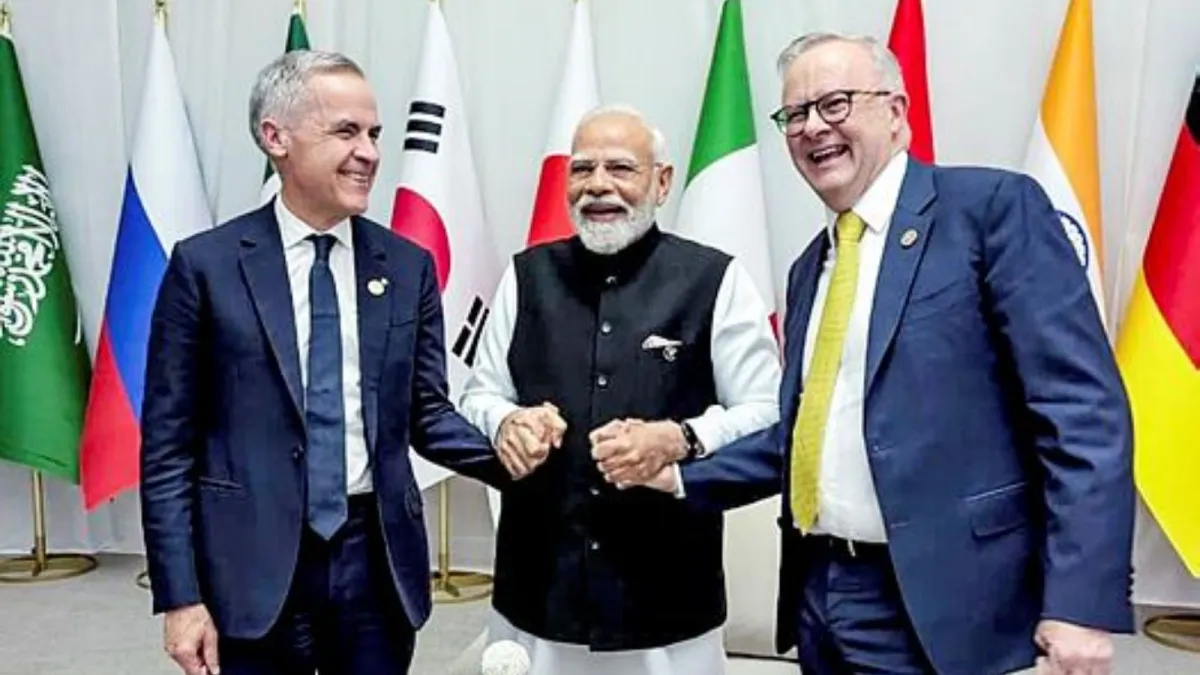
The idea for the partnership was announced after a meeting between Prime Minister Narendra Modi, Australian Prime Minister Anthony Albanese, and Canadian Prime Minister Mark Carney during the G20 Summit in Johannesburg on 22 November 2025.
After several months of discussions, the partnership officially began on 9 July 2026, marking an important step toward long-term cooperation in advanced technologies.
Main Areas of Cooperation
The ACITI Partnership focuses on several sectors that are expected to shape the future economy.
Artificial Intelligence (AI)
Artificial Intelligence is one of the biggest priorities under ACITI. The three countries will work together on AI research, responsible AI development, innovation, and practical applications in different industries.
AI is already transforming sectors such as healthcare, education, finance, agriculture, transportation, and manufacturing. Through this partnership, experts from the three countries can share knowledge and develop new AI solutions.

Green Energy Technologies
Another important area is green energy.
The partnership supports cooperation in clean technologies that help reduce pollution and improve energy efficiency. This includes research in renewable energy, battery technology, clean manufacturing, hydrogen energy, and other low-carbon solutions.
These efforts also support global climate goals and the transition towards cleaner sources of energy.
Critical Minerals
Critical minerals play a major role in modern technology.
Materials such as lithium, cobalt, nickel, graphite, and rare earth elements are needed to manufacture:
- Electric vehicle batteries
- Smartphones
- Solar panels
- Wind turbines
- Electronics
- Defence equipment
The ACITI Partnership aims to create secure and diversified supply chains for these important minerals.
Stronger Supply Chains
Recent global events have shown how supply chains can be affected by conflicts, trade disputes, and natural disasters.
The three countries plan to improve supply chain resilience by reducing dependence on limited sources and increasing cooperation in manufacturing and technology development.
Reliable supply chains are becoming increasingly important for industries across the world.
How Each Country Contributes
One of the biggest strengths of ACITI is that each country brings unique capabilities.
India has a large digital economy, skilled workforce, expanding manufacturing sector, and strong digital public infrastructure.
Australia has abundant natural resources, including many critical minerals, along with expertise in commercialising new technologies.
Canada is internationally known for advanced AI research, clean technology innovation, and scientific development.
By combining these strengths, the three countries hope to create new opportunities for businesses, researchers, and technology companies.
Focus on Net-Zero Goals
The partnership also supports cooperation related to net-zero emissions.
Net-zero means balancing greenhouse gas emissions with activities that remove or reduce those emissions.
The three countries plan to encourage technology that supports cleaner industries, renewable energy, sustainable manufacturing, and lower carbon emissions.
These efforts are becoming increasingly important as countries work toward international climate commitments.
Connection with Nuclear Energy Cooperation
Alongside the launch of ACITI, India and Australia also completed important administrative arrangements under their 2015 Nuclear Cooperation Agreement.
This development allows Australia to begin long-term uranium exports to India for peaceful civilian nuclear energy projects.
Reliable fuel supplies can help support India’s growing clean energy requirements while maintaining international safety standards.
Why Critical Minerals Are Important Today
The demand for critical minerals has increased rapidly because of the global shift toward clean energy and electric mobility.
Electric vehicles, battery storage systems, renewable energy projects, and advanced electronics all require a steady supply of these materials.
Countries around the world are now working to build secure mineral supply chains to reduce risks caused by supply shortages or geopolitical tensions.
The ACITI Partnership supports this objective by encouraging cooperation between resource-rich and technology-driven economies.
Recent Technology Developments
The launch of ACITI comes at a time when international cooperation in advanced technology is becoming stronger.

Some recent developments include:
- Rapid growth of artificial intelligence across industries.
- Expansion of semiconductor manufacturing projects in several countries.
- Increasing investment in renewable energy and battery technologies.
- Rising demand for electric vehicles worldwide.
- Greater focus on trusted and diversified supply chains after recent global disruptions.
- More international partnerships for research, innovation, and digital technologies.
These trends highlight why countries are working together to develop secure technology ecosystems and promote sustainable industrial growth.
Growing Importance of International Technology Partnerships
Modern technologies require cooperation between countries with different strengths.
Some nations provide natural resources, while others contribute advanced research, manufacturing expertise, or digital infrastructure. Partnerships like ACITI allow these strengths to complement each other.
As technology continues to evolve, collaboration in areas such as AI, clean energy, critical minerals, cybersecurity, and advanced manufacturing is expected to become even more important for economic development and innovation.