



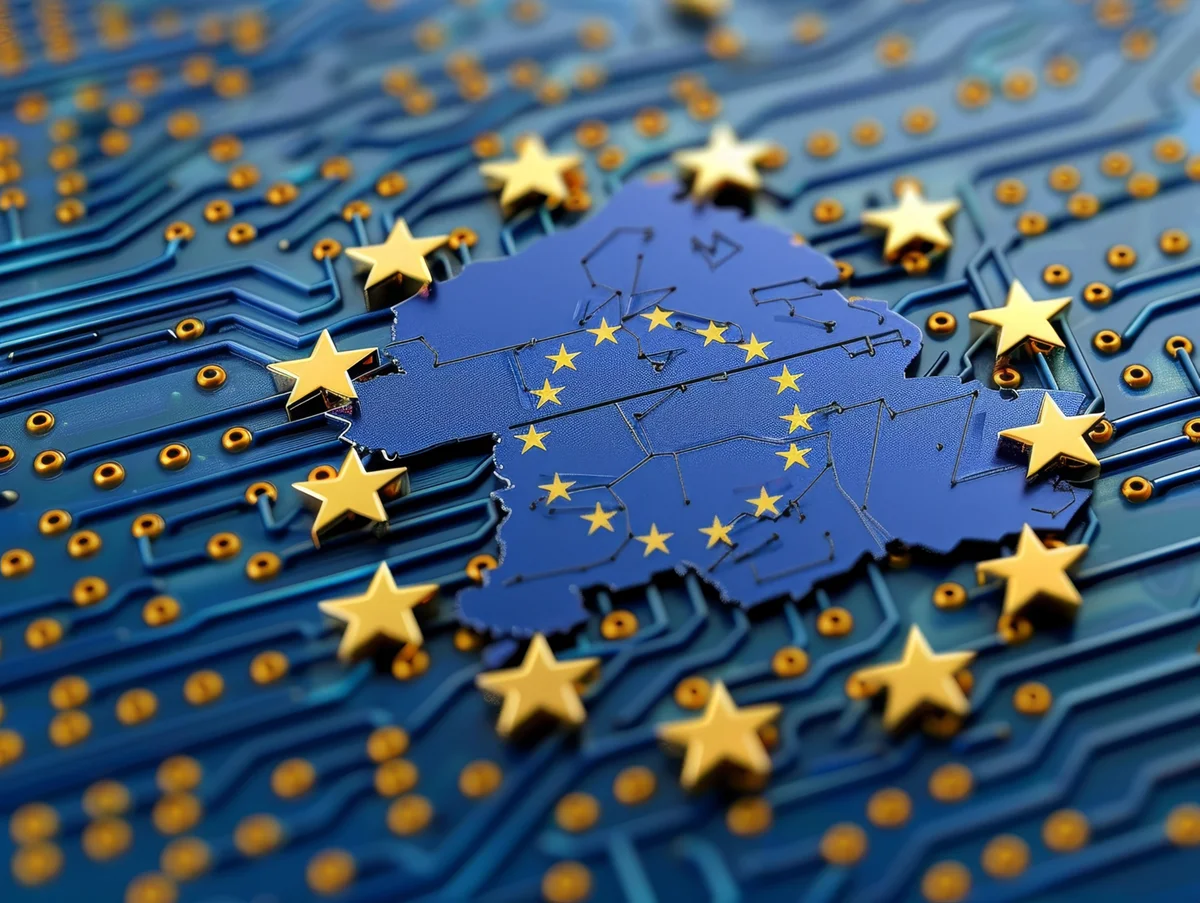
AI Cyberattack Targets European Commission Systems

AI Cyberattack against the European Commission has raised fresh concerns about the growing use of artificial intelligence in cybercrime. On 19 November 2026, the European Commission confirmed that its systems had been targeted in a cyber campaign involving AI tools. The announcement was made in Brussels, where Commission spokesperson Thomas Regnier described the incident as an AI-generated campaign.
The incident has drawn attention to the growing risks of artificial intelligence in the digital world. While AI is helping governments, businesses and individuals improve their work, cybercriminals are also finding ways to use this technology to carry out harmful activities. The attack has raised questions about the safety of government networks and the need for stronger cybersecurity systems.

How Was the Cyberattack Detected?
According to the European Commission, the cyber incident was detected on 22 October 2026. After discovering suspicious activity, officials started an investigation and introduced preventive security measures to protect their digital systems.
As part of its response, the Commission temporarily took several applications offline. These applications were used for different administrative and office-related activities. Most of the affected services had been restored by 19 November 2026.
According to a report by Politico, cited by the Associated Press, the disruption continued for at least 10 days. The report stated that systems related to translation services, employee reimbursements, salary payments and timesheets were affected. However, the European Commission did not officially confirm these specific details.
No Evidence of a Major Staff Data Breach
The European Commission stated that it had not found evidence of a data breach affecting its staff as a whole. This means that investigators had not identified a widespread compromise of employee information at the time of the announcement.

The Commission also did not publicly identify the people or groups responsible for the cyber campaign. No confirmed ransom demand was reported in connection with the incident.
Although the investigation was continuing, the incident highlighted the importance of early detection, system monitoring and preventive cybersecurity measures. Government organisations handle large amounts of important information, making their digital protection a major responsibility.
ARTEX AI Tool Reportedly Used in the Attack
One of the important developments in the case is the reported use of an AI tool called ARTEX. According to Politico, which cited an EU official, CERT-EU identified ARTEX as the tool involved in the campaign.
However, the European Commission did not publicly name the software used in the incident.
On 13 November 2026, the United States Federal Bureau of Investigation (FBI) issued a separate cybersecurity advisory about ARTEX. The advisory described it as an AI-driven platform that malicious actors could use to automate cyber-intrusion activities.
ARTEX is associated with automated penetration testing and vulnerability scanning. These activities are normally used by cybersecurity professionals to identify weaknesses in computer networks and improve their protection. However, similar capabilities can become dangerous when used by attackers without permission.
Reports also stated that ARTEX initially started as open-source software but later moved to a proprietary licence following its reported use in cyberattacks targeting South Korean banks.
Why Are AI-Powered Cyberattacks a Growing Concern?
Artificial intelligence is changing the way cyberattacks can be planned and carried out. Criminal groups can use AI-based tools to automate certain tasks, identify possible weaknesses and make their activities more efficient.
Traditional cyberattacks often require significant technical knowledge and manual effort. AI-powered tools can reduce some of this work by helping attackers analyse systems and automate different stages of an intrusion.
Some common cybersecurity threats involving AI include:
- Automated vulnerability scanning: Attackers can use automated tools to search for weaknesses in computer systems.
- AI-generated phishing: Artificial intelligence can help create convincing fake emails and messages to trick people into sharing sensitive information.
- Malware development: Malicious actors may use AI tools to support the creation or modification of harmful software.
- Automated cyber intrusion: AI-based platforms can help attackers perform multiple technical activities with less manual effort.
- Data theft: Cybercriminals may target government and business networks to access confidential information.
These risks make cybersecurity protection increasingly important for public institutions, financial organisations and private companies.
Role of CERT-EU in Protecting European Institutions
CERT-EU plays an important role in protecting the digital systems of European Union institutions. Its full name is the Computer Emergency Response Team for the EU institutions, bodies, offices and agencies.
The organisation provides cybersecurity support, threat intelligence, incident response and vulnerability management. It also helps EU institutions coordinate their responses to digital security threats.

The European Union has also introduced Regulation (EU, Euratom) 2023/2841 to establish a common cybersecurity framework for its institutions, bodies, offices and agencies. The regulation requires these organisations to follow internal cybersecurity risk-management measures and report relevant incidents to CERT-EU.
Growing Need for Stronger Digital Security
The incident involving the European Commission shows how artificial intelligence is becoming an important part of the global cybersecurity landscape. Governments and organisations now need to prepare for threats that use advanced automation and AI-based technologies.
As digital services become more common, protecting official applications, employee information and administrative networks is becoming increasingly important. Regular security checks, software updates, employee awareness and quick incident reporting can help reduce the impact of cyberattacks.
The growing use of AI in cybercrime also highlights the need for international cooperation. Governments, technology companies and cybersecurity agencies must work together to identify new threats and develop better ways to protect digital infrastructure.