


AI Monsoon Forecasting: Transforming Indian Agriculture Through Technology

The Ministry of Agriculture and Farmers’ Welfare (MoAFW) has pioneered the use of AI Monsoon Forecasting to provide early and accurate rainfall predictions to farmers across India. Recently, nearly 3.8 crore farmers in 13 states received AI-based monsoon forecasts via SMS through the m-Kisan platform. These advance warnings up to four weeks before rainfall enable farmers to make informed decisions about crop selection, sowing schedules, and resource management. This landmark initiative represents a global first in using artificial intelligence for targeted weather forecasting directly aimed at improving agricultural outcomes and farmer resilience.
Thank you for reading this post, don't forget to subscribe!AI Monsoon Forecasting Revolution in Weather Prediction
Since 2022, AI Monsoon Forecasting has brought a major shift in meteorological research and agricultural planning. Traditional forecasting models, though valuable, often struggled to capture complex atmospheric dynamics. Artificial intelligence now enhances prediction accuracy by analysing vast datasets, including satellite imagery, ocean temperatures, wind patterns, and soil moisture levels.
The Ministry’s innovative system integrates Google’s Neural Global Climate Model (Neural GCM) and the European Centre for Medium-Range Weather Forecasts’ Artificial Intelligence Forecasting Systems (AIFS). Together, these models outperform conventional methods in predicting monsoon onset and spatial distribution of rainfall. They also deliver granular, location-specific information that benefits small and marginal farmers.
AI models are not only faster but also adaptive learning from past data to continuously improve prediction reliability. In a country where 60% of agriculture is rain-fed, this advancement represents a turning point for ensuring timely crop planning and food security.
AI Monsoon Forecasting and Farmer Communication through m-Kisan Platform
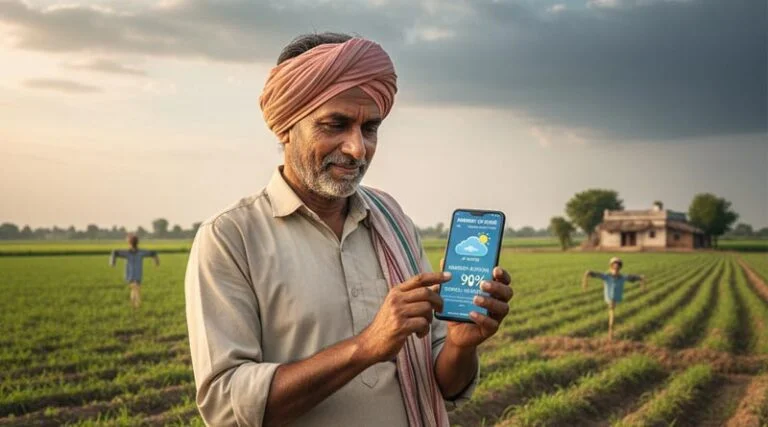
To ensure that the benefits of AI Monsoon Forecasting reach farmers directly, the MoAFW has used the m-Kisan platform an SMS-based communication system that connects millions of farmers nationwide. During the 2025 monsoon season, weekly updates were sent in regional languages, providing insights into rainfall progress, potential dry spells, and recommended agricultural practices.
One of the highlights of this year’s forecast was the advance alert about a 20-day mid-season pause in rainfall. By knowing this in advance, farmers adjusted irrigation schedules, applied soil moisture retention techniques, and rescheduled planting operations. This proactive communication not only reduced crop loss but also built trust between the scientific community and farmers.
The messages were designed in simple, farmer-friendly language and tested for comprehension across rural communities. The success of this model shows how AI-driven information, when combined with effective communication, can significantly improve decision-making in agriculture.
AI Monsoon Forecasting Impact on Kharif Season and Rural Livelihoods
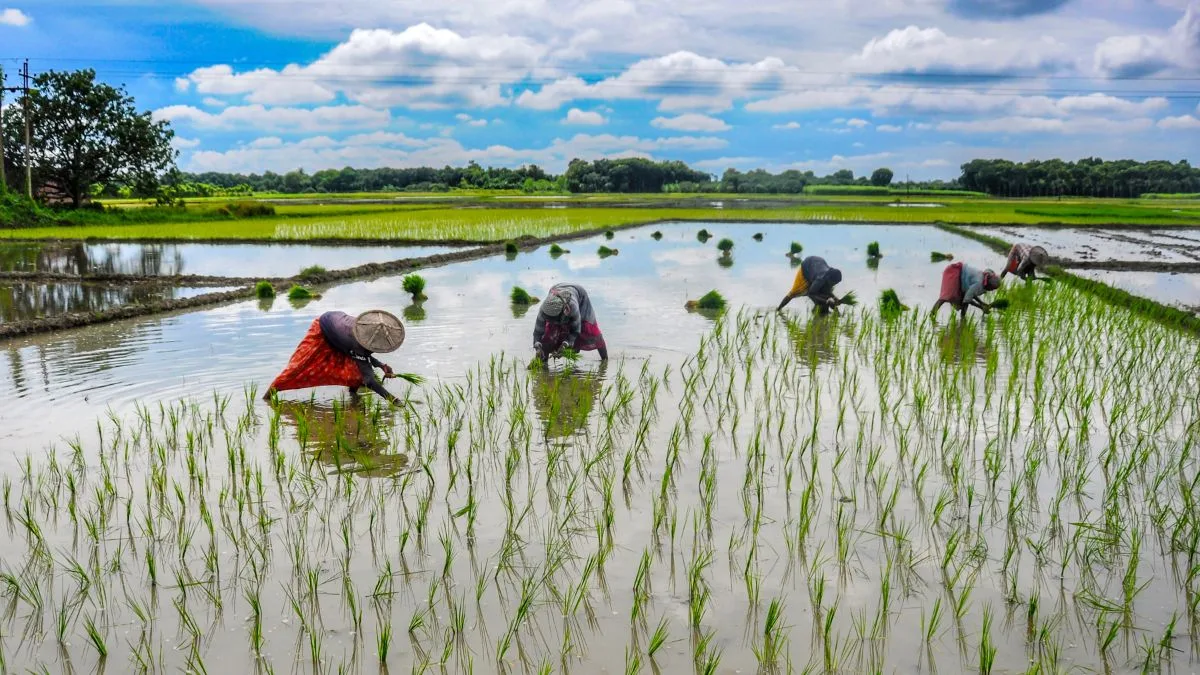
The Kharif season is the lifeline of Indian agriculture, dependent on the arrival and consistency of the southwest monsoon. Through AI Monsoon Forecasting, farmers now have access to predictive insights that were previously unavailable at such an accessible scale. Early warnings allow them to decide which crops to sow such as paddy, maize, or pulses based on expected rainfall volume and duration.
This reduces the risk of crop failure and stabilises household income, especially for smallholders who are most vulnerable to weather uncertainty. The integration of AI forecasting into Kharif planning also helps reduce overuse of water and fertilisers, encouraging more sustainable resource use.
Beyond immediate agricultural gains, AI-based forecasting promotes economic stability. When farmers can anticipate monsoon variability, they can better plan credit needs, labour hiring, and post-harvest storage. This ripple effect supports rural livelihoods, enhances food production efficiency, and contributes to national food security.
AI Monsoon Forecasting and Climate Resilience
As India faces the challenges of climate change erratic rainfall, extended dry spells, and extreme weather events AI Monsoon Forecasting is emerging as a powerful adaptation tool. By analysing years of climate data, AI systems can detect subtle shifts in monsoon behaviour linked to global patterns like El Niño and the Indian Ocean Dipole.
Such foresight is crucial for government agencies to plan irrigation releases, disaster relief, and crop insurance schemes. Moreover, AI forecasting strengthens community-level resilience by integrating with sustainable agricultural practices such as water harvesting, crop diversification, and soil conservation.
This synergy between artificial intelligence and traditional ecological knowledge fosters a future-ready farming system capable of adapting to rapid climatic transitions.
Empowering Farmers through Technology
The true success of AI Monsoon Forecasting lies in its inclusivity. The MoAFW initiative ensures that even remote villages receive timely weather updates. Farmers who earlier relied on word-of-mouth predictions or local observation now get scientific forecasts at their fingertips. This technological empowerment is reshaping how rural India interacts with data and innovation.
Workshops and training programs are being introduced to teach farmers how to interpret AI-generated forecasts effectively. Partnerships with agricultural universities and Krishi Vigyan Kendras (KVKs) further enhance understanding and implementation. By blending advanced technology with grassroots knowledge, India is setting a global model for AI-driven agricultural transformation.
Future of AI Monsoon Forecasting in Indian Agriculture

Looking ahead, the Ministry plans to expand AI Monsoon Forecasting to all 28 states and integrate it with regional agro-advisory services. Continuous refinement of algorithms and data assimilation techniques will further enhance accuracy and reliability. The government also intends to link AI forecasts with precision agriculture tools like soil sensors, drone surveillance, and smart irrigation systems for holistic farm management.
Collaborations with global AI research institutions and private tech firms are expected to push innovation further. The success of the 2025 AI-based monsoon forecasting initiative serves as a benchmark for integrating cutting-edge science into national agricultural policy.
By harnessing the potential of AI, India is not just predicting the monsoon it is reshaping the future of agriculture, ensuring that technology and tradition work hand in hand to secure the livelihoods of millions of farmers.