



Antarctic Ozone Recovery Shows Strong Progress in 2025

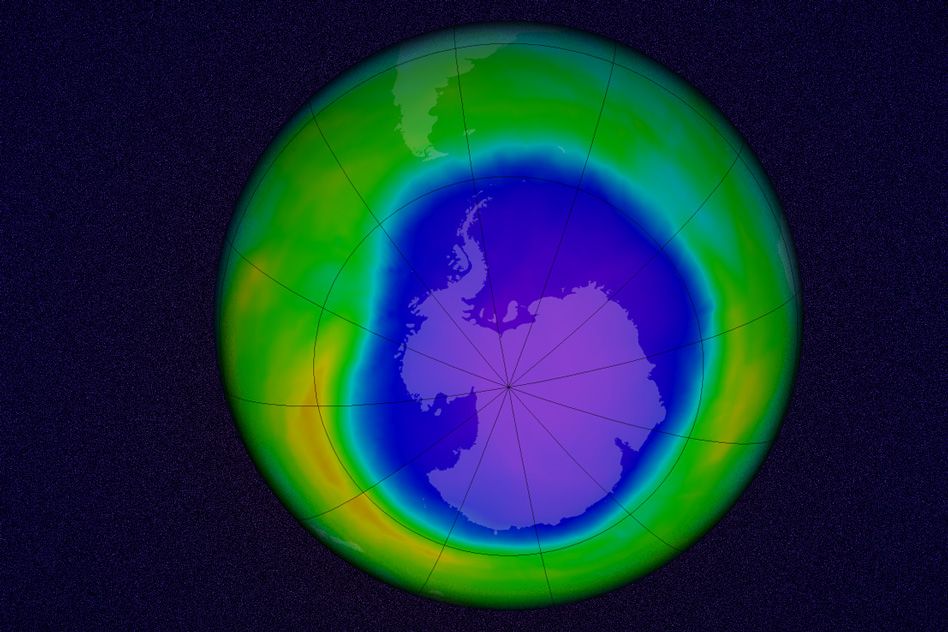
Antarctic Ozone Recovery has taken a hopeful turn in 2025, as scientists report one of the smallest ozone holes in decades. This year, the Antarctic ozone hole ranked as the fifth smallest since 1992, and it broke up several weeks earlier than usual. Experts from NASA and NOAA attribute this encouraging development to decades of international environmental efforts, particularly the success of the Montreal Protocol, which gradually reduced harmful ozone-depleting chemicals in the atmosphere.
Thank you for reading this post, don't forget to subscribe!Smaller Ozone Hole Reflects Significant Progress – Antarctic Ozone Recovery
Between early September and mid-October, the Antarctic ozone hole averaged 18.71 million square kilometres, a notable improvement compared to past decades. Its largest single-day extent was observed on 9 September, measuring 22.86 million square kilometres, approximately 30% smaller than the record maximum recorded in 2006. Satellite observations since 1979 place the 2025 ozone hole among the smallest seen in over 40 years.
This improvement signals a long-term recovery trend for the ozone layer over Antarctica. Scientists stress that such trends are not random; they reflect the sustained global efforts to address the harmful chemicals responsible for ozone depletion.
Impact of Global Agreements – Antarctic Ozone Recovery
The positive trends in Antarctic ozone recovery can largely be credited to international cooperation. The Montreal Protocol, signed in 1987, successfully phased out substances like CFCs, halons, and other chemicals that were the primary drivers of ozone depletion. Since the early 2000s, concentrations of these ozone-depleting substances have fallen by nearly one-third.
Without these global interventions, this year’s ozone hole could have been significantly larger, potentially rivaling the record sizes seen in the early 2000s. Experts emphasize that the Montreal Protocol remains one of the most successful examples of coordinated global environmental action, demonstrating how nations can work together to protect the planet.
Weather Patterns and Polar Vortex Influence – Antarctic Ozone Recovery
While human efforts have been critical, natural atmospheric factors also played a role in this year’s outcome. Meteorologists point out that a weaker polar vortex in August led to higher-than-usual stratospheric temperatures, which in turn helped limit ozone loss. As a result, the ozone hole dissipated earlier than average, giving scientists further cause for optimism.
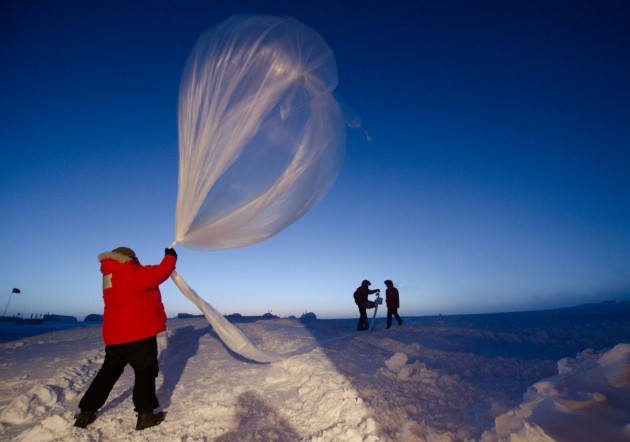
Balloon measurements over the South Pole recorded minimum ozone levels of 147 Dobson Units in early October, a far higher level compared to the historic low of 92 Dobson Units recorded in 2006. These readings suggest that both human action and natural atmospheric conditions worked together to support the recovery of the ozone layer this year.
Global Implications of Antarctic Ozone Recovery
The ozone layer is vital for life on Earth. It acts as a protective shield, absorbing harmful ultraviolet radiation from the sun. Damage to this layer can lead to increased risks of skin cancer, cataracts, and harmful effects on ecosystems.
This year’s smaller ozone hole and earlier breakup are a reminder that consistent global action can produce tangible results. However, scientists caution that recovery is gradual. Even though the levels of ozone-depleting substances are declining, remnants still exist in older materials, such as refrigeration equipment, industrial solvents, and aerosols. These lingering chemicals will continue to influence the ozone layer for decades.
Long-Term Recovery Outlook – Antarctic Ozone Recovery
Scientific models project that the Antarctic ozone layer could return to pre-1980 levels by the late 2060s. This trajectory is promising but requires sustained vigilance. Continuous monitoring using satellites, weather balloons, and ground-based instruments is essential to track the layer’s recovery and to detect any potential setbacks.
Researchers also emphasize the importance of strict adherence to international regulations. Countries must continue to manage and safely dispose of old equipment containing ozone-depleting chemicals. Any relaxation in global commitment could slow down or even reverse the progress seen in recent years.
A Positive Signal for Environmental Action – Antarctic Ozone Recovery
The 2025 Antarctic ozone recovery highlights the effectiveness of coordinated global environmental policies. It proves that even serious planetary challenges, like ozone depletion, can be addressed successfully when nations take proactive, science-driven action.

This progress serves as an example for other environmental concerns, including climate change and plastic pollution. The recovery demonstrates that careful monitoring, strong regulations, and collective international efforts can create measurable benefits for the planet and future generations.
Continued Vigilance and Research
While the trend is encouraging, scientists remain cautious. Research continues to examine how climate change and natural atmospheric cycles might influence future ozone levels. Factors such as stratospheric temperatures, solar activity, and polar wind patterns will continue to play a role alongside human efforts.
The combined effect of global policies and natural conditions in 2025 provides a hopeful reminder: environmental recovery is possible when science, policy, and collaboration come together.