



Arctic Bases Gain Strategic Importance

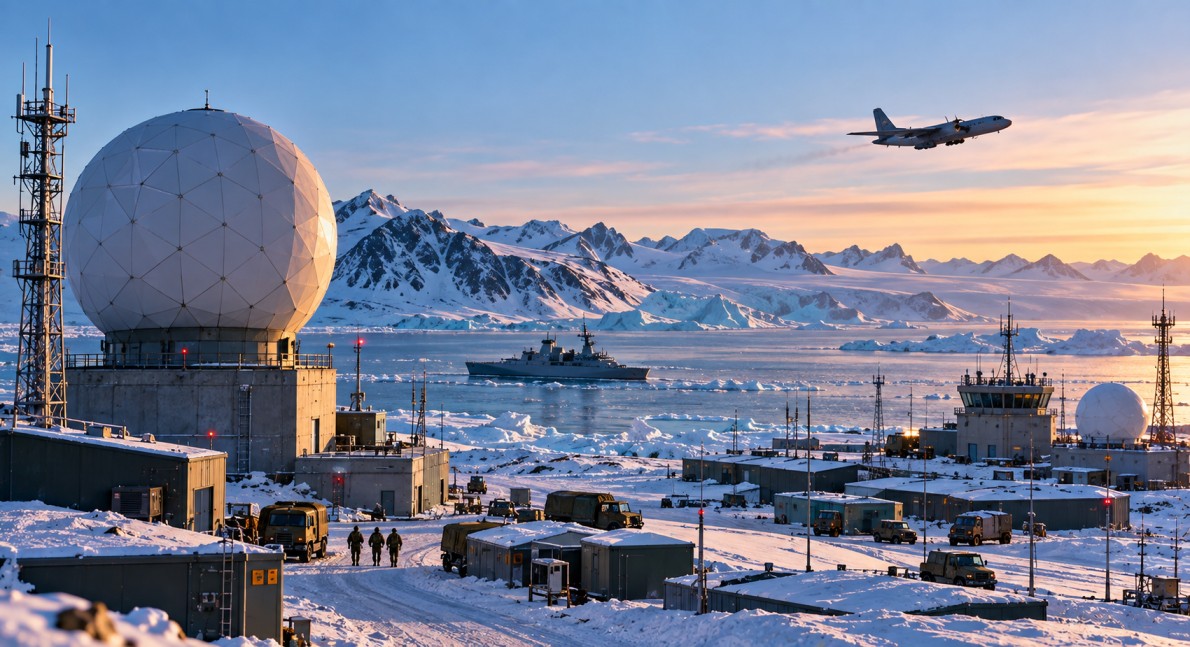
Arctic Bases are becoming increasingly important as the Arctic gains attention for defence, shipping, natural resources and space operations. Countries in and around the region maintain airfields, naval facilities, radar stations, logistics hubs and space-monitoring sites to protect their territories and monitor activity across the High North. In 2026, growing NATO activity and a new US-Denmark-Greenland security agreement have added fresh attention to Arctic defence infrastructure.
Thank you for reading this post, don't forget to subscribe!Why the Arctic Matters
The Arctic is the region around the North Pole, where extreme cold, sea ice and permafrost create difficult conditions for transport and construction. Eight states are generally recognised as Arctic states: Canada, Denmark through Greenland, Finland, Iceland, Norway, Russia, Sweden and the United States through Alaska.
The region is also important because of its location between North America, Europe and Asia. Changes in sea ice have increased interest in routes such as Russia’s Northern Sea Route and Canada’s Northwest Passage. The Arctic also contains important mineral and energy resources.
NATO says the Arctic and High North have become increasingly important for collective security. Seven of the eight Arctic states are now NATO members, following Finland and Sweden joining the alliance. NATO also launched Arctic Sentry in February 2026 to strengthen its activities in the region.
Russia’s Arctic Military Network
Russia has a large military presence across the Arctic because of its long northern coastline and strategic interest in the region. The Northern Fleet, headquartered around Severomorsk on the Kola Peninsula, is central to Russia’s Arctic naval operations.
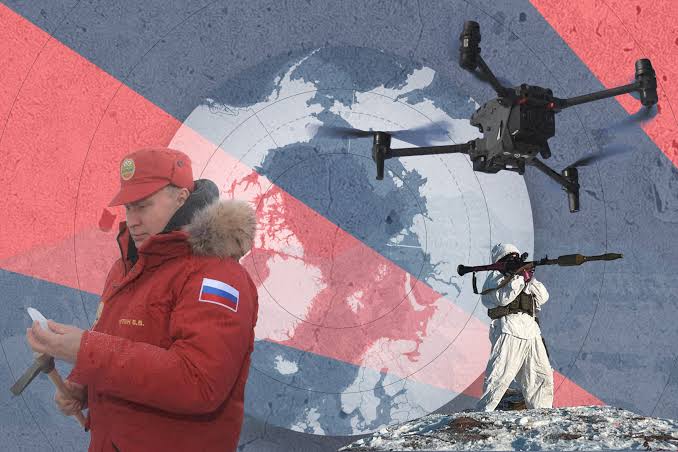
Important Russian Arctic facilities include Severomorsk, Murmansk, Novaya Zemlya, Nagurskoye, Tiksi, Kotelny Island and Wrangel Island. These locations support different activities, including air defence, maritime operations, surveillance, logistics and protection of northern approaches.
Nagurskoye Air Base on Franz Josef Land is one of Russia’s northernmost military facilities. Russia has also modernised several former Soviet-era installations as part of its wider Arctic infrastructure.
US and Canadian Arctic Facilities
The United States operates several important installations in Alaska for air defence, surveillance and military operations. Eielson Air Force Base near Fairbanks supports fighter aircraft and Arctic training, while Joint Base Elmendorf-Richardson in Anchorage is an important command and transport centre.
Clear Space Force Station in Alaska has a major role in missile warning and space surveillance. Its high-latitude location is also useful for monitoring objects and threats approaching North America.
Canada maintains its own network of Arctic facilities and operations. Canadian Forces Station Alert on Ellesmere Island supports surveillance and communications and is one of the world’s most northerly permanent military facilities.
Canada also operates Nanisivik Naval Facility on Baffin Island and uses Resolute Bay as an important location for Arctic training and logistics. In 2026, Canadian forces have continued operations across the Arctic through programmes including Operation NANOOK and Operation LATITUDE.
Greenland and Pituffik Space Base
Greenland has a particularly important position because it lies between North America and Europe. The United States operates Pituffik Space Base, the country’s northernmost military installation.
The base supports missile warning, missile defence and space surveillance missions. Its location gives the United States an important position for monitoring the Arctic and North Atlantic approaches.
Greenland is an autonomous territory within the Kingdom of Denmark. Its strategic position has made it an important part of discussions about Arctic and North Atlantic security.
New Greenland Defence Agreement
A major recent development came on September 22, 2026, when the United States, Denmark and Greenland signed a new security agreement at the United Nations General Assembly in New York.
The agreement allows the United States to modernise and expand activities at Pituffik Space Base. It also provides for additional US defence areas at Narsarsuaq in southern Greenland and Mestersvig on the eastern coast.
The agreement reaffirms the sovereignty and territorial integrity of the Kingdom of Denmark while recognising Greenland’s right to self-determination. It also places the new defence arrangements within the wider security framework of NATO.
The development is significant because the United States currently operates only one active military installation in Greenland. During the Cold War, the US maintained many more facilities on the island. The new agreement therefore creates a broader framework for American defence activities in Greenland.
Nordic Arctic Defence Infrastructure
Norway is another important Arctic security state. Bardufoss Air Station supports military aviation and training, while Evenes Air Station hosts F-35 fighter aircraft and P-8 Poseidon maritime patrol aircraft. Evenes also supports NATO’s air defence activities in northern Europe.
Norway’s location gives it direct access to the Barents Sea and the northern Atlantic. The country regularly conducts Arctic exercises with NATO partners.
Iceland also has strategic importance even though it does not maintain a standing army. Keflavik supports NATO air-policing and transatlantic operations.
Svalbard, meanwhile, is under Norwegian sovereignty and has a special legal status under the 1920 Svalbard Treaty. Its location makes the archipelago important for Arctic research, communications and monitoring, while the treaty places restrictions on military use.
Arctic Bases and Space Surveillance
Arctic Bases are not limited to traditional military activities. The region is also valuable for space operations because high-latitude facilities can communicate with and monitor satellites in polar orbits.
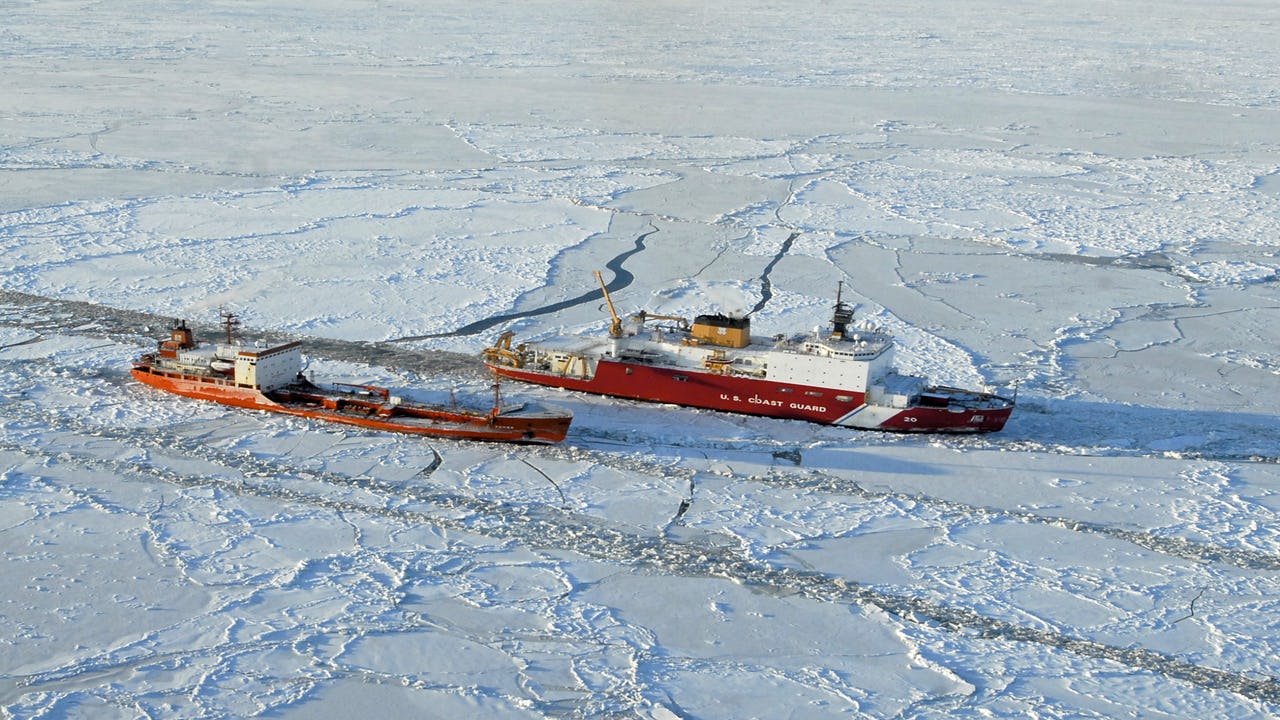
Radar and satellite-tracking systems can support missile warning, space surveillance and the monitoring of objects in orbit. Facilities such as Pituffik and Clear Space Force Station therefore have both Arctic and space-security importance.
The region’s infrastructure is also becoming more important for logistics. Airfields, ports, communication systems and refuelling facilities allow military and civilian organisations to operate in an area where distances are large and weather conditions can change quickly.
Arctic Security Activity in 2026
Arctic defence activity has increased during 2026. NATO’s Arctic Sentry brings together military activities in the High North, while Canada has continued regular operations to maintain surveillance and readiness across its northern territory.
The new Greenland agreement adds another layer to this changing security environment. With expanded access to existing infrastructure and planned defence areas at Narsarsuaq and Mestersvig, Greenland and the wider Arctic are receiving renewed attention from the United States, Denmark and NATO.
At the same time, Arctic infrastructure continues to support scientific research, shipping, communications and other civilian activities. The combination of these uses makes the High North an increasingly important region for both security and international cooperation.