PRATUSH Radiometer: Unlocking the Secrets of the Cosmic Dawn

Recent breakthroughs in space exploration technology have given rise to the PRATUSH Radiometer, an innovative instrument designed to investigate the mysterious Cosmic Dawn—the era when the first stars and galaxies ignited. Compact and efficient, PRATUSH Radiometer is built around a single-board computer (SBC) roughly the size of a credit card, specially engineered to capture faint radio emissions from hydrogen atoms while orbiting the Moon. By operating in the radio-quiet lunar far side, it offers scientists an unprecedented opportunity to study the Universe’s formative years, free from Earth’s overwhelming noise interference.
Thank you for reading this post, don't forget to subscribe!Understanding the Cosmic Dawn
The Cosmic Dawn represents a transformative epoch in cosmic history when the Universe transitioned from darkness to light, as the first stars began reionizing hydrogen gas. Investigating this period is key to understanding how the earliest cosmic structures—stars and galaxies—came into existence. Yet, detecting these primordial signals remains a huge challenge due to their faintness and heavy contamination from terrestrial radio sources.
PRATUSH Radiometer: Mission and Architecture
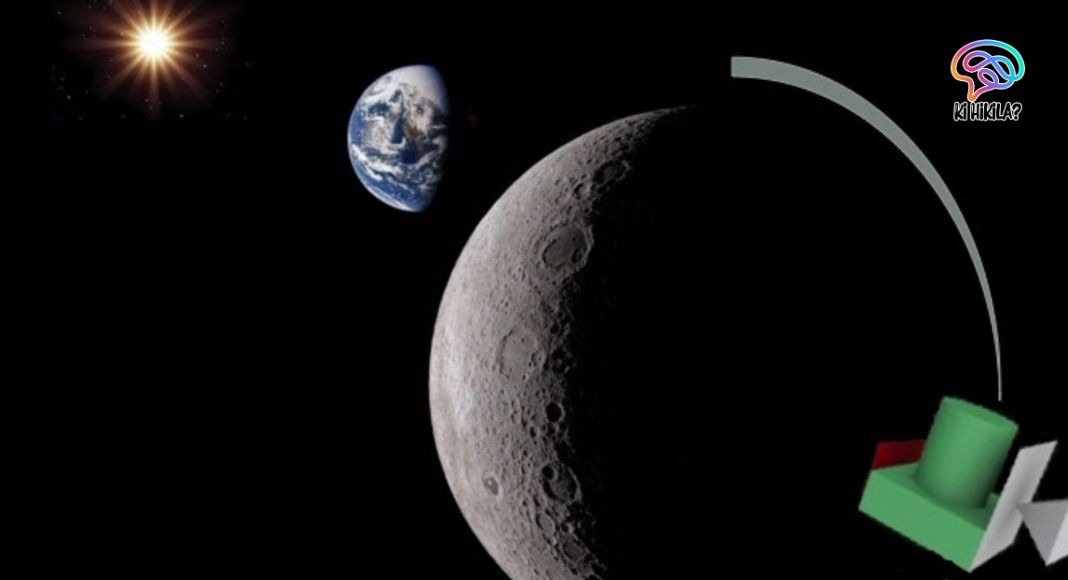
The PRATUSH Radiometer is designed as a compact space payload intended for lunar orbit, particularly over the Moon’s far side. This region provides an ideal environment—shielded from Earth’s radio frequency noise and ionospheric distortion. The radiometer targets the 21-cm hydrogen line, a subtle but invaluable radio signal that reveals insights into the early Universe’s structure. The instrument integrates an antenna system, analog and digital receivers, all controlled by a space-grade SBC.
The Master Controller at Work
At the core of the PRATUSH Radiometer’s digital processing lies a highly efficient SBC, akin to a Raspberry Pi, acting as the mission’s central controller. This controller orchestrates data flow from the antenna and manages the field programmable gate array (FPGA), which processes the delicate cosmic radio signals. The SBC handles real-time data recording, storage, and calibration, ensuring robust operation. In flight-ready versions, the commercial SBC will be swapped for a space-hardened model.
Key Technological Advances
One of the hallmarks of the PRATUSH Radiometer is its minimalistic design philosophy, reducing mass, power demands, and physical footprint—factors critical for space deployment. Extensive laboratory testing has shown the radiometer achieves ultra-low noise measurements, reaching just a few millikelvins in sensitivity, proving its capability to detect the elusive Cosmic Dawn signals. Furthermore, advanced software and next-generation hardware upgrades are set to further enhance its performance in upcoming missions.
Scientific Impact and Future Prospects
The PRATUSH Radiometer stands as a leading example of how small, low-mass, high-efficiency instruments are revolutionizing space science. Its success could shed light on how the first stars shaped the cosmic landscape, potentially revealing new physics along the way. By operating from the quietest vantage point in the inner Solar System, PRATUSH paves the way for next-level observations, demonstrating how compact computing technology enables groundbreaking discoveries in astrophysics.