Bibha Chowdhuri Pioneer of Indian Physics Rediscovered

Bibha Chowdhuri Pioneer of Indian Physics is a phrase that is finally receiving the attention it has long deserved. For decades, her name remained hidden in footnotes and scattered scientific references, even though she made remarkable contributions to cosmic ray studies and particle physics. Today, renewed interest in her life and achievements is bringing her story back into the national spotlight. Her work reshaped important aspects of early Indian physics research, and the rediscovery of her contributions is helping generations understand the struggles and brilliance of a forgotten scientist.
Thank you for reading this post, don't forget to subscribe!Born in 1913 in Kolkata, Bibha Chowdhuri grew up in an atmosphere that encouraged curiosity and education. Her family valued learning deeply, which allowed her to pursue academic interests during a period when very few Indian women stepped into scientific fields. Chowdhuri studied at Calcutta University and completed her MSc in physics in 1936. Not only was she one of the brightest in her class, but she was also the only woman in that batch. Her determination and quiet strength marked the beginning of what would later become a remarkable, though under-recognised, scientific journey.
Bibha Chowdhuri Pioneer of Indian Physics: Early Research That Changed the Course of Particle Studies
After her postgraduate studies, Chowdhuri joined the Bose Institute as a research assistant under the renowned physicist Debendra Mohan Bose. This collaboration would lay the foundation for some of the earliest breakthroughs in cosmic ray research. Together, they worked on advanced photographic emulsion techniques an innovative method at the time to detect high-energy particles from outer space.
Their experiments led to the early detection of mesons, a type of elementary particle that plays an important role in understanding atomic structure. Remarkably, their findings appeared in Nature, one of the world’s leading scientific journals. These papers were among the first demonstrations of what would later become a milestone in particle physics. Years later, when C.F. Powell used the same technique and earned global recognition, it became clear that Bibha Chowdhuri and D.M. Bose had reached crucial conclusions long before the Nobel-winning research was completed.

However, historical circumstances affected the outcome. The Second World War created shortages of highly sensitive photographic plates, forcing them to slow down or pause experiments at crucial moments. This delay cost them the chance of achieving worldwide acclaim. Despite this, Powell himself acknowledged their pioneering work, though the recognition never translated into formal honours for Chowdhuri.
Bibha Chowdhuri Pioneer of Indian Physics: Expanding Her Scientific Horizon Abroad
Chowdhuri’s passion for physics took her abroad in the 1940s. She joined the University of Manchester and completed her PhD in 1945 under the guidance of Nobel laureate P.M.S. Blackett, a leading scientist in cosmic ray research. Her thesis added significant depth to global understanding of particle interactions, reinforcing her position as a dedicated and capable researcher.
During her time in England, she also observed the growth of global scientific collaboration, which influenced how she approached research on her return to India. Her international exposure sharpened her technical skills and deepened her scientific curiosity.
Bibha Chowdhuri Pioneer of Indian Physics: A New Era at TIFR and PRL
In 1949, Bibha Chowdhuri entered another significant chapter of her life when Homi J. Bhabha invited her to join the newly established Tata Institute of Fundamental Research (TIFR). She became the first woman researcher to be appointed at the institute. At TIFR, she contributed to experimental physics and worked closely with scientists who would later shape India’s atomic research landscape.
However, her scientific journey did not end at TIFR. She later moved to the Physical Research Laboratory (PRL) in Ahmedabad, where she became involved in one of India’s major scientific enterprises the Kolar Gold Mine experiments. The project focused on studying high-energy cosmic particles deep underground, using one of the world’s deepest mining sites. Chowdhuri’s contribution to this study placed her at the heart of India’s early exploration of high-energy physics.
After institutional restructuring and team changes, she faced setbacks that could have discouraged many researchers. But her determination never faded. She returned to Kolkata and continued her scientific work independently, collaborating with institutes and publishing research papers well into her later years. Her persistent dedication reflected her belief in scientific exploration as a lifelong endeavour.
Bibha Chowdhuri Pioneer of Indian Physics: A Life of Work Without the Recognition It Deserved
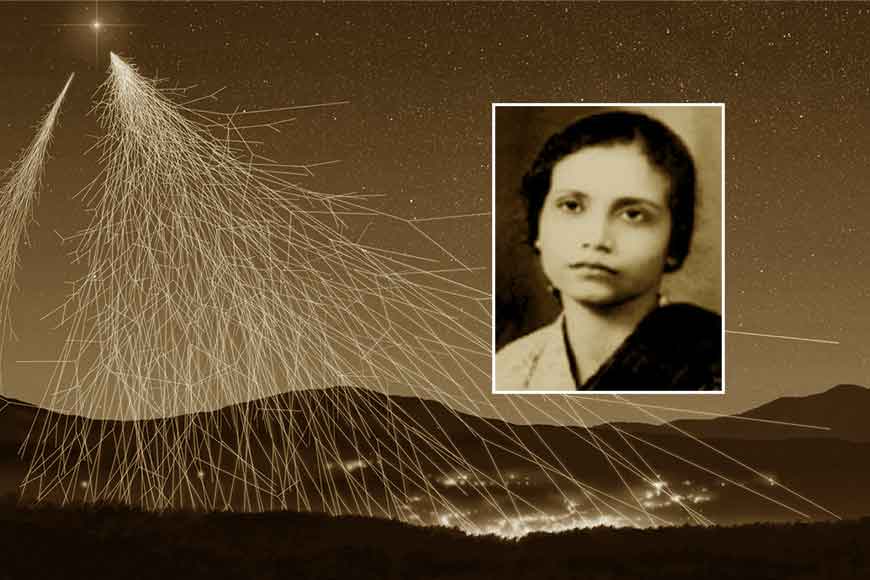
Despite her trailblazing research career, Bibha Chowdhuri did not receive major national awards or formal recognition from academic institutions during her lifetime. Her absence from mainstream scientific narratives highlights the challenges many women scientists faced in early India limited visibility, scarce acknowledgement and a lack of institutional support.
Her story mirrors the experiences of several women whose significant scientific achievements remained overshadowed by gender biases and historical circumstances. Yet, her contributions continue to influence cosmic ray research and inspire scientists who revisit her work.
Recent efforts are now helping reclaim her rightful place in India’s scientific history. A new biography by Rajinder Singh and Suprakash C. Roy presents a detailed account of her life, bringing long-overdue attention to her accomplishments. The book has sparked discussions across academic circles, encouraging renewed interest in her work and reminding readers of the remarkable clarity and strength she brought to Indian physics.
Bibha Chowdhuri Pioneer of Indian Physics: A Story Returning to the Nation’s Memory
As India looks back at the evolution of its scientific achievements, the story of Bibha Chowdhuri stands out as one that must be remembered and celebrated. Her fearless pursuit of knowledge, persistence in the face of setbacks and quiet brilliance represent the spirit of scientific exploration. Revisiting her journey not only honors her contributions but also inspires future generations to pursue research with the same dedication.