



BIS Agarbatti Standard 2025 Sets New Quality Rules

BIS Agarbatti Standard 2025 has marked an important moment for consumers and traditional industries in India. The Bureau of Indian Standards has officially notified the country’s first-ever national standard for agarbattis, bringing clarity, safety and uniform quality to a product used daily in millions of homes. The announcement was made on National Consumer Day 2025, highlighting the government’s focus on consumer protection and responsible manufacturing.
Thank you for reading this post, don't forget to subscribe!The new standard, named IS 19412:2025, sets clear guidelines for raw materials, burning behavior, fragrance quality, labelling and chemical safety. With this step, India strengthens its position as the world’s largest producer and exporter of incense sticks while ensuring safer products for domestic and global users.
BIS Agarbatti Standard 2025 Focuses on Consumer Safety
For decades, agarbattis have been an essential part of Indian culture, rituals and daily life. However, the absence of a unified quality standard often led to wide variations in safety and performance. BIS Agarbatti Standard 2025 addresses this gap by defining measurable and transparent requirements that manufacturers must follow.
The standard focuses strongly on consumer safety, especially indoor air quality. Since agarbattis are burned inside homes, temples and workplaces, controlling harmful emissions and unsafe substances has become increasingly important. The new framework ensures that products sold in the market meet basic health and safety expectations.
BIS Agarbatti Standard 2025 Defines Manufacturing Norms
IS 19412:2025 lays down detailed rules for how agarbattis should be made. These include standards for:
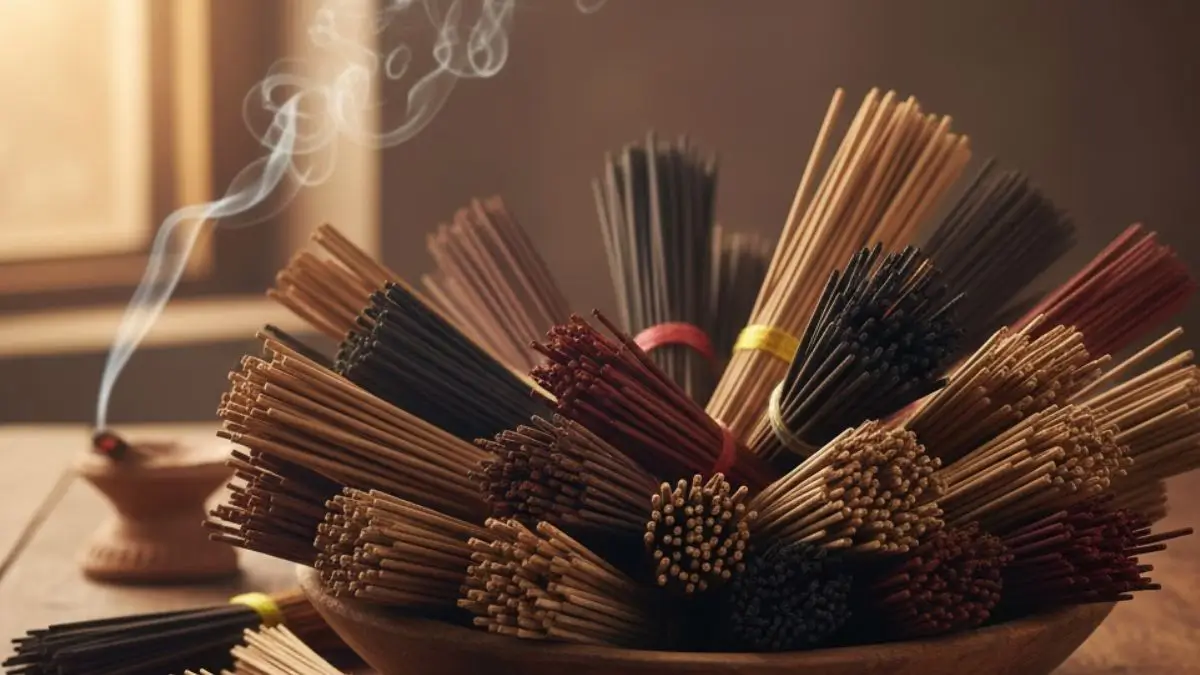
- Physical strength and integrity of incense sticks
- Uniform and steady burning without excessive smoke
- Controlled ash formation to reduce mess and hazards
- Consistent fragrance release without harsh odors
- Clear and truthful labelling for consumer awareness
By setting these benchmarks, BIS Agarbatti Standard 2025 aims to create consistency across brands. Consumers can now expect similar performance and safety levels regardless of where the product is made.
BIS Agarbatti Standard 2025 Bans Harmful Chemicals
One of the most important aspects of the new standard is the ban on certain harmful chemicals. Scientific studies have raised concerns about some substances used in incense sticks that may affect indoor air quality and health.
Under BIS Agarbatti Standard 2025, the use of specific insecticidal chemicals such as permethrin and cypermethrin is prohibited. These substances, often linked to respiratory and environmental risks, are no longer allowed in agarbatti production.
In addition, certain synthetic fragrance intermediates, including benzyl cyanide, have also been restricted. These steps reflect growing awareness about air pollution inside homes and align India’s regulations with global safety trends.
BIS Agarbatti Standard 2025 and Government Commitment
The standard was formally announced by Union Minister for Consumer Affairs, Food and Public Distribution Pralhad Joshi, who highlighted the government’s dedication to protecting consumers and promoting ethical manufacturing. According to officials, the move supports the idea that traditional products must evolve with modern safety expectations.
The Bureau of Indian Standards, functioning under the Ministry of Consumer Affairs, will oversee the implementation of IS 19412:2025. Manufacturers are encouraged to adopt the standard voluntarily at first, allowing the industry time to adjust production processes smoothly.
BIS Agarbatti Standard 2025 Supports Indian Industry
India’s agarbatti sector employs lakhs of workers, many of them women and small-scale artisans. BIS Agarbatti Standard 2025 is expected to strengthen the industry rather than burden it. By improving product quality and safety, manufacturers can build stronger trust with consumers.
Uniform standards also help reduce unfair competition caused by low-quality and unsafe products. Ethical producers who already follow better practices will benefit from a more level playing field.
BIS Agarbatti Standard 2025 Boosts Export Potential
India is the world’s largest exporter of incense sticks, supplying products to markets in Asia, Europe, the Middle East and the Americas. Many international markets have strict rules related to chemical safety and emissions.
With BIS Agarbatti Standard 2025, Indian manufacturers gain an advantage. The standard helps align domestic products with global expectations, making it easier to enter new markets and maintain existing trade relationships. Improved credibility can also enhance India’s reputation as a responsible supplier of traditional goods.
BIS Agarbatti Standard 2025 Reflects Changing Consumer Awareness

Modern consumers are increasingly conscious about what they use inside their homes. Concerns about air pollution, allergies and long-term health effects have influenced buying choices. BIS Agarbatti Standard 2025 responds to these concerns by promoting transparency and safety.
Clear labelling requirements allow buyers to make informed decisions. Knowing that a product follows national safety norms builds confidence and encourages responsible consumption.
BIS Agarbatti Standard 2025 and Sustainable Practices
The standard also encourages better sourcing of raw materials and improved manufacturing discipline. By discouraging harmful substances and promoting controlled production, the framework supports a more sustainable approach to incense making.
This shift benefits not only consumers but also the environment. Reduced chemical use and cleaner burning contribute to lower indoor pollution and less environmental harm.