




Carbon Trading Authority India: A Milestone Step in Climate Governance

Carbon Trading Authority India has emerged as a critical institutional framework to steer the nation’s climate commitments under the Paris Agreement. India recently established a National Designated Authority (NDA) to regulate and manage carbon emissions trading, marking a significant step towards operationalising a national carbon market. The development comes in the aftermath of the finalisation of Article 6 of the Paris Agreement at the 29th UN Climate Change Conference of Parties (COP29), held in Baku, Azerbaijan, in November 2024. This move positions India as an active player in the global carbon market while strengthening its domestic climate strategy.
Thank you for reading this post, don't forget to subscribe!Background: Article 6 and the Global Carbon Market
Article 6 of the Paris Agreement provides the backbone for international carbon emissions trading. It allows countries to cooperate in meeting their emission reduction targets through market-based mechanisms such as carbon credit trading. The article had been the subject of lengthy debates and negotiations for years due to concerns over transparency, accountability, and the risk of double counting emission reductions.
The issue was finally resolved at COP29 in Baku, where world leaders reached consensus on operationalising Article 6. This created a transparent framework for carbon credit generation and trade, ensuring credibility in international climate markets. For India, aligning with this framework means not only meeting domestic climate targets but also enabling Indian businesses to participate in global carbon finance opportunities.
Formation of the National Designated Authority
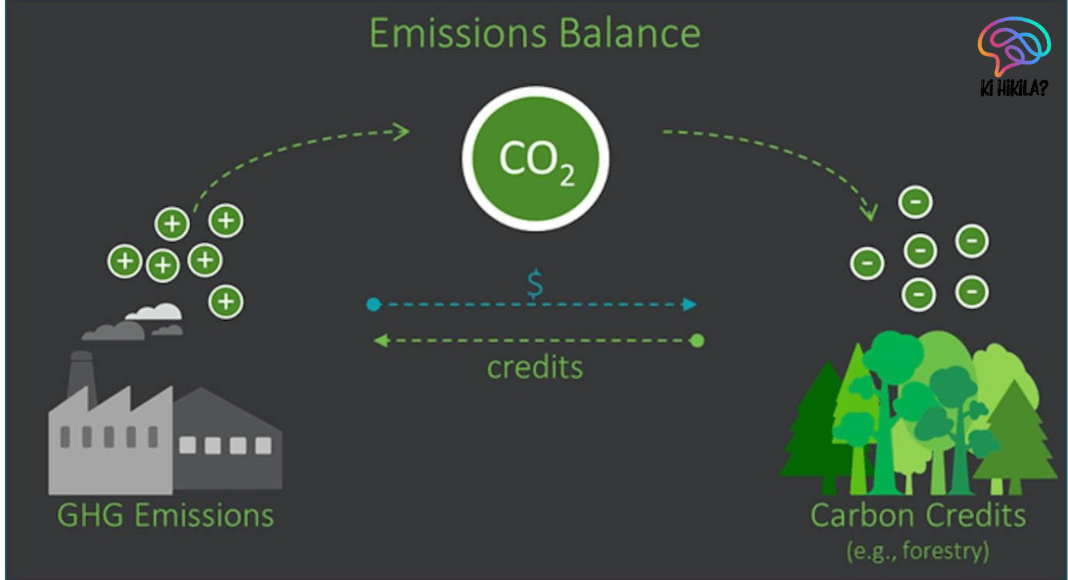
The newly formed NDA functions as the Carbon Trading Authority India and is central to governing carbon market activities in the country. It is a 21-member committee chaired by the Secretary of the Ministry of Environment, Forest and Climate Change (MoEFCC). The composition reflects an inter-ministerial approach, with members drawn from the Ministry of External Affairs, Ministry of Steel, Ministry of Renewable Energy, and the government’s policy think tank, NITI Aayog.
Among all, the Environment Ministry holds the largest representation, reinforcing the importance of ecological priorities in carbon governance. The NDA’s establishment demonstrates India’s seriousness in creating a robust institutional mechanism to manage carbon trading.
Roles and Responsibilities of the NDA
The NDA’s mandate is broad and forward-looking. Its responsibilities include:
- Project Evaluation and Approval: The authority assesses and approves projects that generate emission reduction units (ERUs). These projects may include renewable energy, energy efficiency, reforestation, or carbon capture initiatives.
- Qualifying Activities: It recommends which activities and sectors are eligible for carbon trading under Article 6. This list will evolve over time as India’s national sustainability goals expand.
- NDC Alignment: The NDA ensures that carbon credits generated and traded contribute directly to India’s Nationally Determined Contributions (NDCs).
- Transparency and Integrity: A key role is to maintain credibility in the market by avoiding double counting and ensuring that emission reductions are genuine and verifiable.
In essence, the NDA acts as a gatekeeper and regulator, balancing environmental priorities with economic opportunities.
India’s Climate Commitments under NDC
India’s NDCs, submitted under the Paris Agreement, outline ambitious goals:
- Emission Intensity Reduction: Cut the emission intensity of GDP by 45% by 2030 compared to 2005 levels.
- Clean Energy Transition: Achieve 50% of cumulative electric power capacity from non-fossil fuel sources by 2030.
- Carbon Sink Creation: Establish an additional carbon sink of 2.5 to 3 billion tonnes of CO₂ equivalent through large-scale afforestation efforts by 2030.
The NDA, functioning as the Carbon Trading Authority India, supports these commitments by facilitating carbon trading mechanisms that unlock financial resources and technological innovation.
Economic and Environmental Significance
The establishment of a carbon market in India carries dual benefits—economic and ecological.
- Mobilising Investments: Carbon trading opens up avenues for domestic and foreign investment in renewable energy, sustainable infrastructure, and clean technologies. Companies can gain financial incentives for adopting green practices.
- Market-Based Incentives: By putting a price on carbon, businesses are encouraged to cut emissions cost-effectively, creating a competitive yet sustainable industrial environment.
- Global Integration: The NDA aligns India’s efforts with global climate governance, enabling participation in international carbon markets and positioning India as a responsible climate actor.
- Environmental Integrity: With the NDA monitoring activities, India can avoid pitfalls such as greenwashing or double counting, thereby maintaining trust in its climate actions.
Challenges Ahead for Carbon Trading Authority India
While the creation of the NDA is a major step, India faces challenges in fully operationalising its carbon market:
- Capacity Building: Industries and state governments require training and resources to effectively participate in carbon trading.
- Regulatory Framework: Clear rules, compliance mechanisms, and enforcement will be critical to prevent loopholes.
- Balancing Growth and Sustainability: India must ensure that carbon market mechanisms do not hinder economic development but instead drive sustainable growth.

Conclusion
The launch of the Carbon Trading Authority India through the establishment of the NDA marks a turning point in India’s climate governance journey. By aligning with Article 6 of the Paris Agreement, India is building a transparent, credible, and market-driven system to achieve its NDC targets. The carbon market is expected to accelerate the transition towards clean energy, mobilise green finance, and create an accountable system for emission reductions.
As the NDA begins its work, the coming years will be crucial in determining how effectively India can balance economic growth with environmental responsibility. This initiative places India firmly on the global map of climate leadership while offering a roadmap for sustainable development at home.