Ceuta Migrant Crisis Sparks Clashes

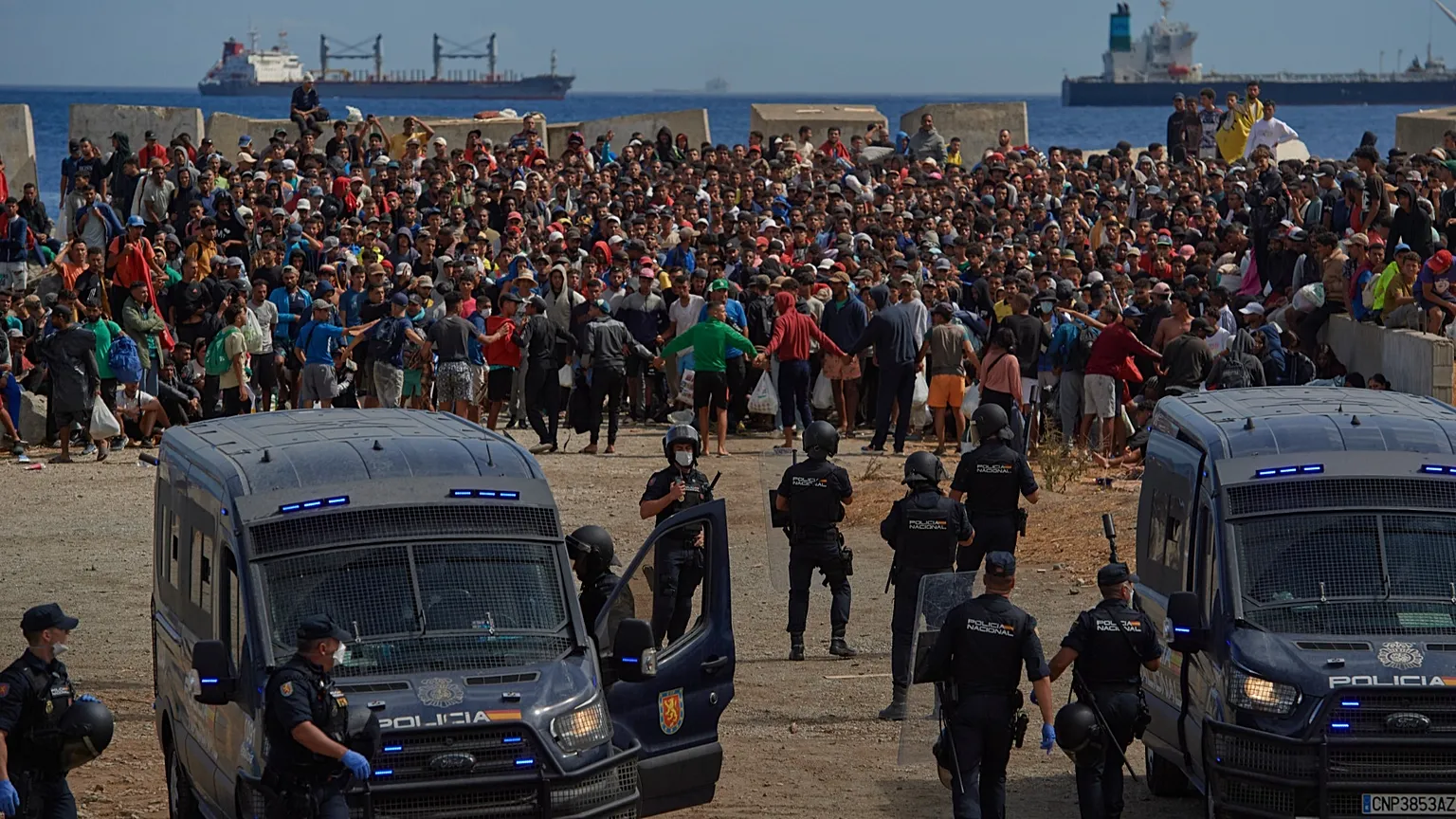
Ceuta Migrant Crisis has created fresh security and humanitarian concerns in Spain’s North African enclave after a large movement of migrants from Morocco. The situation developed into public protests, clashes and police action in late August 2026. Spanish authorities have also sought support from the European Union as pressure on the territory’s border and local services increased.
Ceuta is a Spanish autonomous city located on the northern coast of Africa. It shares a land border with Morocco and is positioned close to the Strait of Gibraltar. Its location makes it an important crossing point between Africa and Europe and gives it wider importance in Spain’s migration and border policies.

Ceuta and Its Strategic Location
Ceuta is one of Spain’s two autonomous cities located in North Africa. The other is Melilla. Both territories share land borders with Morocco and are surrounded by the Mediterranean region.
The Strait of Gibraltar is located near Ceuta and connects the Mediterranean Sea with the Atlantic Ocean. It is also the narrow maritime passage between southern Spain and northern Africa. Because of this geographical position, Ceuta has long been important for trade, security, migration management and relations between Spain, Morocco and the European Union.
The city’s position also makes it a sensitive point for irregular migration into the European Union. People seeking to enter Europe may attempt to cross the land border, swim around coastal barriers or use other dangerous routes.
Large Migrant Movement Creates Pressure
The latest crisis followed a major migrant influx from Morocco. Between late July and late August 2026, estimates suggested that around 70,000 to 72,000 people attempted to cross illegally into Ceuta.
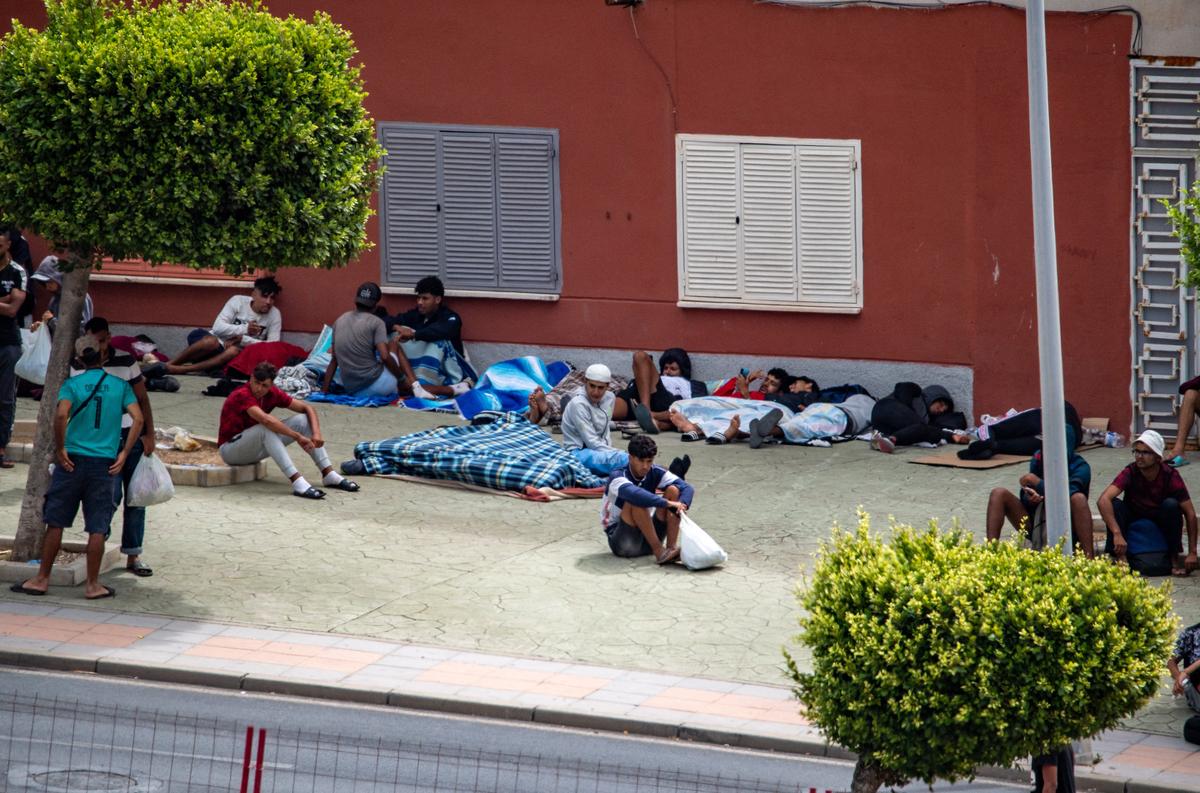
The large movement placed pressure on local authorities and emergency services. Temporary shelters and other facilities faced additional demand, while officials had to manage accommodation, food, medical assistance and security arrangements.
Reports also indicated that at least 111 migrant deaths had been recorded by 4 August. The deaths highlighted the dangers associated with irregular migration routes and attempts to cross borders through difficult land and sea conditions.
By late August, estimates of migrants remaining in Ceuta varied widely, with figures ranging from about 3,500 to 10,000. The difference in estimates reflected the rapidly changing situation and the movement of people through different areas.
Protests Turn Into Clashes
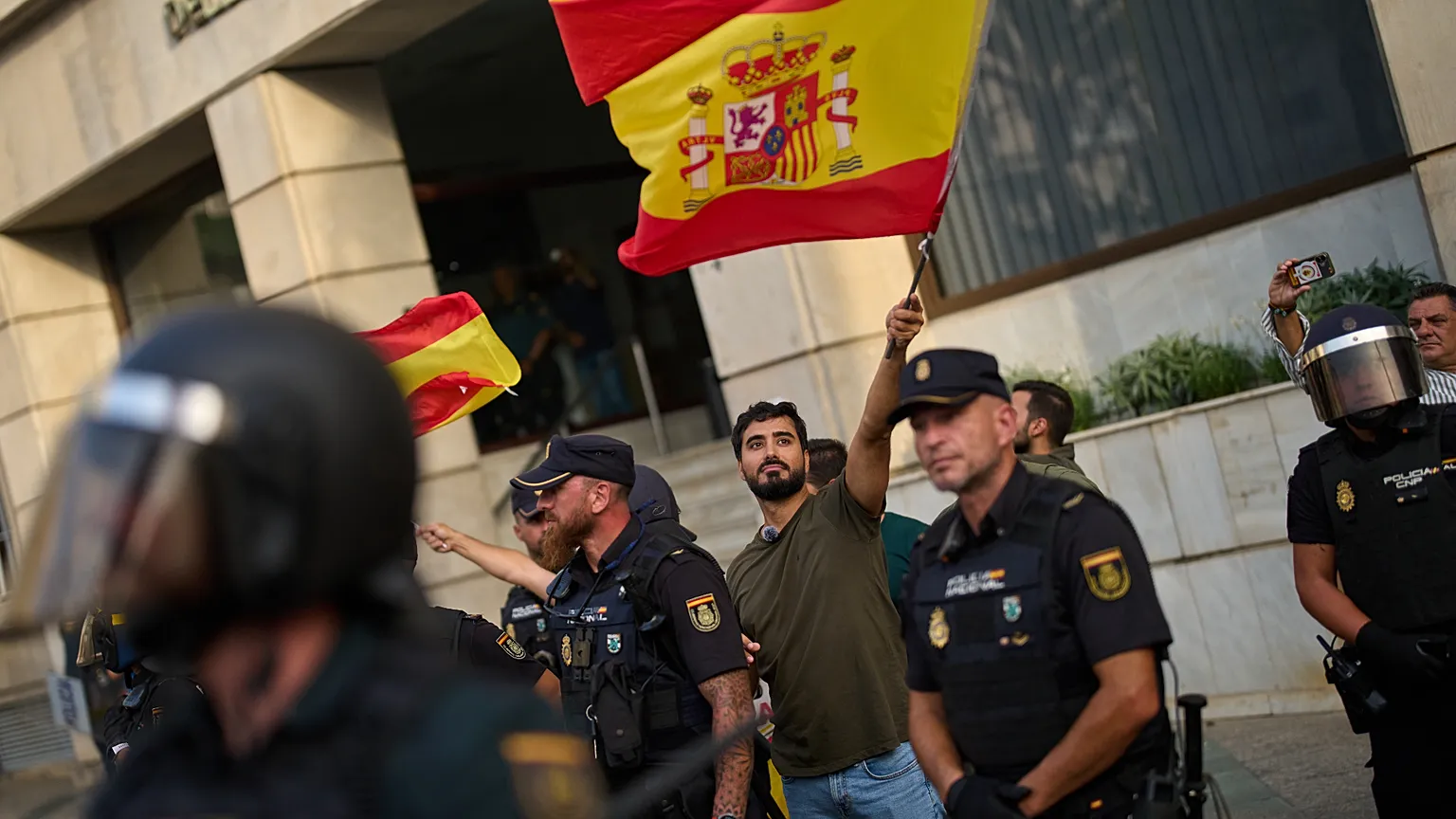
The situation became more tense on 26 August when thousands of residents took part in security protests. Demonstrations near coastal areas where migrants were staying later developed into clashes.
Police intervened as tensions increased. Tear gas was reportedly used during the disturbances. Some anti-migrant protesters blocked Red Cross vehicles, while shelters were damaged. Between 26 and 28 August, some beach camps were also destroyed and set on fire.
The events raised concerns about public safety as well as the treatment and protection of vulnerable migrants. Humanitarian organisations faced difficulties while trying to provide assistance in areas affected by unrest.
Attack on Spanish Military Vehicle
Another serious incident occurred on 27 August. A Spanish military vehicle carrying four soldiers was attacked by a group of around 70 migrants who reportedly threw stones at the vehicle.
One soldier suffered minor injuries in the incident. Spanish police detained 12 Moroccan migrants following the attack.
The incident added another layer to the security situation. Spanish officials appealed for calm while authorities continued to manage the migrant population and the wider public-order situation.
Ceuta’s finance councillor Kissy Chandiramani and Spanish Interior Minister Fernando Grande-Marlaska were among the officials who called for restraint as tensions grew.
Spain Seeks European Union Support
The developments also brought the issue to the European level. On 28 August, the European Commission confirmed that it had received Spain’s request for emergency border funding.
Spain’s request reflects the wider role of the European Union in managing external borders and irregular migration. Ceuta is Spanish territory and therefore part of the EU’s broader border-management framework, even though it is geographically located in North Africa.
Emergency funding can help countries deal with sudden pressure on reception facilities, border infrastructure, security operations and humanitarian services.
The European response is also linked to the EU’s migration and return policies. In this case, Spain has sought the swift return of people who entered the territory illegally to Morocco, subject to applicable legal procedures.
Morocco-Spain Border Relationship
Morocco plays a central role in migration management because it borders both Ceuta and Melilla. Cooperation between Morocco and Spain is therefore important for controlling irregular migration and dealing with people who attempt to cross the border.
Migration has remained an important issue in relations between Morocco, Spain and the European Union. Cooperation can include border surveillance, information sharing, prevention of irregular crossings and procedures for returning people who do not have permission to remain.
At the same time, migration policy involves humanitarian concerns. Migrants may include people fleeing conflict, poverty, political instability or other difficult conditions. Governments and humanitarian organisations therefore face the challenge of maintaining border security while protecting basic rights.
Humanitarian Concerns
The reported deaths during the migrant movement have brought renewed attention to the risks faced by people using irregular routes. Attempts to cross borders without legal protection can expose migrants to drowning, injuries, dehydration, extreme weather and violence.
Humanitarian organisations such as the Red Cross can provide emergency medical assistance, food and other forms of support. However, their work becomes more difficult when protests and clashes occur around temporary camps or reception areas.
The destruction of shelters and the blocking of humanitarian vehicles can further increase risks for vulnerable people.
Wider European Migration Challenge
The Ceuta situation comes as European countries continue to debate how to manage migration and protect external borders. Countries located along the Mediterranean and other entry routes often face sudden increases in migrant arrivals.
The European Union has been working on stronger border controls, faster asylum procedures and return arrangements while also discussing legal migration routes and humanitarian protection.
Ceuta remains a particularly sensitive location because of its geography. It is a Spanish city in Africa, directly bordering Morocco, while also forming part of the European Union’s external border system.
Ceuta, Morocco and the Strait of Gibraltar
The geography of Ceuta helps explain why the territory regularly receives international attention. Morocco surrounds the city on its landward side, while the Mediterranean and nearby Strait of Gibraltar connect the area to major European and African transport routes.
The Strait of Gibraltar is one of the world’s most important maritime passages. It provides a connection between the Atlantic Ocean and Mediterranean Sea and separates Europe from Africa.
The combination of strategic geography, migration pressure and security concerns makes developments in Ceuta significant beyond the city itself. The latest unrest has brought Spain’s border policies, Morocco’s role and the European Union’s response into focus.