


Charax Spasinou Rediscovered: Ancient Port City Rises Again from Iraq’s Desert Sands

Deep in the desert plains of southern Iraq, a forgotten city has returned to the world’s attention. Charax Spasinou Rediscovered is not just an archaeological headline but a major historical moment. Buried for more than a thousand years, this ancient city once stood as a powerful port and trade hub linking East and West. Thanks to modern technology, researchers are now able to map and understand its true scale without disturbing the fragile site.
Charax Spasinou was once located near the banks of the Tigris River, a lifeline of ancient civilisation. Over centuries, floods, shifting rivers, and political turmoil erased its visible remains. What survived was hidden beneath layers of desert soil, waiting for the right tools and time to be revealed.

Foundation Linked to Alexander’s Eastern Vision
The origins of Charax Spasinou go back to 324 BCE, during the final phase of the eastern campaigns led by Alexander the Great. Historical sources suggest that the city was first founded under the name Alexandria. Its creation reflected Alexander’s broader ambition to establish new urban centres that could secure territory and control major trade routes across Mesopotamia.
This region, known historically as Mesopotamia, was already a cradle of civilisation. By founding a city here, Alexander aimed to connect Greek administrative systems with long-established local economies. After his death, the city faced repeated natural disasters, especially flooding, which damaged much of its infrastructure. Political instability also played a role in its decline.
Later rulers rebuilt the settlement and renamed it Charax Spasinou. Under new administrations, possibly during the Seleucid or Characene periods, the city regained importance and adapted to changing regional powers.
A Major Trade and Port City
Charax Spasinou owed its prosperity to its strategic location. Positioned near the meeting point of river routes and overland trade paths, it acted as a gateway between Arabia, Persia, and the Mediterranean world. Merchants moving spices, textiles, metals, and other valuable goods likely passed through its markets.
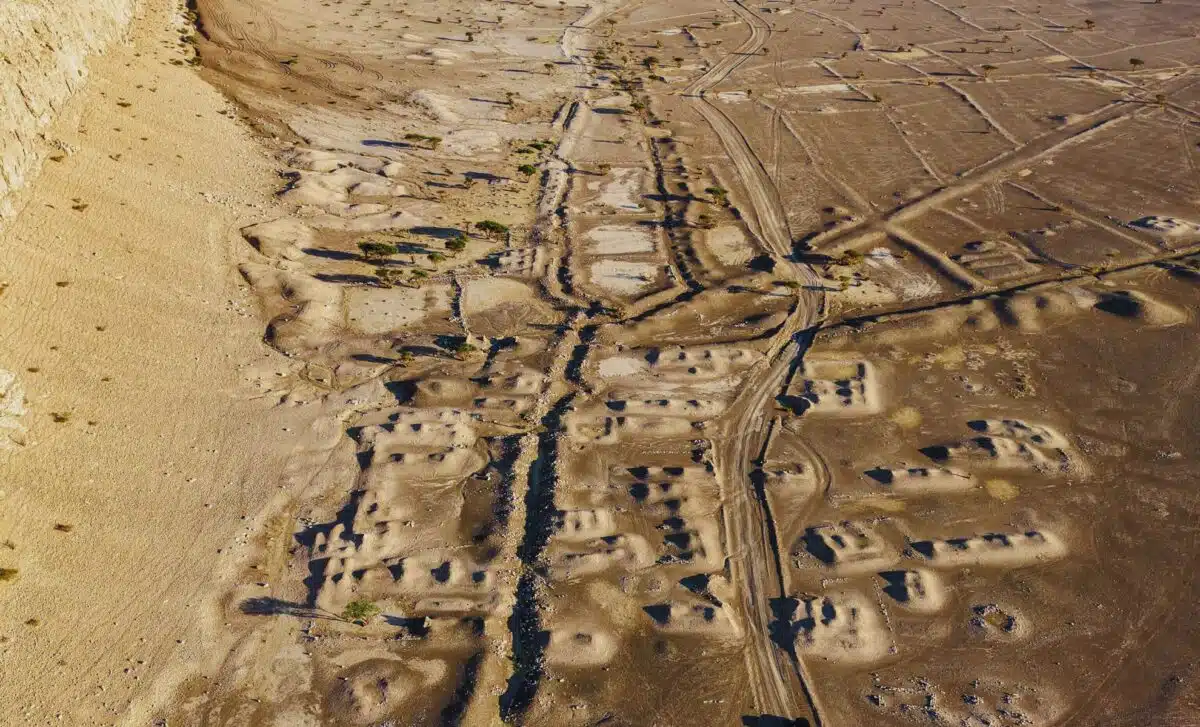
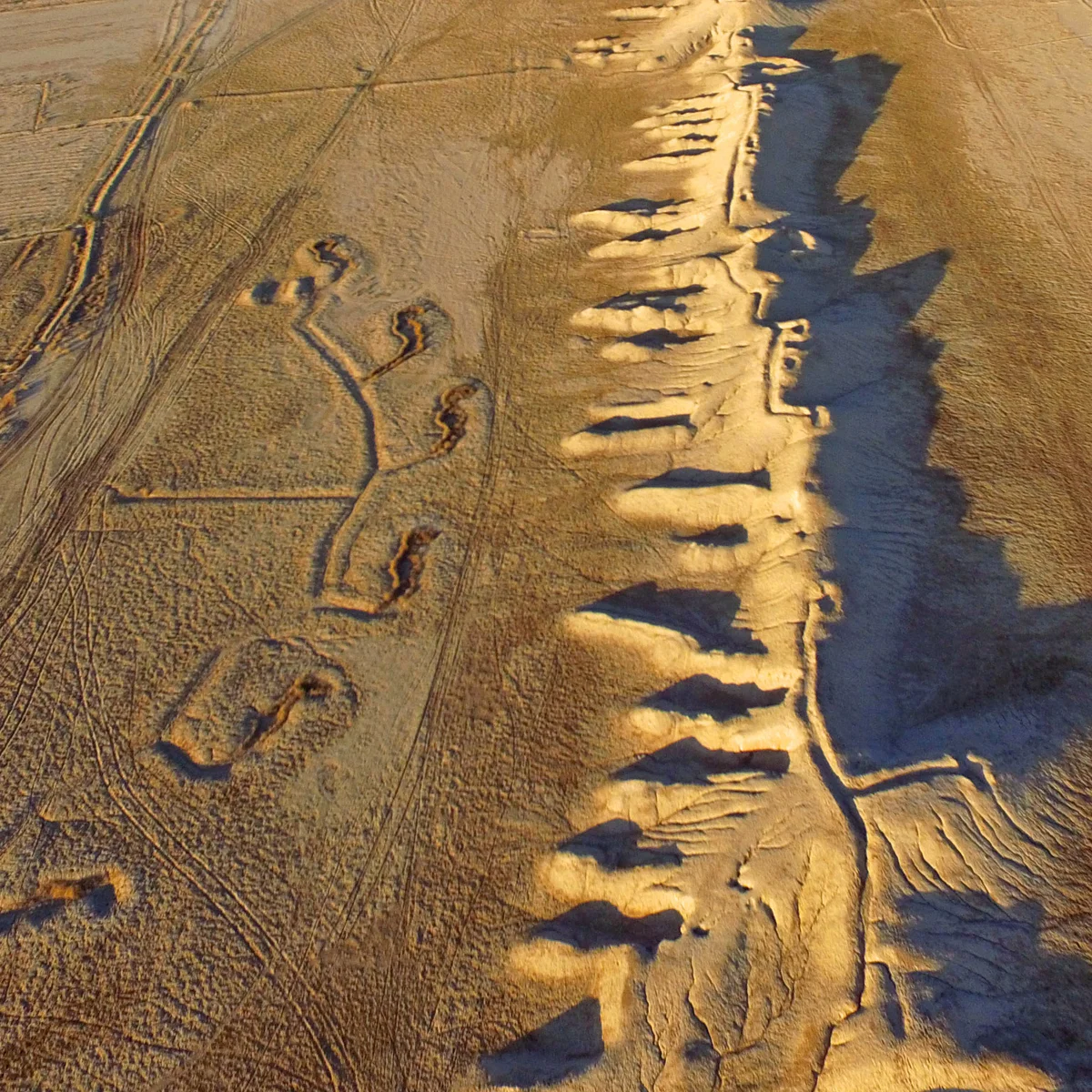
Recent archaeological surveys reveal that the city was far larger than previously believed. Wide streets, planned residential areas, temples, and industrial zones point to an organised urban design. The discovery of kiln-equipped workshops suggests active local production, especially of ceramics and building materials.
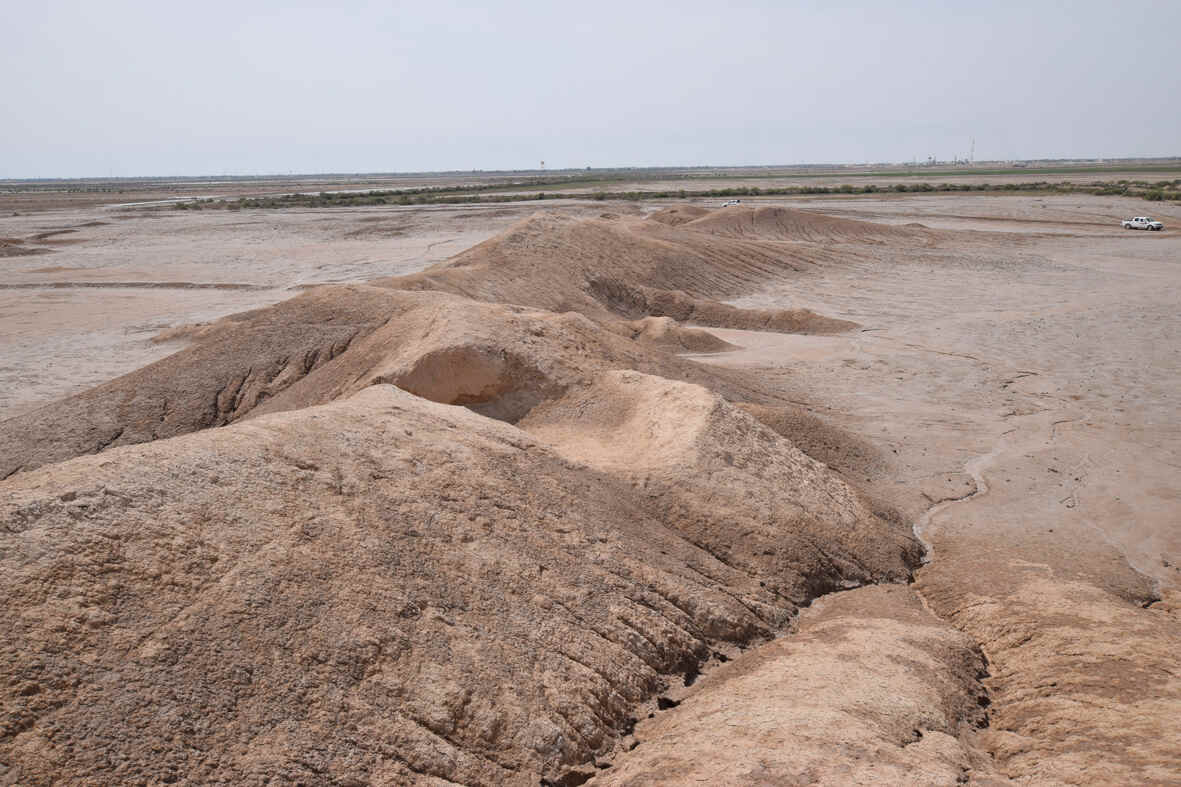
Pottery fragments, bricks, and other surface finds scattered across the site indicate that economic life continued here for centuries. The sheer scale of the remains suggests Charax Spasinou was not a minor settlement, but one of the most important urban centres in the region during its time.
Modern Technology Unlocks the Past
The rediscovery of Charax Spasinou was made possible through advanced, non-invasive archaeological methods. Instead of large-scale excavation, researchers used drones to capture thousands of high-resolution aerial images. These images helped create detailed surface maps of the area.
Magnetometers were also deployed to detect buried walls, roads, and foundations hidden beneath the sand. By measuring subtle changes in the Earth’s magnetic field, archaeologists could trace the city’s layout without digging. This approach allowed experts to survey more than 500 square kilometres efficiently and safely.
The result is a digital reconstruction of an entire ancient city. Streets, building blocks, and urban grids have emerged on screens, offering a clear picture of how Charax Spasinou once functioned. This method not only protects the site from damage but also marks a major shift in how archaeology is conducted in sensitive regions.
Charax Spasinou Rediscovered: Changing the Story of Ancient Iraq
The rediscovery is reshaping how historians view urban development in ancient Iraq. For a long time, Charax Spasinou was known only from scattered texts and limited surface remains. Now, evidence shows it was a vast, carefully planned city with regional influence.
Its story highlights both the strength and vulnerability of ancient urban projects. Natural forces like floods could erase cities from view, but human planning and ambition left traces that endured underground. The survival of these remains shows how resilient ancient construction could be, even in harsh environments.
Charax Spasinou Rediscovered also strengthens understanding of the period after Alexander, when Greek and local traditions blended across Mesopotamia. The city stands as proof that Hellenistic influence in the region was deeper and more complex than once assumed.
As digital archaeology continues to advance, Charax Spasinou may become a model for future discoveries. Without lifting a single stone, researchers have brought an entire city back into historical discussion, adding a powerful new chapter to the story of ancient civilisations.