



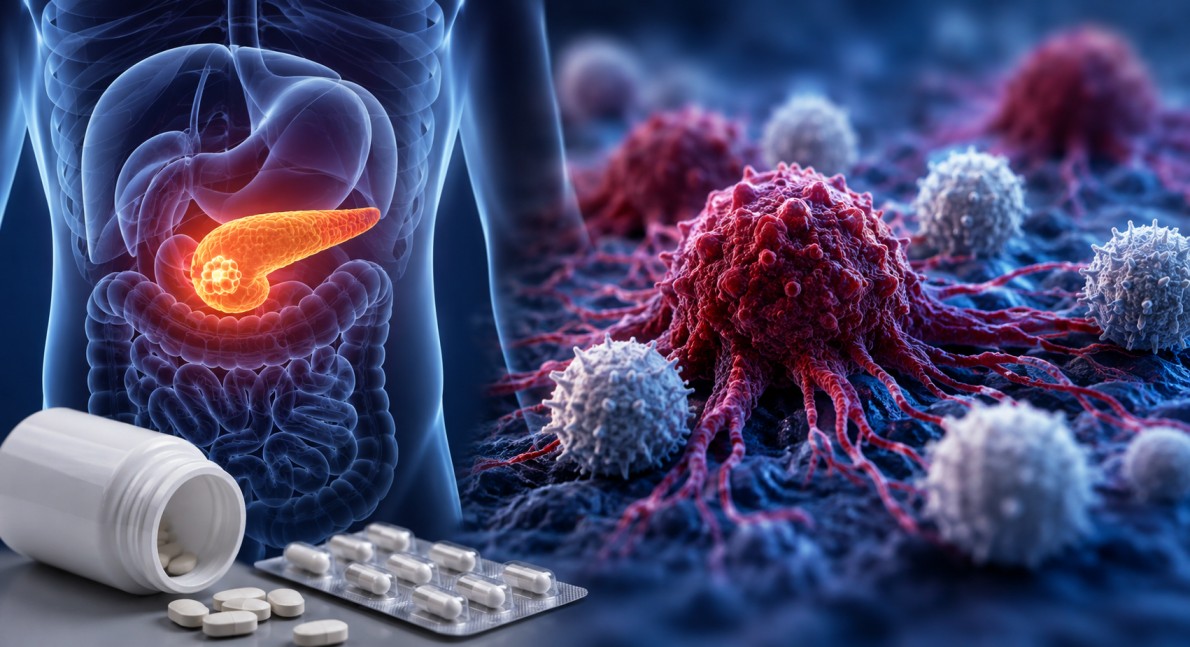
Daraxonrasib Approval for Pancreatic Cancer

Daraxonrasib Approval has marked an important development in cancer treatment after the United States Food and Drug Administration (FDA) approved Rasonque, also known as daraxonrasib, for certain adult patients with metastatic pancreatic adenocarcinoma. The approval was announced on August 26, 2026, bringing a new treatment option for patients facing one of the most difficult forms of cancer.
Daraxonrasib is an oral medicine developed by Revolution Medicines, a biotechnology company based in California. The medicine is designed to target specific genetic changes involved in the growth of pancreatic cancer cells. Its approval has drawn attention from the global medical and research community because pancreatic cancer remains a major challenge despite continued progress in cancer research and precision medicine.

Understanding Pancreatic Cancer
Pancreatic adenocarcinoma is the most common form of pancreatic cancer. The pancreas is an important organ located behind the stomach and plays a role in digestion and blood sugar regulation. Pancreatic cancer can be difficult to detect in its early stages because symptoms may not appear clearly until the disease has progressed.
Metastatic pancreatic adenocarcinoma refers to cancer that has spread from the pancreas to other parts of the body. Treating metastatic cancer is especially challenging, and researchers continue to search for medicines that can target the biological changes that help cancer cells grow and spread.
The latest FDA decision comes at a time when cancer treatment is increasingly moving towards personalised and targeted approaches. Instead of relying only on traditional treatments, researchers are developing medicines that focus on specific genes and molecular pathways connected to cancer.

How Daraxonrasib Works
Daraxonrasib is described as a multi-selective RAS(ON) inhibitor. The medicine is designed to target altered forms of the KRAS gene, which is linked to many cases of pancreatic cancer. KRAS is part of a family of genes that helps control how cells grow and communicate.
When changes or mutations occur in genes such as KRAS, cells may begin growing in an uncontrolled way. This can contribute to the development and progression of cancer. Researchers have spent many years trying to develop medicines that can effectively target these cancer-related genetic changes.
The development of daraxonrasib reflects the growing role of targeted therapies in modern medicine. Scientists are increasingly studying how genetic information can help doctors understand different forms of cancer and develop more specific treatment options.
Clinical Trial Results
The FDA approval was supported by results from the Phase 3 RASolute 302 clinical trial. According to the reported data, patients who received daraxonrasib had a median overall survival of 13.2 months, compared with 6.7 months for patients receiving standard chemotherapy in the trial.
Clinical trial results are an important part of the process used to study the safety and effectiveness of new medicines. Researchers examine how a treatment performs in patients and compare the results with existing treatment approaches.
The FDA used its Real-Time Oncology Review programme during the evaluation process. This programme is designed to make the review of certain cancer medicine applications more efficient while maintaining regulatory standards. The review also involved cooperation with Health Canada through Project Orbis, an international programme that supports collaboration between regulatory agencies reviewing cancer medicines.
Growing Focus on Targeted Cancer Treatment
The approval of daraxonrasib comes during a period of rapid development in cancer research. Scientists are increasingly focusing on precision medicine, genetic testing, targeted drugs and new treatment combinations.
Targeted medicines aim to act on specific biological features associated with a disease. This approach is different from some traditional treatments that may affect both cancer cells and healthy cells. Researchers continue to study how targeted therapies can be used alongside chemotherapy, immunotherapy and other forms of treatment.
Pancreatic cancer research has become an important area of medical innovation because the disease often requires complex treatment and early diagnosis can be difficult. New medicines targeting KRAS and other cancer-related pathways are being closely watched as researchers work to improve treatment options.
Availability and Reported Side Effects
Rasonque is expected to be available in the United States through prescription. The reported price is approximately $39,800 for a one-month supply, highlighting the wider global discussion around the affordability and accessibility of new cancer medicines.
Reported common side effects include skin rash, mouth sores, diarrhoea and other digestive problems. Patients considering any cancer treatment should discuss possible benefits, risks and side effects with qualified healthcare professionals.
The Daraxonrasib Approval also highlights the growing importance of international cooperation in medical research and drug regulation. As biotechnology and cancer research continue to advance, scientists are exploring new ways to target the genetic changes behind serious diseases and develop more specialised treatment options for patients.