


Delhi Lakshmi Yojana for Women

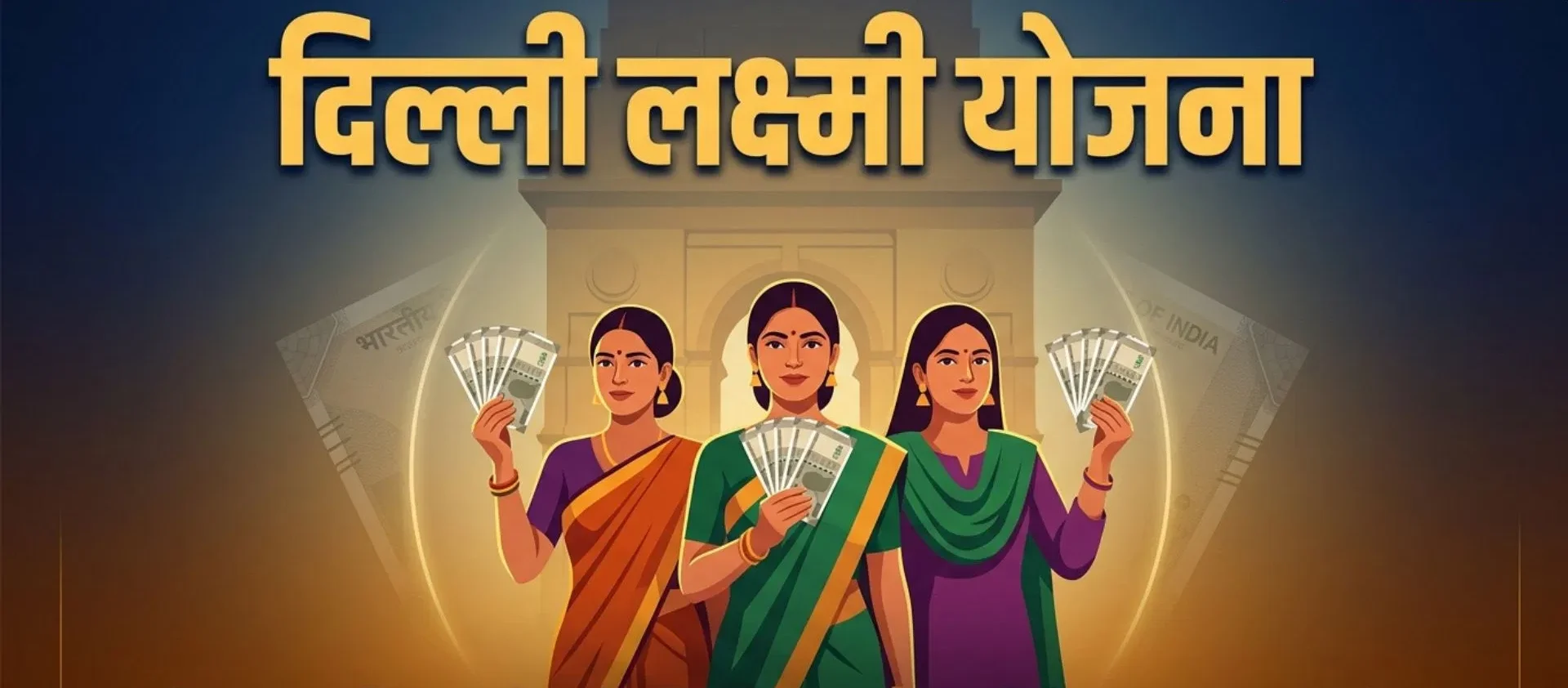
Delhi Lakshmi Yojana is a new monthly financial assistance scheme launched by the Delhi government to provide economic support to eligible women from lower-income families. The scheme was formally launched on 26 August 2026 at Talkatora Stadium in New Delhi. Under the programme, eligible women between 21 and 60 years of age will receive financial assistance of ₹2,500 every month.
The scheme is designed to provide regular financial support while also encouraging beneficiaries to save a part of the amount. Its payment structure combines a savings component with digital access to money, making the programme different from a simple cash-transfer scheme.

₹2,500 monthly assistance under Delhi Lakshmi Yojana
Under the Delhi Lakshmi Yojana, each eligible beneficiary will receive ₹2,500 per month. The amount is divided into two parts.
Of the monthly assistance, ₹1,500 will be placed in a locked Fixed Deposit (FD) or Recurring Deposit (RD). This amount will remain locked until 31 July 2029, encouraging beneficiaries to build savings for future needs.
The remaining ₹1,000 will be credited to a Central Bank Digital Currency (CBDC) wallet. CBDC is a digital form of sovereign currency issued by a country’s central bank. In India, the digital rupee is the country’s CBDC initiative.
This payment structure combines immediate financial access with longer-term savings.
Who can receive the benefit?
The scheme has specific eligibility requirements. Applicants must be registered voters in Delhi to qualify.
Another important condition concerns residence. The applicant’s family must have been living in Delhi for at least 10 years. This requirement is intended to ensure that the assistance reaches eligible long-term residents of the national capital.
Household electricity use is also included in the eligibility criteria. The household’s electricity consumption must not have exceeded 2,400 units during the previous year.
These conditions are used to identify the intended beneficiary group and distinguish eligible lower-income households from those outside the scheme’s target category.
Registration began in August 2026
Online registration for the scheme opened on 1 August 2026. The programme received a significant response before its official launch.
By 26 August, more than 9.22 lakh women had registered, while around 6.52 lakh applications had been completed according to the available official figures.
The large number of registrations indicates strong interest in the financial assistance programme among women in Delhi. The government plans to process eligible applications according to the scheme’s rules.
Thousands receive sanction letters
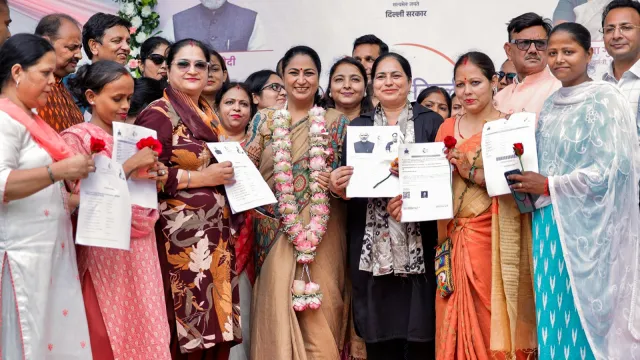
The launch event at Talkatora Stadium marked the beginning of the distribution of approval documents to beneficiaries.
More than 4,000 women were reported to have received sanction letters on the launch day. Available reports put the number at approximately 4,000 to 4,190, although some accounts reported that around 2,500 women physically received approval certificates at the event.
A sanction letter serves as an official confirmation that a beneficiary has been approved for assistance under the scheme.
The distribution marks the transition of the programme from registration and application to actual beneficiary support.
₹5,100 crore budget for 2026–27
The Delhi government has allocated ₹5,100 crore for the scheme during the 2026–27 financial year.
The government has set a wider target of providing benefits to more than 17 lakh women. Reaching this target will require continued application processing, verification and payment management.
The financial allocation shows the scale of the programme and its importance within Delhi’s welfare spending.
Scheme was earlier announced under another name
The programme was earlier announced as the Mahila Samriddhi Yojana before being launched as the Delhi Lakshmi Yojana.
The renaming reflects the final structure under which the financial assistance is being delivered. The core objective remains providing economic support to eligible women from lower-income households.
Savings and digital payment model
One of the notable features of the Delhi Lakshmi Yojana is its combination of savings and digital payments.
The ₹1,500 savings component is designed to remain locked for a defined period. This could help beneficiaries build a financial reserve rather than spending the entire monthly assistance immediately.
The ₹1,000 CBDC component, meanwhile, provides a digital form of payment. Digital currency can allow transactions to be recorded electronically and may support wider adoption of digital financial services.
The combination also reflects the growing use of digital technology in government welfare delivery.
Focus on women’s financial support
Regular financial assistance can help women manage household expenses and meet personal needs. It may also provide greater financial independence for beneficiaries who have limited or irregular household income.
The scheme’s savings element adds another dimension by encouraging beneficiaries to retain part of the assistance for future use.
The Delhi Lakshmi Yojana therefore combines monthly financial support, savings and digital payment technology within a single welfare programme.
Current welfare policy in Delhi
The launch comes amid growing attention to direct financial assistance, digital payments and targeted welfare programmes across India. Governments at different levels are increasingly using online registration, digital verification and electronic payment systems to deliver benefits.
For Delhi, the new scheme represents a major financial assistance programme aimed specifically at women in lower-income families. Its implementation will depend on beneficiary verification, timely payments and effective management of the savings and digital-wallet components.