



Echinus Geyser Yellowstone Eruption: Rare Acidic Geyser Roars Back After Six Years

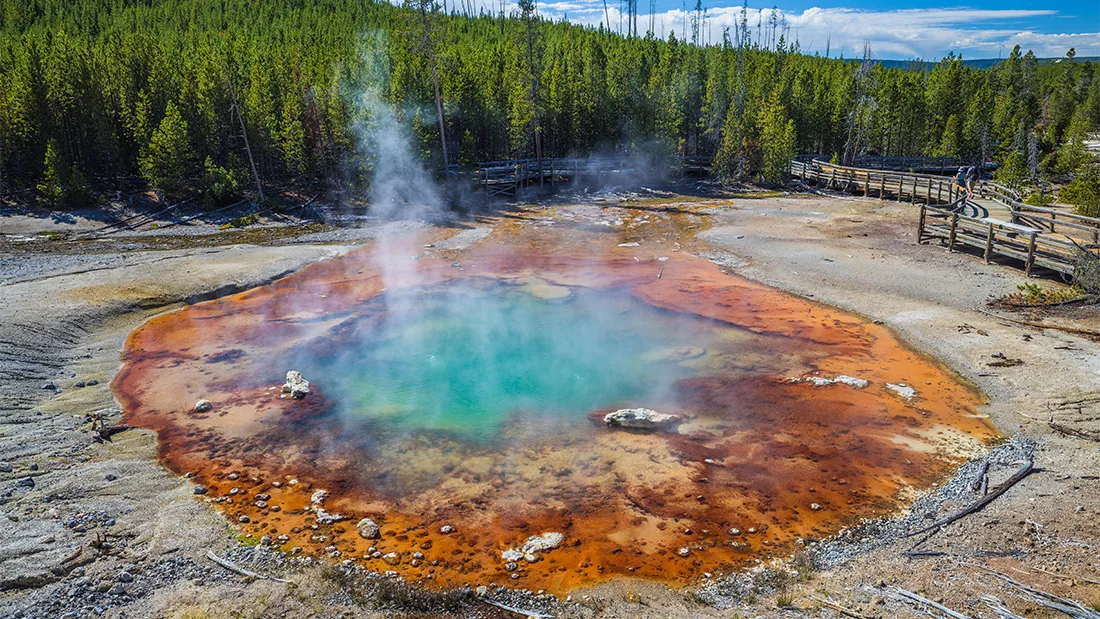
Echinus Geyser Yellowstone Eruption has surprised scientists and visitors after nearly six years of silence. Located in Yellowstone National Park, the geyser recently blasted steaming water up to 30 feet into the air. The renewed activity marks the most consistent eruptions from the geyser since 2017 and highlights the ever-changing geothermal systems beneath Yellowstone.
Thank you for reading this post, don't forget to subscribe!Known as the world’s largest acidic geyser, Echinus has always attracted attention for its unusual chemistry and dramatic eruption patterns. The latest eruptions show that the park’s underground hydrothermal network is constantly shifting and evolving.
Distinctive Structure and Appearance
Echinus Geyser differs greatly from typical cone-shaped geysers. Instead of a narrow vent, it has a wide pool measuring about 66 feet across. Around the pool are sharp, spiky silica formations that resemble sea urchins, which inspired the geyser’s name.
When active, the geyser erupts every few hours. Jets of acidic water shoot between 20 and 30 feet high into the air. The pool’s rim also displays striking colors such as red, orange, and yellow. These colours come from mineral deposits including iron, aluminium, and arsenic.
Although the water is highly acidic, its acidity level is comparable to common liquids like vinegar or orange juice. However, the temperature of the water remains extremely high, making it very dangerous.
Rare Chemistry Behind the Acidic Geyser
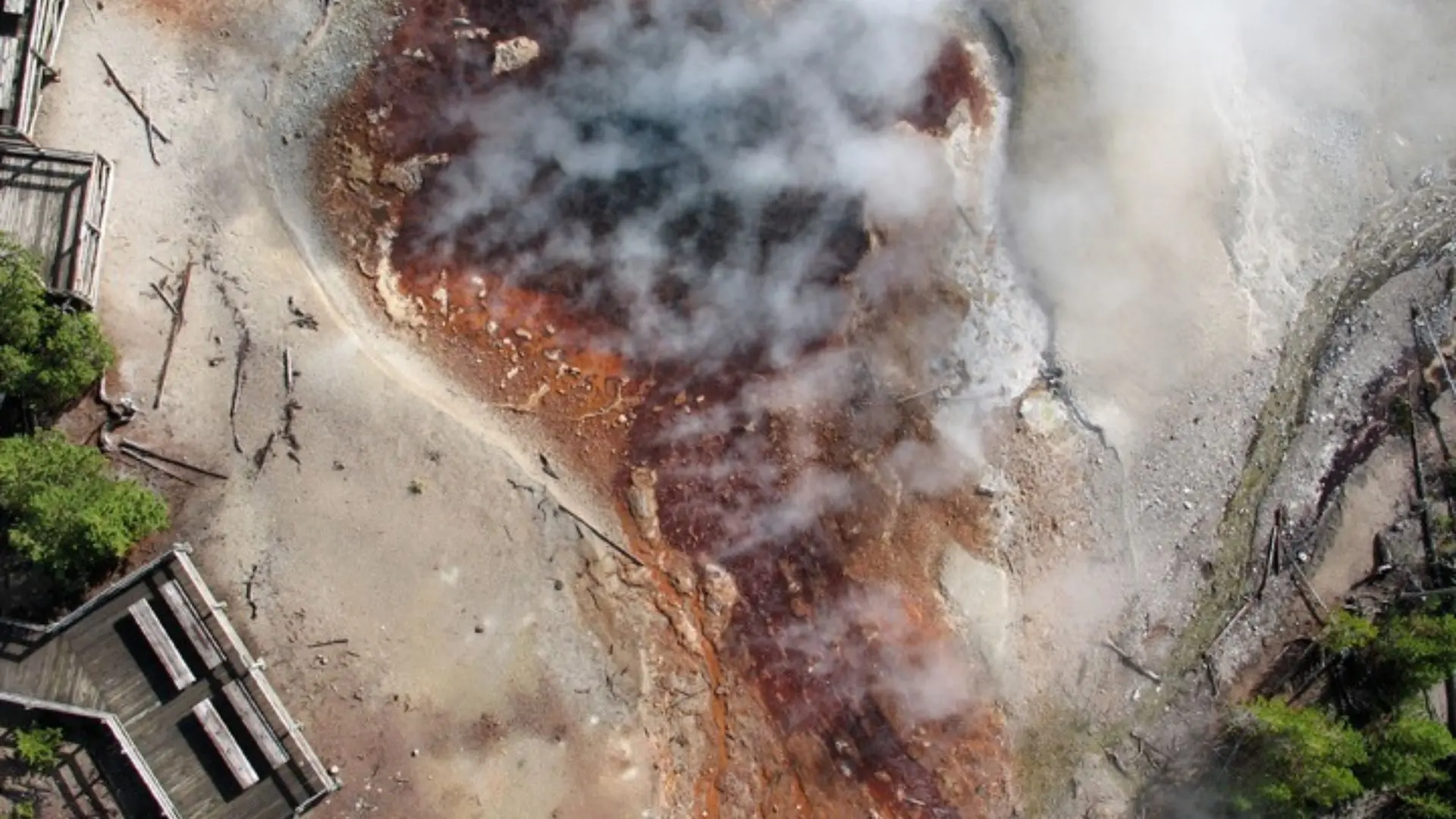
Acidic hot springs rarely become geysers. Strong acid usually dissolves underground silica formations that are needed to trap steam and create pressure for eruptions.
Echinus Geyser is unique because it maintains a delicate balance between neutral groundwater and acidic gases rising from deep underground. This chemical mix allows the geyser to preserve its underground channels while still producing acidic water. Because of this rare balance, large acidic geysers like Echinus are extremely uncommon across the world.
Changing Eruption Patterns Over the Years
The eruption history of Echinus Geyser has changed several times over the decades. In the 1970s, eruptions occurred frequently every 40 to 80 minutes. During the 1980s and 1990s, eruptions became stronger and sometimes reached heights of 75 feet, lasting over 90 minutes.
Activity slowed in the early 2000s, and by December 2020 the geyser had gone quiet. However, in early February 2026, scientists observed increased temperatures in nearby runoff channels. Soon after, eruptions resumed with water jets reaching 20–30 feet and lasting about two to three minutes.
Yellowstone’s Stability and Safety Measures
The Echinus Geyser Yellowstone Eruption occurred around the same time as activity from Steamboat Geyser, the tallest active geyser in the world. This coincidence led to speculation about possible volcanic unrest in Yellowstone.
However, geologists confirm that the volcanic system remains stable. In February 2026, the park recorded 74 small earthquakes, with the largest measuring only magnitude 2.4.
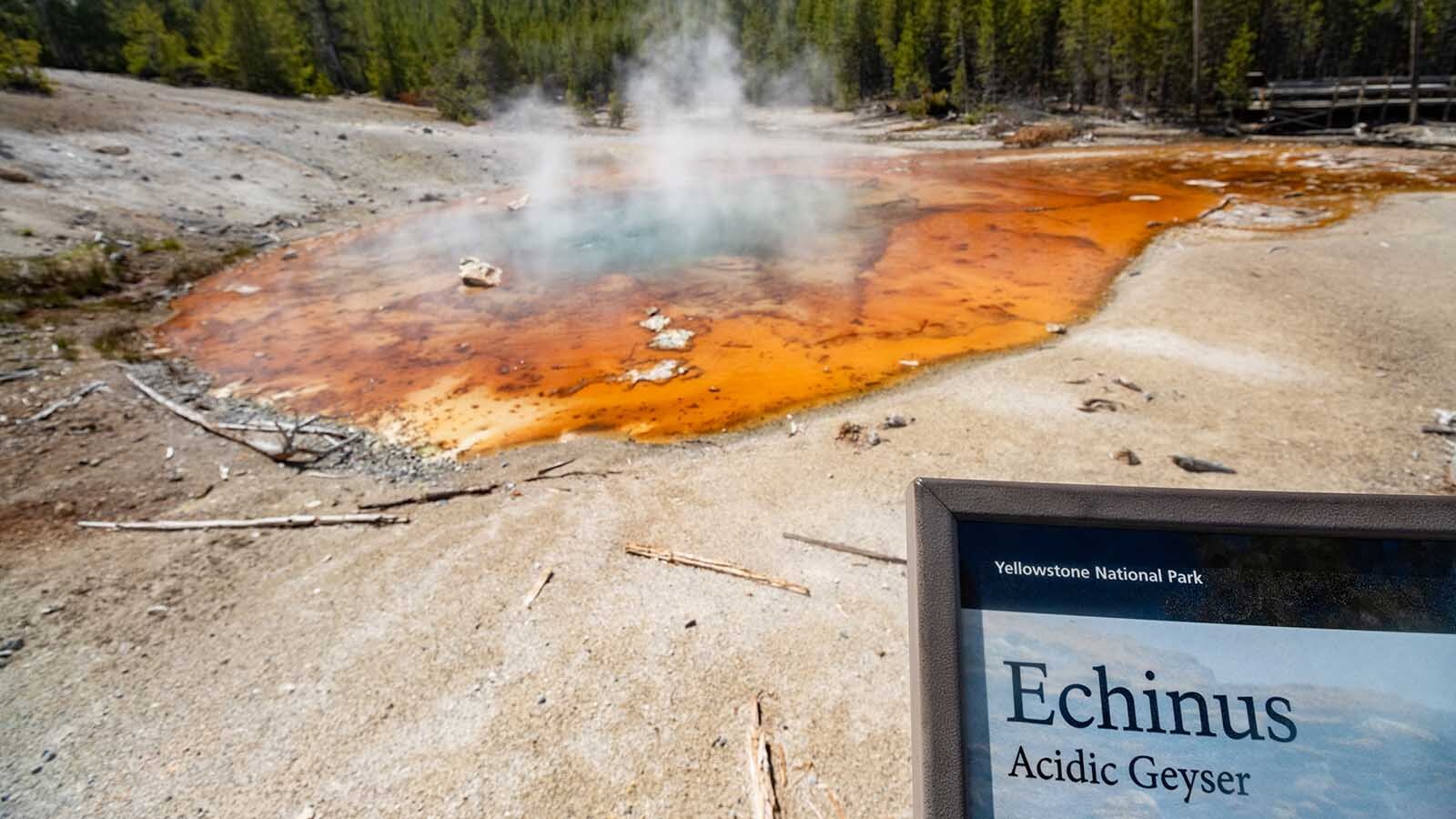
Experts explain that geyser eruptions are mainly driven by shallow groundwater systems rather than magma movement. Despite the spectacular display, Yellowstone’s volcanic activity remains at normal levels. Park authorities continue to advise visitors to stay on boardwalks, as the ground around geysers can be thin and water temperatures often exceed 200°F.