FAIFA Criticises WHO-FCTC COP11 for Excluding Farmers from Key Global Policy Dialogue

FAIFA Criticises WHO-FCTC COP11 as the organisation voices strong objections to the decision by the World Health Organization’s Framework Convention on Tobacco Control (WHO-FCTC) to exclude tobacco farmers and their representatives from the upcoming 11th Conference of the Parties (COP11). The global conference, scheduled to be held in Geneva from November 17 to 22, 2025, will shape critical policy decisions on tobacco control. However, for the communities whose livelihoods depend on tobacco cultivation, the absence of their participation has raised serious concerns.
Thank you for reading this post, don't forget to subscribe!The Federation of All India Farmer Associations (FAIFA) has condemned the decision
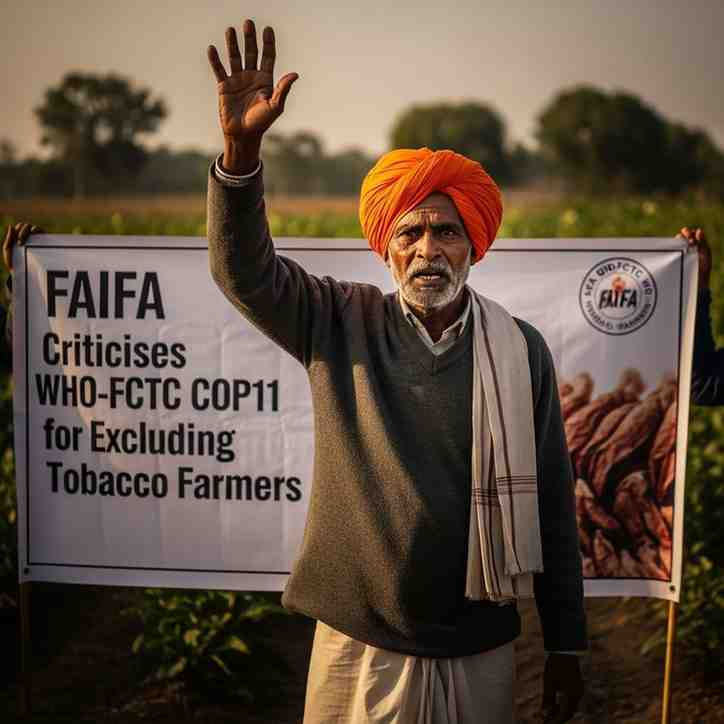
According to FAIFA, the rejection of farmers’ requests to join the discussions as observers or stakeholders is deeply unjustified. The WHO-FCTC Secretariat reportedly stated that the interests of tobacco farmers are “not aligned” with the FCTC’s core objectives. FAIFA has strongly opposed this stance, calling it “illogical and discriminatory.”
FAIFA President P. S. Murali Babu stressed that such exclusion contradicts the values of transparency, inclusiveness, and fairness that bodies like the UN and WHO frequently advocate. He highlighted that farmers are directly impacted by global tobacco-control decisions, making their participation essential. The federation also pointed out that Articles 17 and 18 of the WHO-FCTC mandate member countries to support farmers by ensuring alternative livelihoods and protecting their economic well-being. Denying farmers a platform to express their concerns, therefore, goes against the spirit of the convention itself.
FAIFA argued that tobacco farmers are not adversaries of public health initiatives; rather, they are stakeholders whose livelihoods must be considered when shaping future policies. Policies without representation from those affected especially small and marginal farmers risk creating distress and widening socio-economic divides.
FAIFA’s objections and key arguments in FAIFA Criticises WHO-FCTC COP11
FAIFA reiterated that tobacco farmers have consistently sought constructive engagement with global policymakers. Instead of consultation, the continued effort to keep them outside key decision-making spaces is demoralising. The organisation emphasised that excluding farmers does not make the policy process more objective; rather, it weakens the policy framework by removing critical ground-level perspectives.
FAIFA President Murali Babu described the exclusion as a violation of basic democratic principles. He said that when decisions are made about a sector that sustains millions, ignoring the primary stakeholders is not only unfair but also counterproductive. The federation maintained that sustainable and effective tobacco control can be achieved only through open dialogue, not by silencing the voices of those most impacted.
India’s tobacco sector and economic significance in FAIFA Criticises WHO-FCTC COP11
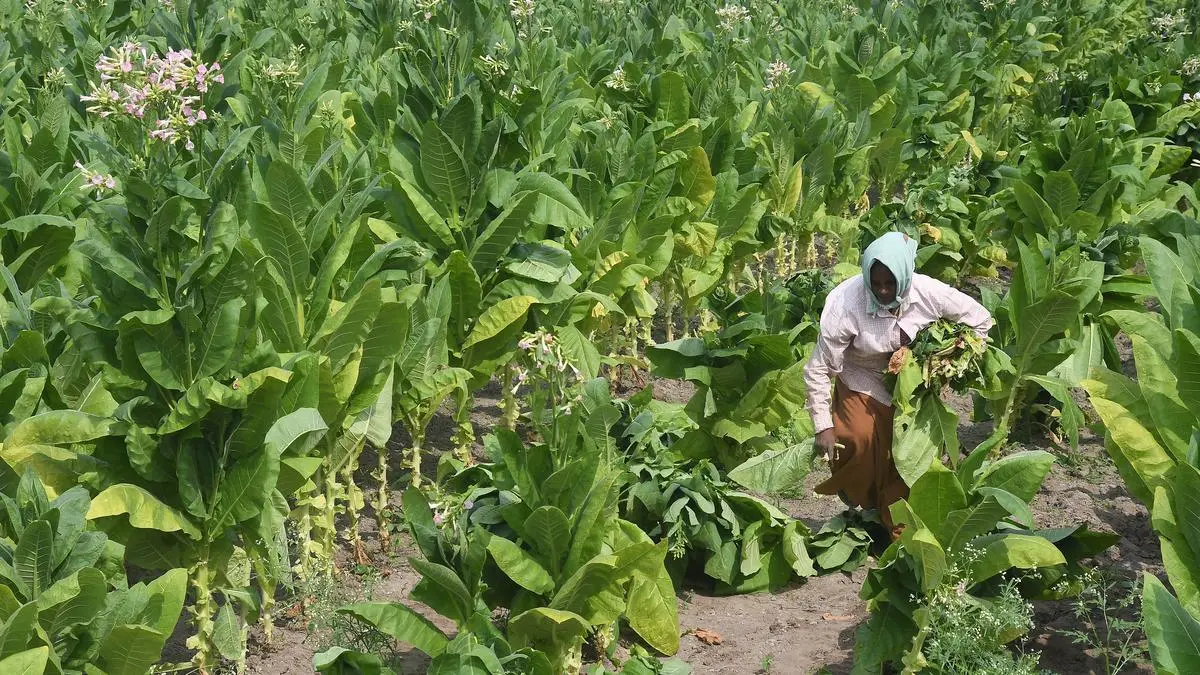
FAIFA also highlighted the substantial role of tobacco in India’s agricultural and rural economy. India is the world’s second-largest tobacco producer after China, and ranks fourth globally in the production of Flue-Cured Virginia (FCV) tobacco one of the most traded tobacco varieties. India is also the second-largest exporter of unmanufactured tobacco, with export earnings reaching ₹12,006 crore in 2023–24.
Beyond production statistics, FAIFA underlined that over 36 million people in India depend on tobacco cultivation, processing, and trade for their livelihoods. This includes farmers, labourers, transporters, warehouse workers, auction platforms, exporters, and other allied sectors. In several states, including Andhra Pradesh, Karnataka, Telangana, and Gujarat, tobacco remains a major cash crop supporting rural families.
FAIFA warned that undermining this sector through unilateral policy decisions could have far-reaching consequences. Many small farmers rely exclusively on tobacco due to the crop’s market viability, especially in regions where alternative crops do not offer comparable income security.
Concerns over policy exclusion and livelihoods in FAIFA Criticises WHO-FCTC COP11
The association fears that the continued exclusion of farmer representatives from WHO-FCTC forums will result in poorly informed policies. Such decisions, made without understanding farmers’ ground realities, could destabilise rural economies and negatively impact millions of families. FAIFA cautioned that policies framed in isolation without considering socio-economic implications may lead to unintended hardships, including income loss, rural unemployment, and increased migration to urban areas.
FAIFA also highlighted that discussions on crop diversification and sustainable alternatives cannot be effective without farmers’ participation. If policymakers genuinely seek transitions toward healthier and more sustainable models, those transitions must involve farmers in the planning process.
FAIFA Criticises WHO-FCTC COP11: FAIFA’s Appeal for Inclusion at COP11
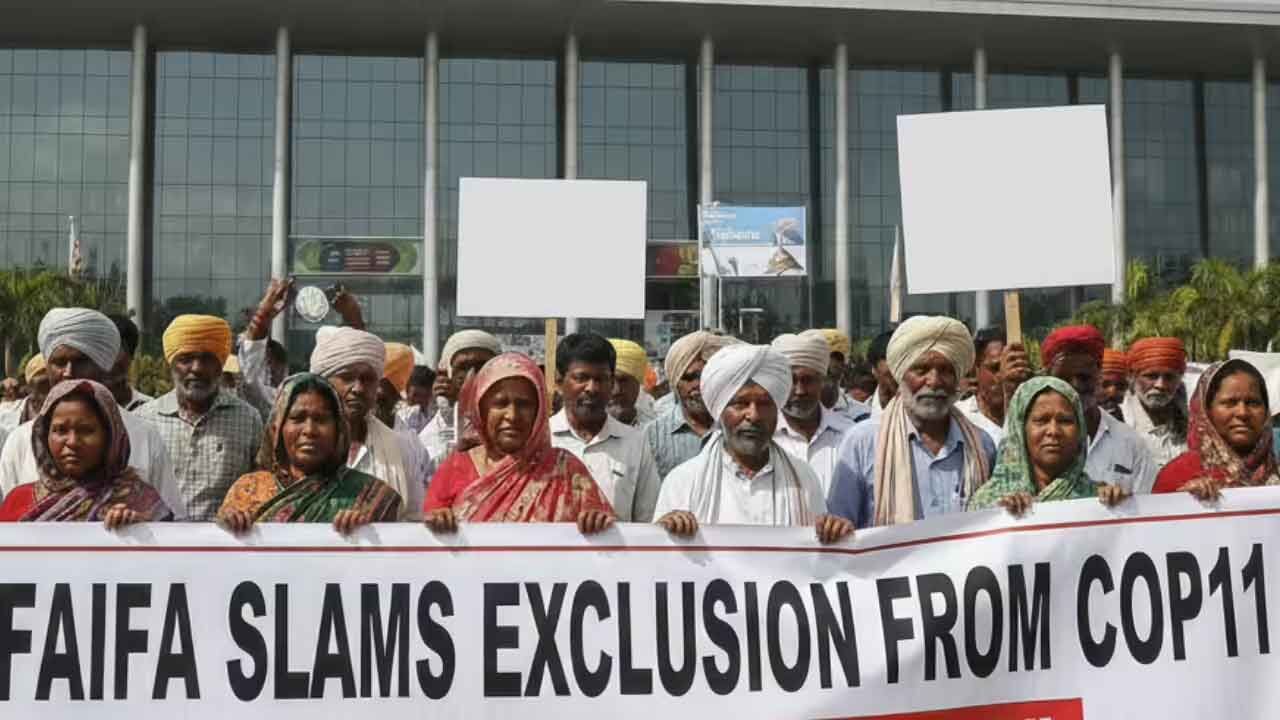
FAIFA has once again urged the WHO-FCTC Secretariat to allow farmer representatives to attend COP11 either as observers or contributors. The organisation believes that an inclusive dialogue is essential to strike the right balance between global health objectives and the economic realities of tobacco-growing communities.
The federation stated that sustainable policymaking must involve every stakeholder, especially those whose livelihoods will be directly impacted by upcoming regulations. Farmers, FAIFA argued, do not oppose public health measures; they simply demand that decisions affecting them be made with their participation and consent.
FAIFA concluded by appealing to policymakers worldwide to adopt a compassionate and inclusive approach. Marginalising farmers in critical global discussions threatens both transparency and fairness. As the world moves toward more stringent tobacco-control norms, FAIFA insists that the voices of millions of farmers must not be silenced. Only through collaboration, trust, and inclusive policymaking can the goals of health protection and livelihood security be achieved together.