Fog Harvesting in Morocco

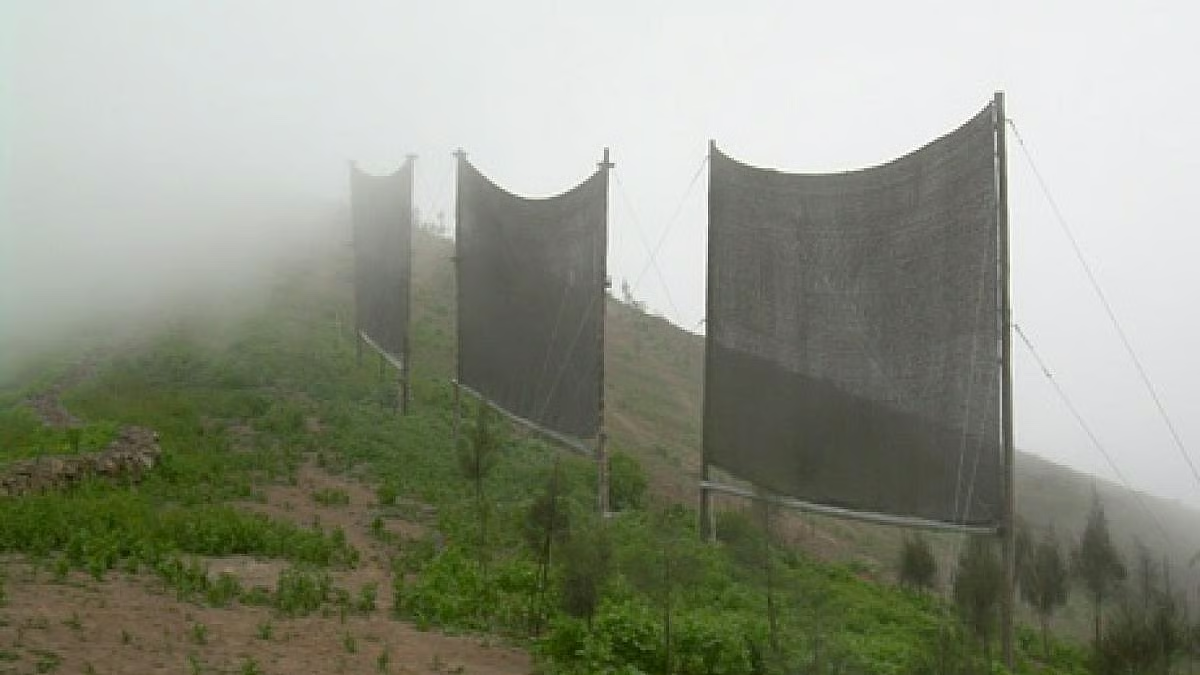
Fog Harvesting is helping communities in southwestern Morocco collect water from moisture-rich mountain fog. On Mount Boutmezguida, near the Sahara Desert, a large network of specially designed mesh nets captures tiny droplets from Atlantic fog and turns them into usable water. The collected water is then transported through pipes to homes in villages in the Aït Baamrane region.
Thank you for reading this post, don't forget to subscribe!The project offers an example of how simple technology can be adapted to local weather conditions to address water shortages, especially in dry and semi-arid areas.
How Fog Harvesting Works
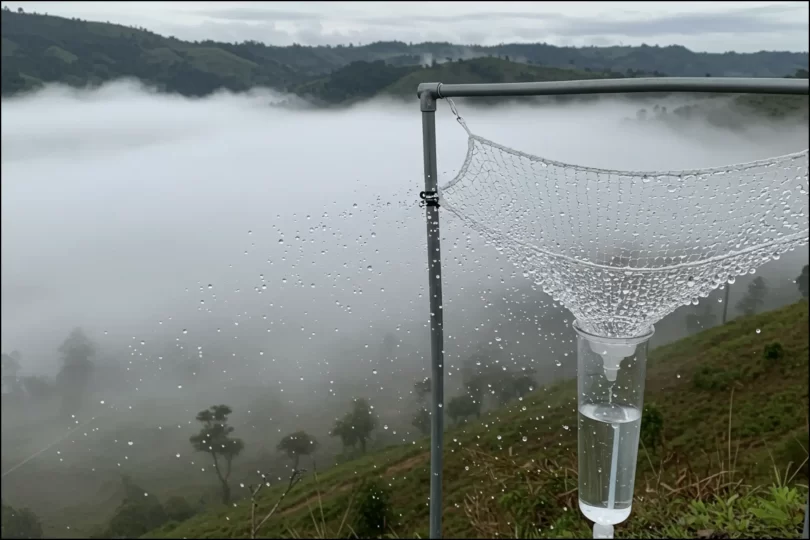
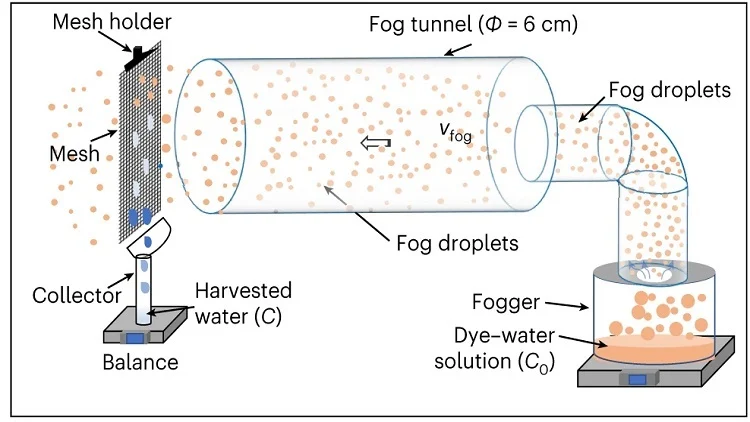
Fog contains millions of very small water droplets suspended in the air. Although these droplets are too small to collect easily using normal containers, specially designed mesh can trap them.
When fog moves through the mesh, tiny droplets stick to the surface and join together. As the droplets become larger, gravity causes them to flow down into collection channels. The water can then be directed into storage tanks or pipes.
Unlike many conventional water systems, the fog-collection network on Mount Boutmezguida can operate without electricity for the basic collection and movement of water.
Mount Boutmezguida Provides the Right Conditions
Mount Boutmezguida is located in the Anti-Atlas Mountains of southwestern Morocco, close to the Sahara Desert. The location is more than 4,000 feet above sea level.
Its position makes the mountain suitable for fog collection. Moist air from the nearby Atlantic Ocean reaches the mountains and forms fog. The regular movement of this fog provides a natural source of atmospheric moisture.
The combination of dry surroundings, mountain elevation and frequent Atlantic fog makes the area particularly suitable for fog-harvesting technology.
CloudFisher Technology Used in the Project
The project uses CloudFisher technology, which relies on specially designed black polymer mesh nets.
The nets are designed to capture water droplets while allowing wind to pass through them. This is important because mountain locations can experience strong winds.
The CloudFisher structures are designed to withstand wind speeds of up to around 120 km/h. The materials used in the system are also designed for safe water collection.
The technology demonstrates how engineering can work with natural weather patterns instead of depending entirely on energy-intensive pumping or conventional water sources.
Dar Si Hmad Manages the Initiative
The fog-collection project is managed by Dar Si Hmad, a women-led Moroccan nonprofit organisation.
The organisation began experimenting with fog collection in 2006. Over time, its work developed into a larger water-supply system serving communities in the region.
The project is particularly important for local households because access to reliable water can be difficult in dry areas. Instead of depending only on groundwater, wells or distant water sources, the system makes use of moisture already present in the atmosphere.
Water Reaches Homes Through Gravity
One of the notable features of the system is its use of gravity-fed pipes.
Because the fog collectors are located at higher elevations, collected water can move downhill through pipes without requiring continuous pumping. This reduces energy requirements and can make the system easier to operate in remote areas.
Water collected from the mesh is channelled into the local distribution network, allowing nearby communities to receive piped water.
This approach combines a natural source of energy- gravity- with a simple collection method to create a relatively low-energy water system.
Supporting Water Security in Dry Regions
Water security has become an important issue in many parts of the world because of changing rainfall patterns, drought, population growth and rising demand for water.
Traditional water sources are under pressure in several dry regions. Groundwater levels can decline when extraction exceeds natural recharge, while rivers and reservoirs may become less reliable during long periods of low rainfall.
Fog harvesting cannot replace conventional water sources everywhere, but it can provide an additional source of water in places where fog occurs regularly.
The Morocco project shows how local climate conditions can be used to develop alternative water solutions.
Collection Volumes Vary With Weather
The amount of water produced by fog-harvesting systems depends heavily on weather conditions, including fog density, wind speed, humidity and the size of the collection network.
Reports from 2025 and 2026 have cited different daily collection figures for the Morocco installations, ranging from around 6,300 litres to 37,000 litres.
The differences are linked partly to the particular installation being measured and changing weather conditions. Coverage has also been reported at different scales, ranging from several villages to a wider network serving up to 16 villages.
This variation shows why fog harvesting is closely connected to local climate conditions.
Fog Research and Community Training
Research and monitoring are also part of the initiative. A Fog Research Center in the region studies the performance of the collection system and supports training for local residents.
Community involvement is important because the long-term success of a water project depends not only on installing equipment but also on maintaining and managing it.
Training local people can help communities understand the technology, monitor the system and carry out routine maintenance.
Expansion of Fog-Harvesting Technology
Dar Si Hmad has also explored the possibility of expanding fog-collection infrastructure to another area in southwestern Morocco.
Technical knowledge linked to CloudFisher has supported these efforts, including work associated with industrial designer Peter Trautwein.
The expansion of such systems could help more communities make use of atmospheric water where suitable fog conditions exist.
A Low-Energy Approach to Water Collection
The Morocco project highlights a growing interest in climate-friendly and locally adapted technologies. Fog harvesting does not require the construction of large dams or deep groundwater extraction at the collection stage.
The basic principle is simple: capture naturally occurring water droplets, collect them and move the water to where people need it.
For communities located near foggy mountains or coastal areas, this approach could become a useful part of broader water-management strategies, particularly when combined with rainwater collection, groundwater protection and efficient water use.