Gaganyaan Drogue Parachute Test Strengthens India’s Human Spaceflight Mission

India’s ambitious human spaceflight programme has reached another important milestone with the successful Gaganyaan Drogue Parachute Test. The achievement marks a crucial step in ensuring the safety and reliability of systems that will carry Indian astronauts into space and bring them back safely to Earth. Conducted under demanding conditions, this test highlights India’s growing technological confidence and its steady progress towards a crewed space mission.
Thank you for reading this post, don't forget to subscribe!Major Boost for the Gaganyaan Mission
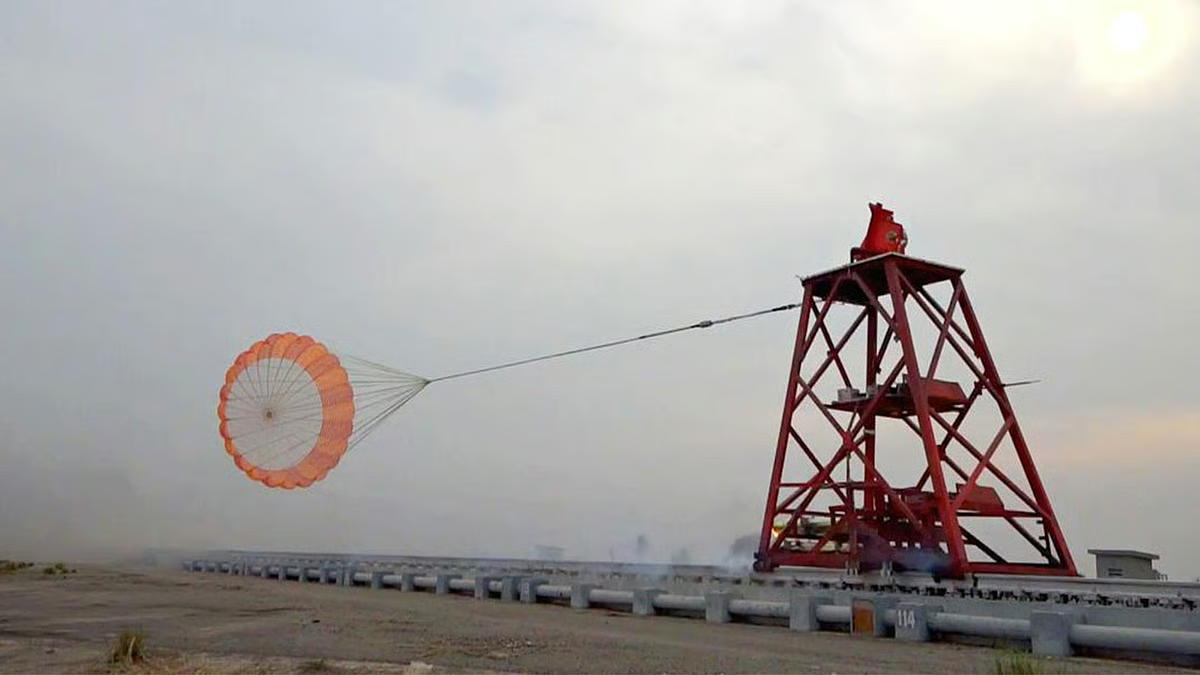
India’s maiden human spaceflight mission received a significant boost after the drogue parachute successfully cleared its qualification-level load test. The test was conducted at the Rail Track Rocket Sledge (RTRS) facility in Chandigarh by Defence Research and Development Organisation in collaboration with Indian Space Research Organisation.
The Gaganyaan mission aims to send Indian astronauts into low Earth orbit using an indigenously developed spacecraft. For such a mission, the reliability of recovery systems is critical. The drogue parachute plays a key role during the re-entry phase, when the crew module faces intense heat, speed, and pressure while returning from space.
High-Intensity Testing at the RTRS Facility
The qualification test was carried out on February 18 at DRDO’s specialised Rail Track Rocket Sledge facility. This advanced facility is designed to simulate extreme conditions by allowing high-speed aerodynamic and ballistic testing. It helps scientists recreate the stresses that spacecraft components experience during real missions.
During the Gaganyaan Drogue Parachute Test, the parachute was subjected to loads higher than what it would face during an actual flight. This approach is taken to confirm that the system has sufficient safety margins. The successful outcome showed that the parachute maintained its structural strength and performed exactly as designed, even under severe stress.
This result confirms India’s capability to design and manufacture high-strength ribbon parachutes that meet the strict safety standards required for human spaceflight.
Role of the Drogue Parachute in Crew Safety
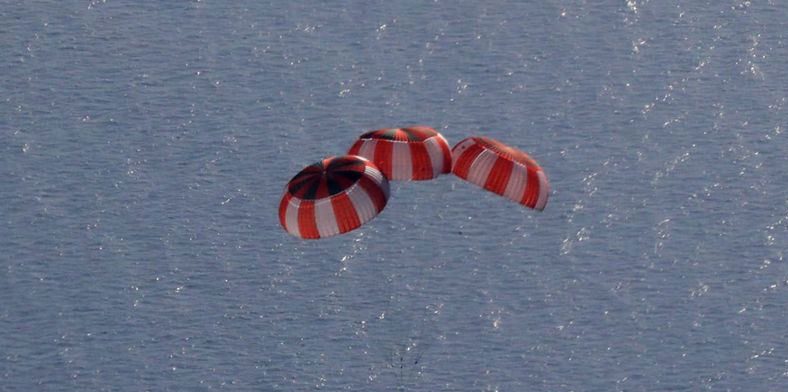
The drogue parachute is one of the most critical components of the crew module’s recovery system. After the spacecraft re-enters the Earth’s atmosphere, the drogue parachute is deployed first. Its job is to stabilise the module and reduce its speed before the larger main parachutes are released.
Without a reliable drogue parachute, the deployment of the main parachutes could become unsafe. The success of this test therefore directly supports the safety of astronauts during the final and most sensitive phase of the mission.
Strong Collaboration Between Indian Agencies
The test reflected close coordination among several Indian scientific institutions. Along with DRDO, key contributions came from the Aerial Delivery Research and Development Establishment (ADRDE) and the Terminal Ballistics Research Laboratory (TBRL). The Vikram Sarabhai Space Centre (VSSC) of ISRO also played an important role in the effort.
Such inter-agency collaboration is essential for complex missions like Gaganyaan, where multiple systems must work together seamlessly. Each organisation brings specialised expertise, ensuring redundancy, reliability, and overall mission safety.
Strategic Importance for India’s Space Ambitions
The Gaganyaan programme is not just a scientific mission but also a symbol of India’s strategic and technological progress. Human-rating of systems, especially recovery systems like parachutes, is one of the toughest challenges in spaceflight. Every component must perform flawlessly to protect human life.
The success of the Gaganyaan Drogue Parachute Test brings India closer to achieving independent human spaceflight capability. It strengthens confidence in the country’s ability to design, test, and qualify critical technologies without relying on foreign systems.
Leadership Applauds the Achievement
India’s leadership welcomed the success of the test. Defence Minister Rajnath Singh and DRDO Chairman Samir V. Kamat congratulated the teams involved. They described the achievement as a major step towards self-reliance under the vision of Atmanirbhar Bharat.
Such recognition reflects the national importance of the Gaganyaan programme and the role it plays in inspiring future generations of scientists, engineers, and astronauts.
Moving Closer to Crewed Spaceflight
With critical technologies like parachute systems undergoing successful validation, the Gaganyaan mission is steadily advancing. Each successful test reduces risk and increases readiness for future crewed missions.
The drogue parachute qualification adds another layer of confidence to India’s human-rated recovery systems. As testing continues across other subsystems, India moves closer to the historic moment when its astronauts will journey into space aboard an Indian spacecraft and return safely home.