


HbA1c Accuracy India Under Scrutiny as New Study Flags Diagnostic Risks

A new scientific study has triggered an important debate about HbA1c Accuracy India, raising questions about how reliably millions of people are being diagnosed and monitored for type 2 diabetes. Published in The Lancet Regional Health, the research suggests that HbA1c testing, a method widely trusted by doctors and public health systems, may not accurately reflect true blood sugar levels in large sections of the Indian population.
Thank you for reading this post, don't forget to subscribe!India already carries one of the world’s highest diabetes burdens. With urban lifestyles, dietary changes, and genetic factors contributing to rising cases, accurate diagnosis is critical. The study warns that depending too heavily on HbA1c values alone could lead to serious gaps in identifying who actually has diabetes and who does not. This has major implications for treatment, prevention, and national health planning.
What HbA1c measures and why it matters
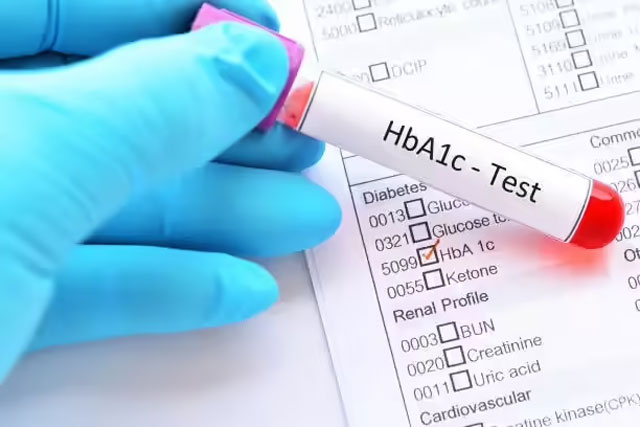
HbA1c is a blood test that estimates average blood glucose levels over the past two to three months. It works by measuring how much glucose is attached to haemoglobin, the protein in red blood cells that carries oxygen. Because red blood cells live for about 120 days, HbA1c is seen as a stable marker that does not require fasting and can be taken at any time of the day.
Globally, HbA1c is used for both diagnosing diabetes and monitoring long-term glucose control. In India too, it has become the backbone of diabetes screening programs, hospital diagnosis, and even large population surveys. However, the new findings suggest that this convenience may come at a cost when applied to a country with diverse genetic, nutritional, and health conditions.
Why HbA1c Accuracy India is being questioned
The study highlights that HbA1c values can be distorted when red blood cells behave differently than expected. In India, this is not a rare issue. Conditions such as anaemia, inherited haemoglobin disorders, and enzyme deficiencies are widespread. These conditions can change the lifespan or structure of red blood cells, leading to HbA1c readings that do not match actual blood glucose levels.
Iron deficiency anaemia, for example, affects a large share of women and children in India and is also common among men in several regions. When haemoglobin levels are low, HbA1c values may appear higher or lower than they truly should be. Similarly, genetic conditions like haemoglobinopathies and glucose-6-phosphate dehydrogenase deficiency can shorten red blood cell lifespan, reducing the time glucose has to bind to haemoglobin. This may result in deceptively low HbA1c readings even when blood sugar is high.
Risk of missed or delayed diabetes diagnosis
One of the most serious implications raised by the study is the risk of misdiagnosis. According to Anoop Misra, corresponding author of the study and chairman of the Fortis C-DOC Centre of Excellence for Diabetes, relying only on HbA1c can delay diagnosis for years in some patients.
The research points out that men with undetected G6PD deficiency may receive a diabetes diagnosis up to four years later than they should. During this time, high blood sugar continues to damage blood vessels, nerves, kidneys, and eyes. On the other hand, some people may be wrongly labelled as diabetic and placed on lifelong medication when their glucose levels are actually normal.
Such errors do not just affect individuals. They also distort national statistics, making it difficult for policymakers to understand the true scale of diabetes in India and plan resources accordingly.
Regional and social disparities make the problem deeper
The issue of HbA1c Accuracy India is especially serious in rural and tribal areas. These regions often have higher rates of anaemia and inherited blood disorders, combined with limited access to advanced laboratory testing. In such settings, HbA1c-based diagnosis may be particularly misleading.
Co-author Shashank Joshi noted that even well-equipped urban hospitals are not immune to these distortions. Differences in laboratory methods, lack of uniform quality control, and variations in testing equipment can further affect results. This means that two people with similar blood glucose levels may receive very different HbA1c readings depending on where and how they are tested.
Impact on public health surveys and policy
Large national surveys in India often depend on HbA1c testing because it is easy to administer and does not require fasting. However, the study warns that such surveys may either overestimate or underestimate the true prevalence of diabetes. In regions with high anaemia rates, HbA1c-based estimates could significantly misrepresent reality.
This has long-term consequences. Health budgets, medicine supply chains, and preventive programs are planned based on these numbers. If the data itself is flawed, the response will also be flawed, leaving many people without timely care while resources may be misdirected elsewhere.
Rethinking diabetes diagnosis in the Indian context
Rather than rejecting HbA1c entirely, the authors call for a more balanced and India-specific approach. They suggest that HbA1c should be used alongside other tests and clinical judgment, especially in populations known to have blood disorders.
In low-resource settings, the study recommends using the oral glucose tolerance test, which measures fasting and two-hour post-glucose values. This method directly reflects how the body handles sugar and is less affected by red blood cell variations. Basic blood tests to detect anaemia or related conditions can also help doctors interpret results more accurately.
In larger hospitals and tertiary care centres, combining standardised HbA1c testing with glucose tolerance tests is advised. For patients who need closer monitoring, newer tools such as continuous glucose monitoring and alternative markers like fructosamine may offer better insights into long-term glucose control.
A call for careful use of HbA1c in India
The findings do not suggest abandoning HbA1c testing, but they clearly show that one size does not fit all. HbA1c Accuracy India depends heavily on individual health conditions, regional factors, and laboratory standards. As diabetes continues to rise across the country, adopting diagnostic strategies that reflect India’s unique biological and social realities will be essential.
By moving beyond exclusive reliance on a single test and embracing a more flexible framework, India can improve early detection, reduce complications, and ensure that diabetes care reaches those who truly need it.