
Hera Asteroid Mission Reaches DART Site

Hera Asteroid Mission has reached the Didymos binary asteroid system to investigate the location where NASA’s DART spacecraft struck the asteroid moonlet Dimorphos in 2022. The European Space Agency (ESA) spacecraft arrived in early November 2026 and will study the effects of the historic impact.
The mission is an important step in understanding how humans could protect Earth from a potentially dangerous asteroid. By examining the impact site and the physical properties of the asteroids, scientists hope to improve the technology used to change the path of a space object.

Hera Reaches the Didymos Asteroid System
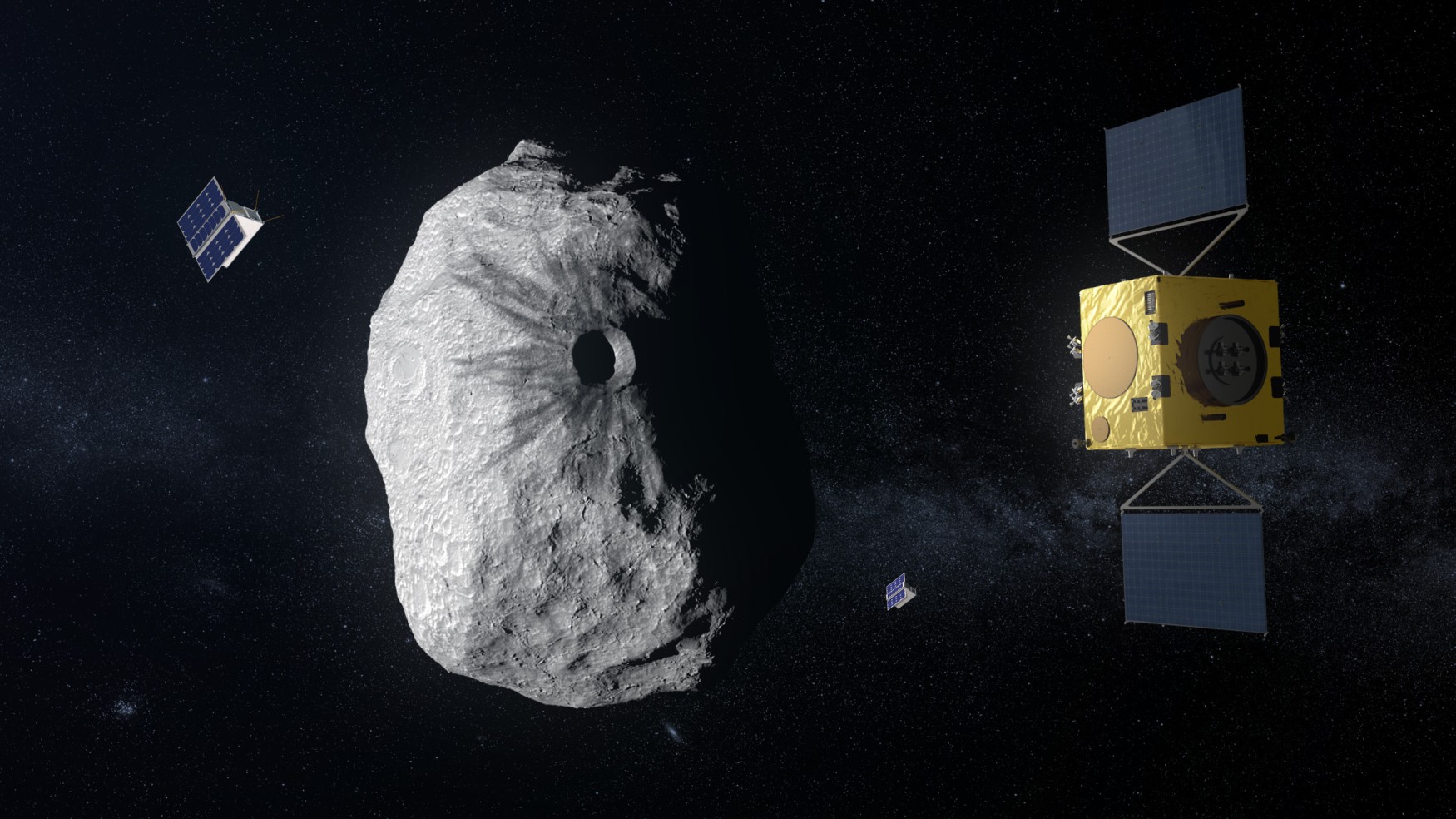
Hera is now at the Didymos binary asteroid system, which consists of the larger asteroid Didymos and its smaller moonlet, Dimorphos. The spacecraft was sent to examine the changes caused by NASA’s Double Asteroid Redirection Test (DART).
On 18 October 2026, Hera’s Asteroid Framing Camera captured images showing Didymos and Dimorphos as two separate objects. The spacecraft was approximately 1,280 kilometres away when it took these images.
Hera performed braking manoeuvres on 15 and 22 October to reduce its speed and prepare for its approach. These operations helped the spacecraft enter orbit around the asteroid system.
On 5 November, Hera captured a closer image of Didymos from a distance of around 60 kilometres. The image showed several surface features, including boulders, craters and a ridge around the asteroid’s equator.
Why Is Hera Studying the DART Impact Site?
NASA’s DART mission made history on 26 September 2022 when its spacecraft deliberately crashed into Dimorphos. The purpose was to test whether a spacecraft could change the movement of an asteroid through a direct impact.
The experiment successfully changed Dimorphos’s orbit around Didymos. The orbital period became 33 minutes shorter, a greater change than initially predicted.
However, scientists still need to understand exactly how the impact produced this result. The change depends not only on the force of the spacecraft but also on the asteroid’s density, structure, surface material and the amount of debris thrown into space.
Hera will investigate the impact area and collect detailed information about both asteroids. These findings will help scientists understand how much momentum was transferred during the collision.
Hera Will Study the Structure of Both Asteroids
Hera is designed to map Didymos and Dimorphos and measure important physical properties. One of its main tasks is to determine the mass of Dimorphos and examine its internal structure.
The spacecraft carries scientific instruments that will collect information about the asteroids’ surfaces and surroundings. It will also work with two smaller spacecraft, called CubeSats, named Milani and Juventas.
These smaller spacecraft will help investigate areas that Hera cannot study in the same way from its main position. Their measurements will add to the understanding of the asteroids’ composition and internal features.
Juventas Will Explore the Asteroid’s Interior
The Juventas CubeSat carries an instrument called JuRa, a radar designed to examine the internal structure of an asteroid.
It operates in the 50-70 MHz frequency range and is designed to achieve a resolution of around 10-15 metres. Radar measurements can help scientists study the layers beneath an asteroid’s surface.
This information is important because an asteroid may contain loose material, empty spaces, tightly packed rocks or a mixture of different structures. These properties can affect how an asteroid responds when hit by a spacecraft.
Milani Will Study Surface Composition
The Milani CubeSat will focus on the surface composition of Didymos and Dimorphos. It will collect spectral information to help scientists identify the materials present on the asteroids.
Spectroscopy allows researchers to study how materials reflect or absorb different wavelengths of light. This can provide clues about the minerals and other substances found on an asteroid.
Milani will also look for dust around the asteroid system. Studying this dust can help scientists understand material released during the DART impact and other surface processes.
How Hera Supports Planetary Defence
Planetary defence involves finding and studying asteroids that could pose a risk to Earth and developing ways to reduce that risk.
The DART mission demonstrated that a spacecraft could change an asteroid moonlet’s orbit through a kinetic impact. Hera will now provide detailed information about the results of that experiment.
Understanding the asteroid’s mass, density, surface and internal structure is essential for improving future impact calculations. A technique that works differently on asteroids with different physical properties may require careful planning before it is used in a real emergency.
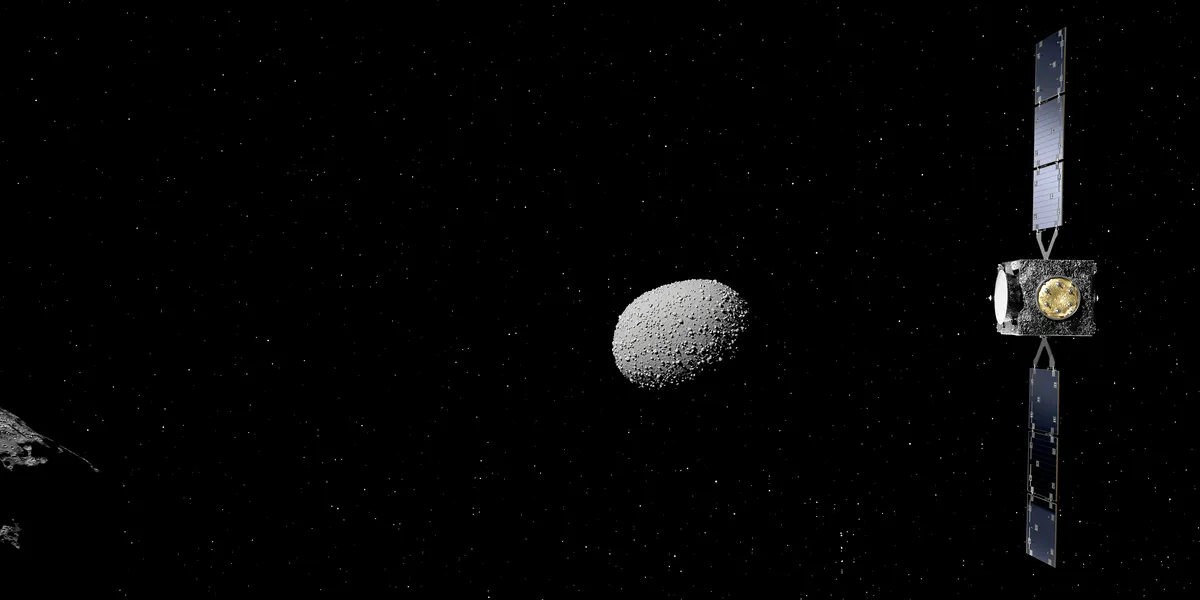
The findings from Hera could help scientists design more effective asteroid-deflection missions in the future.
Hera’s Journey from Earth to Didymos
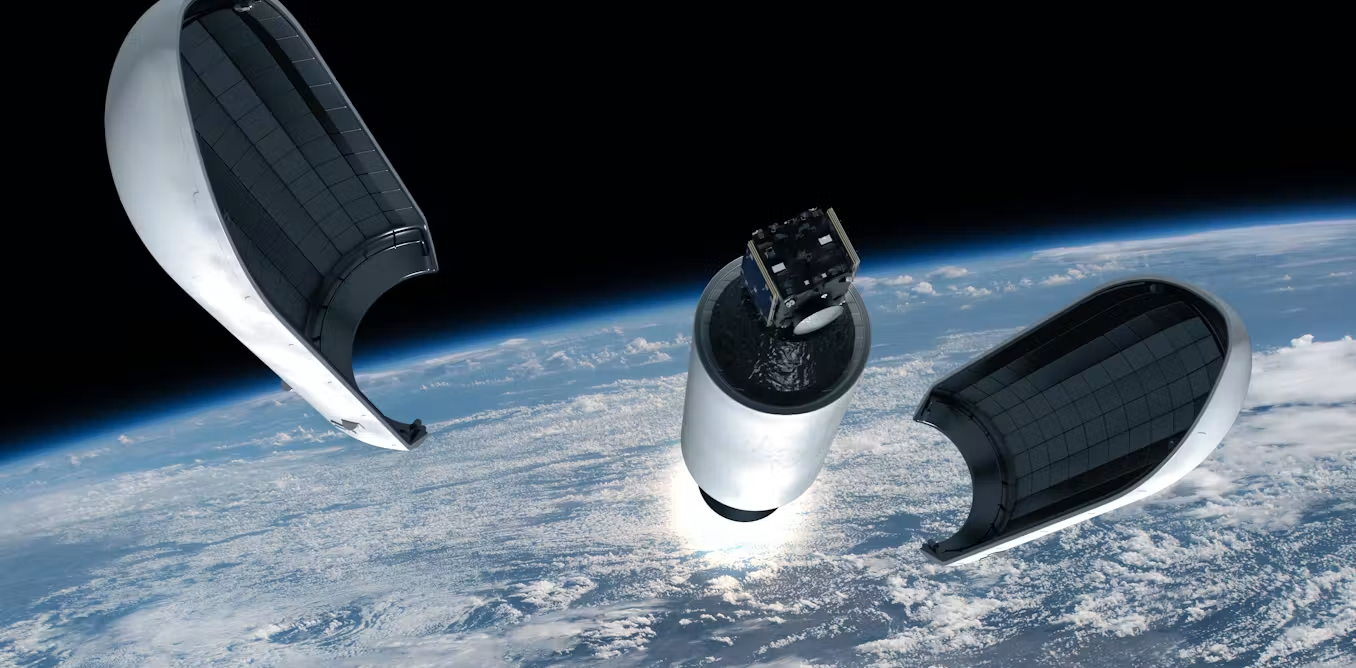
Hera was launched on 7 October 2024 aboard a SpaceX Falcon 9 rocket. It travelled through space to reach the Didymos system and arrived around a month earlier than its original schedule.
The mission is now moving towards detailed observations of Dimorphos and the area affected by the DART collision. Detailed images of Dimorphos are expected on 25 November 2026.
These observations will help researchers examine the impact site more closely and understand how the asteroid changed after the collision. The mission will add valuable information to ongoing international efforts to understand near-Earth asteroids and improve Earth’s planetary-defence capabilities.