
IIM Kozhikode QS Ranking Breaks into Global Top 100 in 2026

IIM Kozhikode QS Ranking has made headlines as the Indian Institute of Management Kozhikode, also known as IIM-K, entered the global top 100 in the QS World University Rankings by Subject 2026 for the first time. This is a proud moment not just for the institute but also for India’s growing presence in global education. The achievement reflects how Indian institutions are steadily improving in quality, research, and global reputation, especially in the field of management studies.
Thank you for reading this post, don't forget to subscribe!IIM Kozhikode QS Ranking Marks a Global Milestone
The latest ranking shows that IIM Kozhikode is now among the top 100 institutes in the world for management education. This is a big step forward for the institute, which has been working consistently to improve its teaching quality, research output, and industry connections.
Over the years, IIM Kozhikode has built a strong reputation for offering modern education, encouraging innovation, and preparing students for real-world challenges. Entering the top 100 list shows that the institute is now being recognised globally for its efforts. It also highlights how Indian management education is gaining respect on the world stage.
Understanding QS World University Rankings
The Quacquarelli Symonds, commonly known as QS, publishes these rankings every year. These rankings are widely followed across the world and are considered one of the most trusted systems to measure the performance of universities.
QS evaluates institutions based on several important factors. These include how well the institute is known among academics, how employers view its graduates, the quality of research work, and how successful students are after completing their studies. All these factors together give a clear picture of how an institution performs globally.
How the Ranking System Works
The QS ranking system uses a detailed method to judge universities fairly. It focuses on five main areas, often called lenses. These include research and discovery, employability and outcomes, global engagement, learning experience, and sustainability.
Each of these areas has specific indicators. For example, research quality is measured by how often research papers are cited, while employability is judged by how companies rate the graduates. Global engagement looks at international collaborations and diversity, while learning experience focuses on teaching quality. Sustainability measures how institutions contribute to society and the environment.
This structured approach ensures that rankings are not based on just one factor but on a balanced evaluation of many aspects.
India’s Rising Presence in Global Rankings
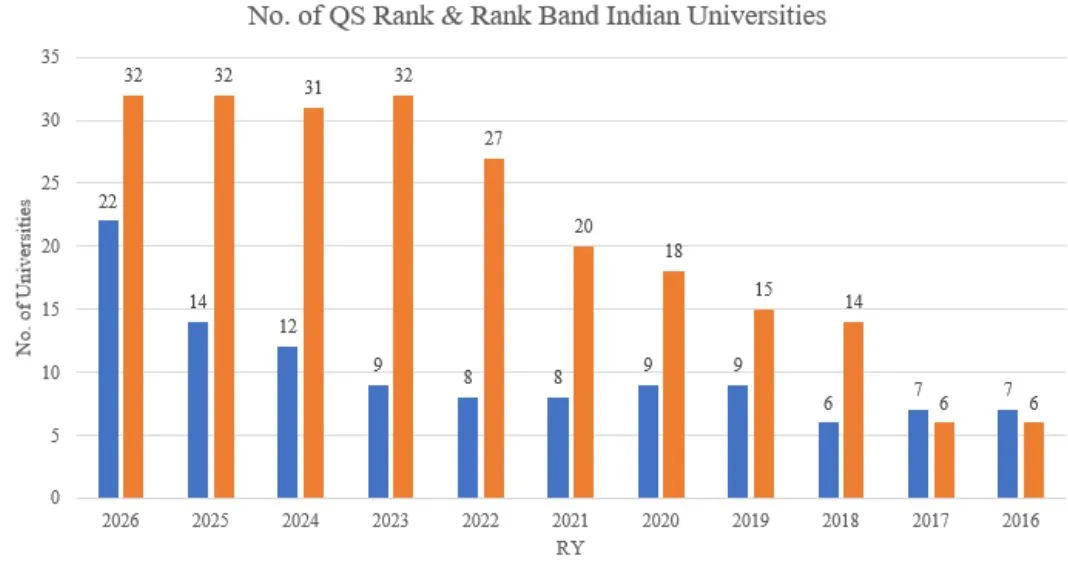
India has shown strong progress in the 2026 QS rankings. A large number of Indian institutions have entered the list this year, showing the country’s rapid growth in higher education.
With many new entries, India now stands among the top countries in terms of institutional presence, following nations like the United States, China, and the United Kingdom. This growth shows that Indian institutions are improving in research, teaching, and global partnerships.
In particular, the field of computer science has seen impressive results, with several Indian institutions making it into the global top 100. This indicates that India is not only growing in management education but also in technical and scientific fields.
Other Indian Institutes Shine Bright
Along with IIM Kozhikode, other Indian institutions have also performed well. The Indian Institute of Technology (ISM) Dhanbad and the Indian Institute of Management Ahmedabad have achieved some of the highest ranks among Indian institutes.
IIT (ISM) Dhanbad continues to do well in areas like mining and mineral engineering, where it has built a strong global reputation. On the other hand, IIM Ahmedabad has secured a place among the top institutions in business and management studies, even entering the top 25 globally in certain areas.
These achievements show that Indian institutions are becoming more competitive and are gaining recognition in specialised fields across the world.
What This Means for the Future
The entry of IIM Kozhikode into the top 100 is more than just a ranking milestone. It shows that Indian education is moving in the right direction. With better teaching methods, stronger research, and global collaborations, institutions in India are becoming more attractive to students worldwide.
This achievement will also encourage other institutions to improve and aim for higher standards. As more Indian institutes enter global rankings, the country’s reputation in education will continue to grow.
In the coming years, we can expect even more progress as Indian institutions focus on quality, innovation, and global engagement. The IIM Kozhikode QS Ranking is a clear sign that India is becoming a strong player in the global education landscape.