India Sovereign Rating Upgraded to A-

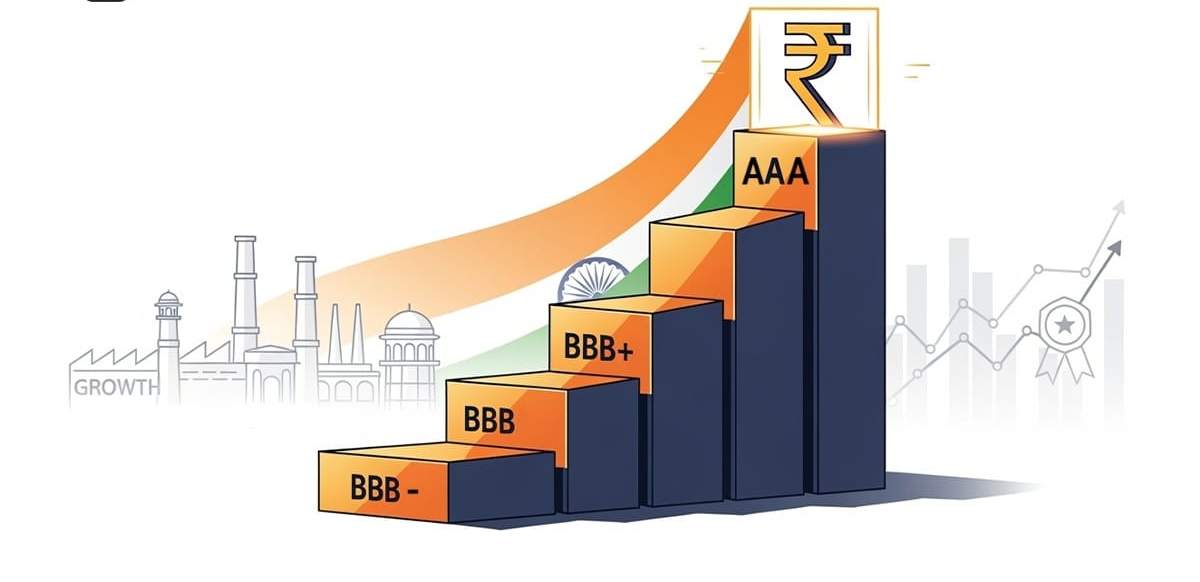
India Sovereign Rating has received a major boost after the Japan Credit Rating Agency (JCR) upgraded the country’s long-term foreign-currency and local-currency issuer ratings to A- from BBB+ on 2 September 2026. JCR also gave India a Stable outlook and increased the country ceiling to A. The upgrade reflects growing confidence in India’s economic strength, financial sector stability and long-term growth prospects.
JCR Upgrades India’s Credit Rating India Sovereign Rating
The latest decision by JCR places India in a stronger position on the agency’s sovereign rating scale. A sovereign credit rating is an assessment of how capable and willing a country is to repay its debt. It is closely watched by investors, financial institutions and international businesses because it provides an indication of a country’s credit risk.The upgrade from BBB+ to A- is significant because it signals an improvement in JCR’s assessment of India’s ability to manage its financial obligations. The Stable outlook means JCR does not currently expect a major change in India’s rating direction in the near term.The decision comes at a time when India continues to focus on economic growth, infrastructure development, digital services and financial sector reforms.


Strong Economic Growth Supports the Upgrade India Sovereign Rating
One of the major reasons behind the rating decision is India’s strong economic performance. JCR noted that India’s real GDP grew by 7.7% in FY2026. The agency linked this growth mainly to strong private consumption and continued public investment.Private consumption is an important part of the Indian economy because household spending supports demand for goods and services. At the same time, government investment in roads, railways, airports, digital infrastructure and other projects has helped support economic activity.India has also remained one of the faster-growing major economies. Strong domestic demand provides an important support to growth because the country is not completely dependent on external markets.
Banking Sector Shows Greater Stability
The condition of India’s banking sector was another factor highlighted by JCR. The agency noted that the banking system’s non-performing loan ratio was below 2%.
Non-performing loans are loans where borrowers have stopped making payments according to the required schedule. A lower level of such loans generally indicates better asset quality and reduces pressure on banks.Over recent years, Indian banks have strengthened their balance sheets and improved their ability to manage stressed assets. A healthier banking system can support economic growth by allowing banks to provide more credit to businesses and households.The improvement in banking sector stability has therefore become an important part of the broader economic picture considered by international rating agencies.
GST and Digital Public Infrastructure
JCR also pointed to structural reforms undertaken by India. Among them are the Goods and Services Tax (GST) and the development of digital public infrastructure.GST brought several indirect taxes under a common national tax framework and was introduced in India in 2017. Over time, the system has become an important part of tax administration and revenue collection.
India’s digital public infrastructure has also expanded rapidly. Digital systems have changed the way people make payments, access government services and complete financial transactions. Platforms and systems connected with digital identity, payments and document services have helped create a wider digital ecosystem.These reforms are viewed as factors that can improve economic efficiency and support formalisation of economic activity.
Growth Expected to Remain Above 6%
JCR expects India’s real GDP growth to remain above 6% in FY2027. This projection reflects expectations of continued domestic demand and investment.
India’s large consumer market, expanding infrastructure and growing digital economy remain important drivers of future growth. Manufacturing, services, technology, renewable energy and infrastructure are also receiving increased attention as the country seeks to expand economic activity.The growth outlook is particularly important for investors because sustained economic expansion can improve government revenue, employment opportunities and business activity.
Fiscal Challenges Remain
Although JCR upgraded India’s sovereign rating, the agency also highlighted some continuing risks. High government debt remains an important fiscal concern. Managing government borrowing while maintaining investment and public spending will remain a key policy challenge.
The agency also referred to the complexity of intergovernmental fiscal relations in India. The financial relationship between the Union government and state governments plays an important role in managing public finances and development spending.These factors continue to keep fiscal deficits relatively elevated despite the positive growth outlook.
What the A- Rating Means for India
The new A- rating can improve international confidence in India’s financial position. A stronger sovereign rating may support investor sentiment and can potentially help reduce the perceived risk associated with Indian government and corporate borrowers.Credit ratings are not the only factor investors consider. Inflation, interest rates, currency movements, government debt, geopolitical developments and global economic conditions also influence investment decisions.The Stable outlook provides an additional positive signal because it indicates that JCR currently sees the rating as broadly balanced rather than expecting an immediate upgrade or downgrade.

India’s Changing Economic Position
The JCR decision comes amid wider changes in India’s economic landscape. The country is increasing investment in infrastructure, expanding digital services and encouraging domestic manufacturing. At the same time, India is working to attract foreign investment and strengthen its position in global supply chains.Recent developments in areas such as artificial intelligence, semiconductors, renewable energy, electric mobility and digital payments are creating new opportunities for economic expansion.India’s growing role in global trade and international economic cooperation is also increasing attention on its fiscal and financial policies.The latest rating upgrade therefore reflects not only the current growth rate but also JCR’s assessment of India’s broader economic capacity and structural improvements.
JCR’s View of India’s Future
The upgrade to A-, along with a Stable outlook, places greater emphasis on India’s economic resilience. Strong GDP growth, improved banking sector conditions, continued public investment and structural reforms were among the key factors supporting the decision.At the same time, managing government debt and fiscal pressures will remain important for maintaining long-term economic stability. India’s ability to sustain high growth while improving public finances will continue to influence how international rating agencies assess the country in the coming years.