IIT Madras AI Learning Partnership

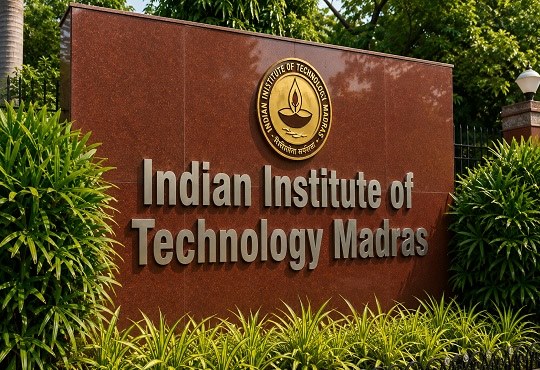
IIT Madras AI learning technology is set to receive a new push through a partnership between the Indian Institute of Technology Madras (IIT Madras) and the UNESCO Mahatma Gandhi Institute of Education for Peace and Sustainable Development (UNESCO MGIEP). The two institutions signed a cooperation agreement on September 1, 2026, to work on next-generation artificial intelligence and immersive learning technologies.
The partnership brings together IIT Madras’s expertise in artificial intelligence, Extended Reality (XR) and game design with UNESCO MGIEP’s work in Social and Emotional Learning (SEL). The institutions plan to develop digital tools that can support teachers and students while making technology-based education more accessible.

IIT Madras AI Partnership Focus
The IIT Madras AI initiative will focus on creating open-source digital learning tools that can be used in classrooms. The tools are expected to support personalised learning, interactive lessons and teaching methods that give greater importance to individual learners.
A key part of the project is affordability and accessibility. The partners intend to develop AI-based models that can work in low-bandwidth environments. This could be useful for schools and learners who do not have access to high-speed internet or expensive digital infrastructure.
The approach reflects the growing use of AI in education, where technology is increasingly being explored to help teachers prepare lessons, support students and create more interactive learning experiences.
Combining AI with Social and Emotional Learning
The partnership will connect artificial intelligence with Social and Emotional Learning. SEL focuses on skills such as self-awareness, managing emotions, understanding others, building relationships and making responsible decisions.
Rather than using AI only to deliver academic content, the project aims to explore ways technology can support wider learning and personal development. Digital tools could help teachers include SEL-based activities in lesson plans and classroom assessments.
This approach is becoming increasingly relevant as education systems look at how technology can support students beyond traditional textbook-based learning.
Role of UNESCO MGIEP
UNESCO MGIEP is a UNESCO Category 1 institute based in India. Its work focuses on education for peace and sustainable development, with particular attention to social and emotional competencies and digital learning.
Through the new agreement, UNESCO MGIEP will bring its experience in education, learning sciences and SEL to the development of the new tools. Its involvement is expected to help ensure that the technology is designed around educational needs rather than technology alone.
The partnership also connects the project with wider global discussions about how digital technologies and AI can be used responsibly in education.
IIT Madras and Immersive Technology
IIT Madras brings strong research capabilities in artificial intelligence and immersive technologies. Its Experiential Technology Innovation Centre (XTIC) works in areas including Extended Reality and human-computer interaction.
Extended Reality includes technologies such as virtual reality, augmented reality and mixed reality. These technologies can create interactive learning environments where students can explore concepts through simulations and digital experiences.
Combining XR with AI could allow future learning tools to respond more effectively to individual users. For example, interactive environments could be designed to adjust activities based on a learner’s progress or provide additional support when required.
Open-Source Tools for Classrooms
A major feature of the IIT Madras AI project is the planned use of open-source technology. Open-source tools can be accessed, modified and shared according to their licensing terms.
This model can make educational technology easier to adapt for different schools, languages and learning environments. It can also reduce dependence on expensive commercial platforms.
The focus on low-cost and low-bandwidth solutions is especially important for expanding digital education beyond schools with strong technological infrastructure. Tools that require fewer resources could potentially reach a wider group of learners.
Joint Research and Faculty Exchange
The agreement also covers joint research in educational technology, pedagogy and learning sciences. Researchers and faculty members from both institutions will have opportunities to work together on new ideas and applications.
The partners will also support exchanges between faculty members and researchers. Such collaboration can bring together technical knowledge from AI and immersive technology with expertise in education and learner development.
The project is expected to include AI-supported scaffolding for lesson plans and assessments that incorporate social and emotional learning concepts.
AI and the Future of Education
The IIT Madras AI partnership comes at a time when artificial intelligence is rapidly changing the education sector. Schools, universities and education technology companies around the world are exploring AI for personalised learning, content creation, assessment support and classroom assistance.
At the same time, questions about affordability, digital access, privacy and responsible use of AI remain important. Technology designed for education needs to work effectively while keeping learners and teachers at the centre of the process.
The cooperation between IIT Madras and UNESCO MGIEP aims to address some of these challenges by combining AI, immersive technology and education research. Its focus on open-source tools and low-bandwidth access could also support wider use of digital learning technologies in different educational settings.
The partnership marks another step in India’s growing role in developing AI-based educational technologies and could lead to new tools that combine advanced technology with social, emotional and learner-centred approaches.