

India Wrestling Shines in 2026

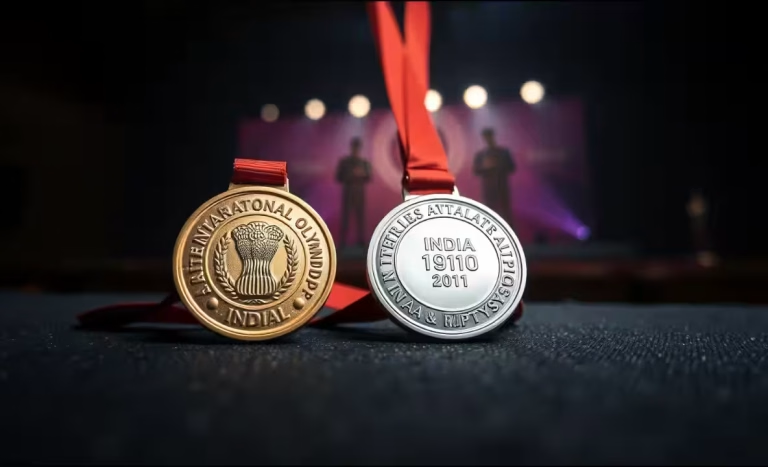
India Wrestling produced its strongest Asian Games campaign in more than six decades at Aichi-Nagoya 2026, finishing with six medals: two gold, two silver and two bronze. The result matched India’s six-medal total from Hangzhou, but the two gold medals made the 2026 campaign a major improvement. India had last won six or more wrestling medals at an Asian Games in 1962, when it collected 12 medals in Jakarta.
Thank you for reading this post, don't forget to subscribe!Two Gold Medals Lead India’s Campaign
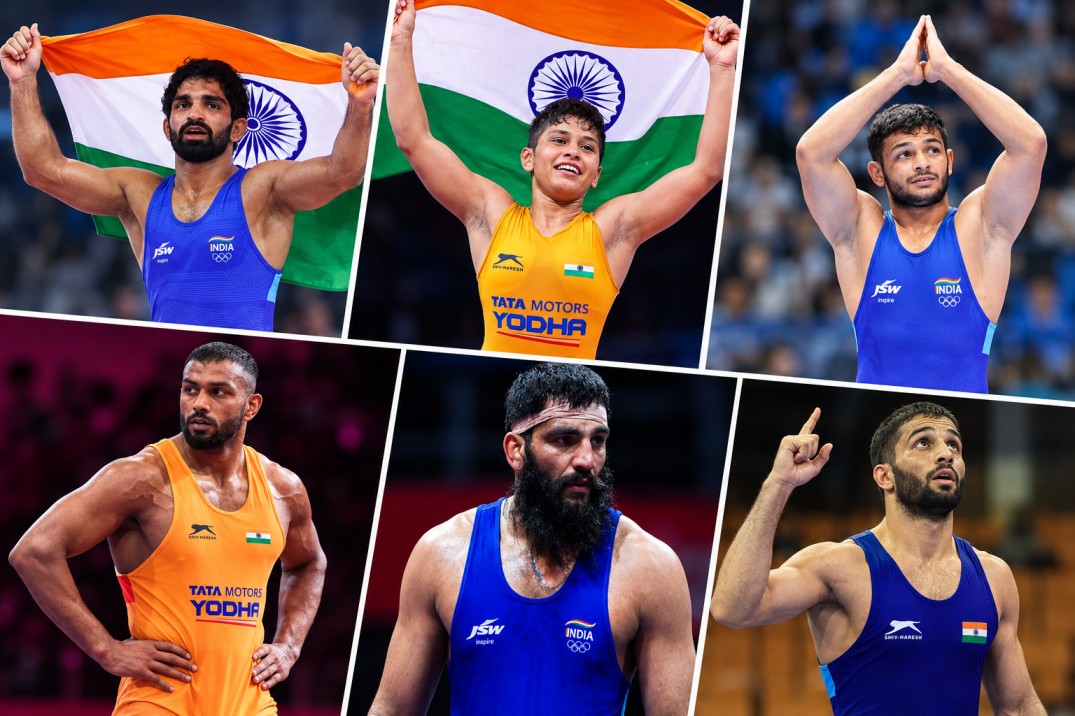
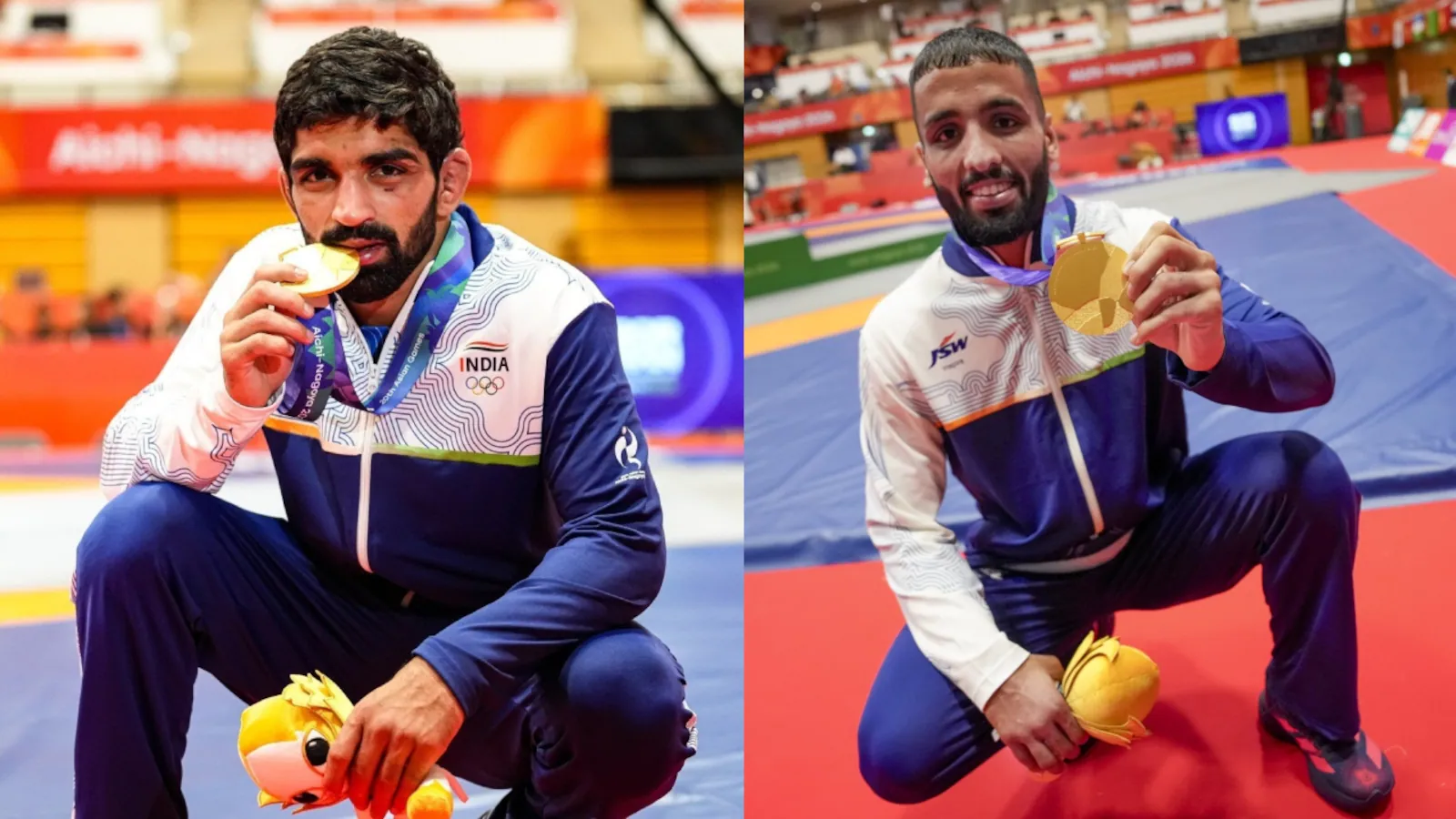
Aman Sehrawat and Sujeet Kalkal gave India its two gold medals in men’s freestyle wrestling. Sujeet won the 65kg title on October 2 after producing a dramatic comeback against Tajikistan’s Abdulmazhid Kudiev. He recovered from a seven-point deficit to win the final 10-9. The victory came a day after he had also defeated Olympic champion Kotaro Kiyooka in the semifinal.
Aman Sehrawat then added another gold in the men’s 57kg category on October 3. He defeated North Korea’s reigning world champion Han Chong Song 11-7 in a closely fought final. Aman had trailed 7-6 before producing a late comeback to secure the title.
The two victories gave India its first two men’s freestyle gold medals at the same Asian Games since 1978 and changed the colour of India’s wrestling medal haul compared with Hangzhou, where the country won one silver and five bronze medals.
Nitesh Siwach Makes History in Greco-Roman Wrestling
Nitesh Siwach won silver in the men’s 97kg Greco-Roman category, becoming the first Indian Greco-Roman wrestler in more than six decades to reach an Asian Games final. He defeated Mongolia’s Gankhuyag Ganbaatar 9-0 in the semifinal before losing 0-4 to Japan’s Yuri Nakazato in the final.
Nitesh’s achievement was especially significant because Greco-Roman wrestling had been part of the Asian Games since the 1962 Jakarta edition. His run ended India’s long wait for a Greco-Roman finalist and gave the country its first silver medal in the discipline at these Games.
His performance also added another important chapter to India’s return to the Greco-Roman podium. United World Wrestling had identified Nitesh as the first Indian Greco-Roman wrestler to reach a final since 1962 during the competition.
Antim Panghal Wins Silver
Antim Panghal secured India’s second silver medal in wrestling in the women’s 53kg freestyle category. She reached the final after a strong run through the earlier rounds but lost 1-9 to Japan’s Moe Kiyooka in the gold-medal bout.
The silver was an improvement on Antim’s bronze medal from the previous Asian Games. It also made her the first Indian woman wrestler to win a silver medal in the 53kg event at the Asian Games.
Antim’s medal added to the progress of Indian women’s wrestling at the continental level. She had entered the 2026 Games after already winning an Asian Games medal and remained one of India’s key wrestlers in the women’s freestyle team.
Deepak Punia and Sunil Kumar Add Bronze Medals
India’s two bronze medals came from Deepak Punia and Sunil Kumar.
Deepak Punia won bronze in the men’s 97kg freestyle category after defeating Mongolia’s Gankhuyag Ganbaatar 2-1 in the bronze-medal bout. His result gave India another podium finish in a heavyweight freestyle category.
Sunil Kumar won bronze in the men’s 87kg Greco-Roman category after defeating the Philippines’ Callum Johnston Roberts 9-0 by technical superiority. The result was particularly notable because Sunil became the first Indian Greco-Roman wrestler to win two Asian Games medals. He had previously won bronze in the same category at Hangzhou.
Sunil’s medal was also India’s first wrestling medal of the Aichi-Nagoya Games, setting the campaign in motion before the later gold and silver-medal performances.
Better Medal Quality Than Hangzhou
India also won six wrestling medals at Hangzhou, but the distribution was very different. The country finished that campaign with one silver and five bronze medals.
At Aichi-Nagoya, India converted some of that podium success into gold. The final tally of two gold, two silver and two bronze medals showed a much stronger performance at the top of the podium.
The result also showed progress across different forms of wrestling. Aman and Sujeet won gold in men’s freestyle, Antim reached the women’s freestyle final, while Nitesh and Sunil delivered important results in Greco-Roman wrestling.
A Historic Benchmark From Jakarta 1962
The 1962 Jakarta Asian Games remain India’s biggest wrestling campaign by total medals. India won 12 medals that year, including three gold, six silver and three bronze medals. Greco-Roman wrestling was also introduced at those Games.
The 2026 campaign did not match the 1962 medal count, but it became India’s best wrestling performance at the Asian Games since that edition. The six-medal result also marked a clear improvement in gold-medal performance.
United World Wrestling’s historical records show that Indian wrestling has produced medals across freestyle, Greco-Roman and women’s wrestling over several Asian Games editions. Women’s wrestling became part of the Asian Games programme in 2002.
Wrestling Adds to India’s Strong Asian Games Campaign
India’s wrestling success was part of a broader performance at Aichi-Nagoya. The country finished the Games with 85 medals, including 21 gold, 27 silver and 37 bronze, placing fourth in the overall standings. Wrestling contributed six of those medals.
The performances of Aman Sehrawat, Sujeet Kalkal, Antim Panghal, Nitesh Siwach, Deepak Punia and Sunil Kumar gave Indian wrestling a strong finish to the 2026 Asian Games. The two freestyle gold medals and historic Greco-Roman silver also provided a significant boost as Indian wrestlers look toward the next major international competitions, including the 2028 Los Angeles Olympic cycle.