World’s Oldest Flowing River Recognised: The Remarkable Story of Australia’s Finke River

World’s Oldest Flowing River Recognised rivers have always been central to human history and natural life. From ancient civilisations that grew along riverbanks to modern societies that still depend on them for water and food, rivers connect the past with the present. When people think of ancient rivers, names like the Ganga, Indus, Nile, or Amazon often come to mind. However, scientists now point to a surprising place for the world’s oldest still-flowing river system: the dry interior of Australia. Geological research shows that the Finke River holds this rare and fascinating distinction.
Thank you for reading this post, don't forget to subscribe!Rivers and Their Role in Earth’s History
Rivers are not just channels of water; they are records of Earth’s history. Over millions of years, rivers carve valleys, transport sediments, and shape entire landscapes. Many famous rivers are thousands or tens of thousands of years old. Some may even date back a few million years. But very few rivers have survived the massive changes caused by shifting continents, rising mountains, and changing climates over hundreds of millions of years.
This is what makes the recognition of the Finke River so special. It is not just old by human standards but ancient by geological time. Its story takes us back to a period when life on Earth was very different, and dinosaurs had not yet appeared.
Ancient Origins in Central Australia
The Finke River is believed to have begun flowing between 300 and 400 million years ago. At that time, Earth’s continents were arranged very differently, and Australia was part of a much larger landmass. According to scientists, the river has continued to follow roughly the same path since then, making it the oldest known river system still in existence.
The river stretches for more than 640 kilometres across the Northern Territory and into South Australia. For the Indigenous Arrernte people, the river is known as Larapinta and holds deep cultural and spiritual meaning. Long before modern science studied its age, local communities recognised the river as an ancient and powerful feature of the land.
A River That Defies Expectations
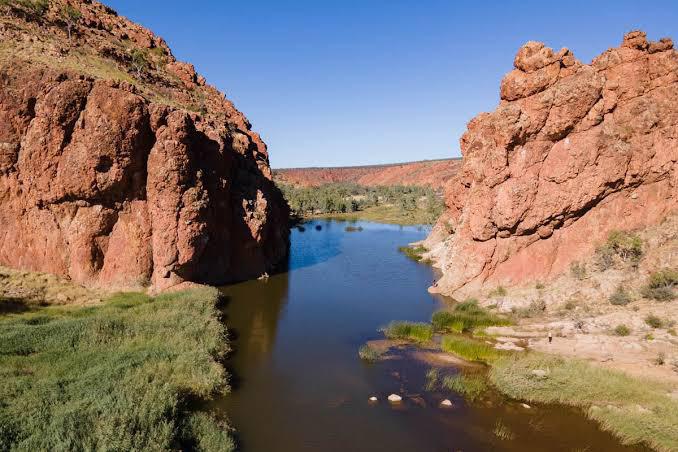
Unlike the long, constantly flowing rivers people imagine, the Finke River behaves very differently. It flows through one of the driest regions of Australia, where rainfall is rare and unpredictable. For much of the year, the river does not appear to flow at all.
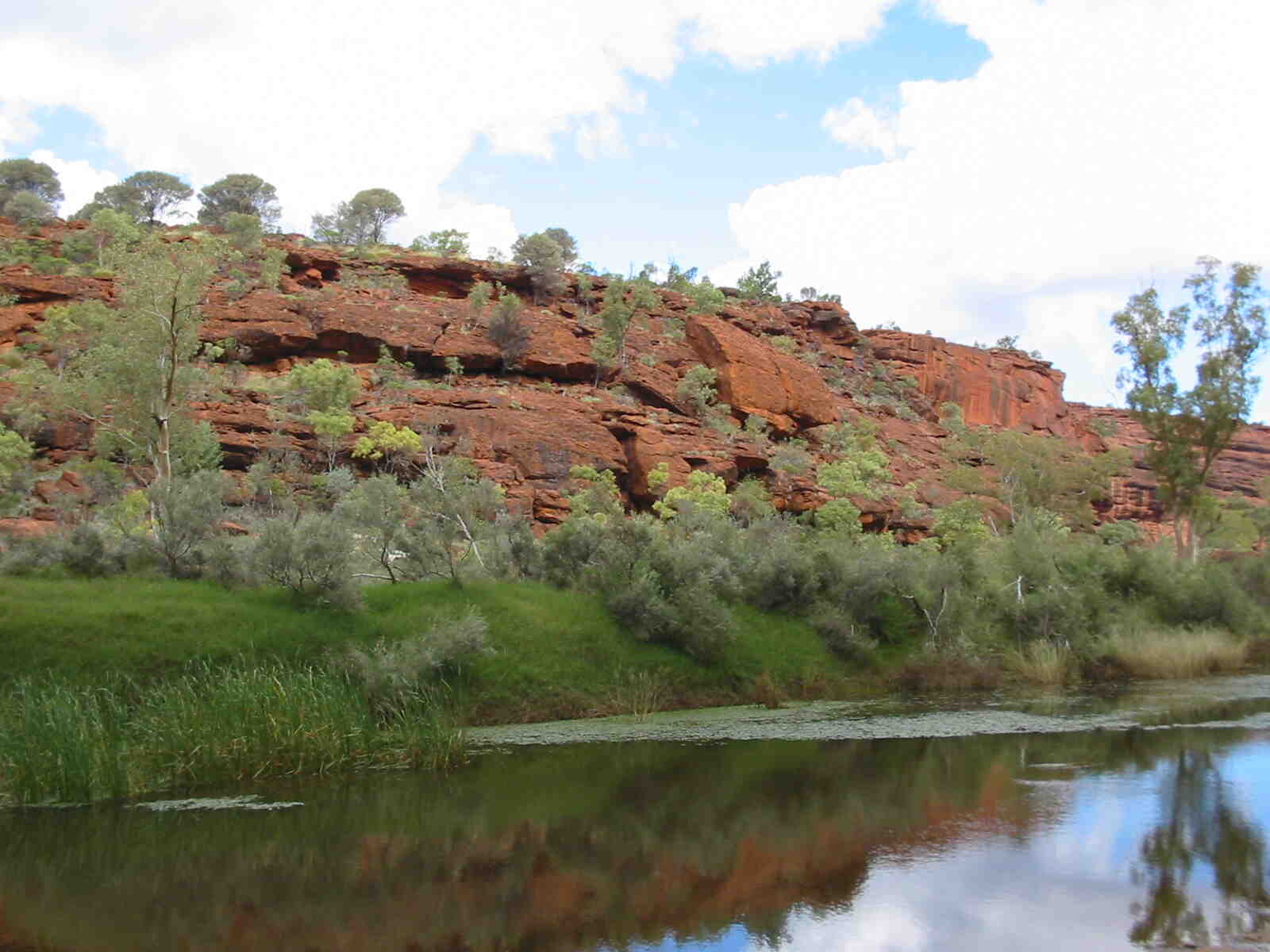
Instead, it exists as a chain of waterholes connected by dry riverbeds. Only after heavy rain does the river briefly come alive, with water rushing through its channels. This unusual pattern might make it seem less important than major rivers elsewhere in the world. However, scientists stress that its intermittent flow does not reduce its age or significance.
Even during dry periods, the waterholes and underground flow remain part of the same ancient river system that began hundreds of millions of years ago.
Cutting Through the MacDonnell Ranges
One of the strongest pieces of evidence supporting the river’s great age lies in its path through the MacDonnell Ranges. These rugged mountain ranges are made of very hard rock and form a major barrier across central Australia. Most rivers would flow around such mountains, choosing an easier route.
The Finke River does something remarkable. It cuts straight through the ranges, forming deep gorges. This puzzling feature led geologists to study the area more closely. They discovered that the river is older than the mountains themselves.
This phenomenon is known as antecedence. It means the river was already flowing before the land around it began to rise. As the mountains slowly uplifted over millions of years, the river kept eroding downward, maintaining its original course. This process can only happen over extremely long periods, which further supports the river’s ancient origin.
Geological Clues Locked in Stone
Scientists have used several methods to estimate the age of the Finke River. These include studying erosion patterns, analysing surrounding rock formations, and using radioactive isotope dating. Together, these techniques show that the river’s channel has existed since at least the same time as the surrounding ancient rocks.
Many other rivers from that era disappeared as climates changed, seas advanced or retreated, and landforms shifted. The Finke survived because central Australia experienced relatively slow geological change. The river became deeply entrenched in the landscape, protecting its path from being erased.
This makes the Finke River a rare survivor from deep geological time, offering scientists a living example of Earth’s distant past.
World’s Oldest Flowing River Recognised: Life Along an Ancient River
Despite its dry surroundings, the Finke River supports life. The waterholes provide vital sources of water for plants, animals, and birds in the desert. During wet periods, the river brings fresh nutrients and allows life to flourish, even if only for a short time.
For Indigenous communities, the river has always been more than a physical feature. Stories, songs, and traditions connected to Larapinta reflect a deep understanding of the land and its long history. The recognition of the river’s age by modern science adds another layer of meaning to this relationship.
Why the World’s Oldest Flowing River Recognised Matters Today
The recognition of the Finke River as the world’s oldest flowing river changes how people think about Australia’s natural heritage. Often seen as a young and dry continent, Australia actually holds some of the oldest landscapes on Earth. The Finke River is a powerful reminder of this ancient past.
It also highlights the importance of protecting such unique natural features. As climate change and human activity place pressure on fragile environments, understanding and preserving ancient systems like the Finke becomes even more important.
World’s Oldest Flowing River Recognised as a Living Link to Earth’s Distant Past
Today, the Finke River continues to quietly follow the path it carved hundreds of millions of years ago. It may not flow every day, and it may not support large cities, but its value lies in its incredible endurance. The river stands as a living link between the modern world and a time long before humans existed.
The recognition of the World’s Oldest Flowing River Recognised is not just a scientific achievement. It is a story of patience, survival, and the slow but powerful forces that shape our planet over immense spans of time.