



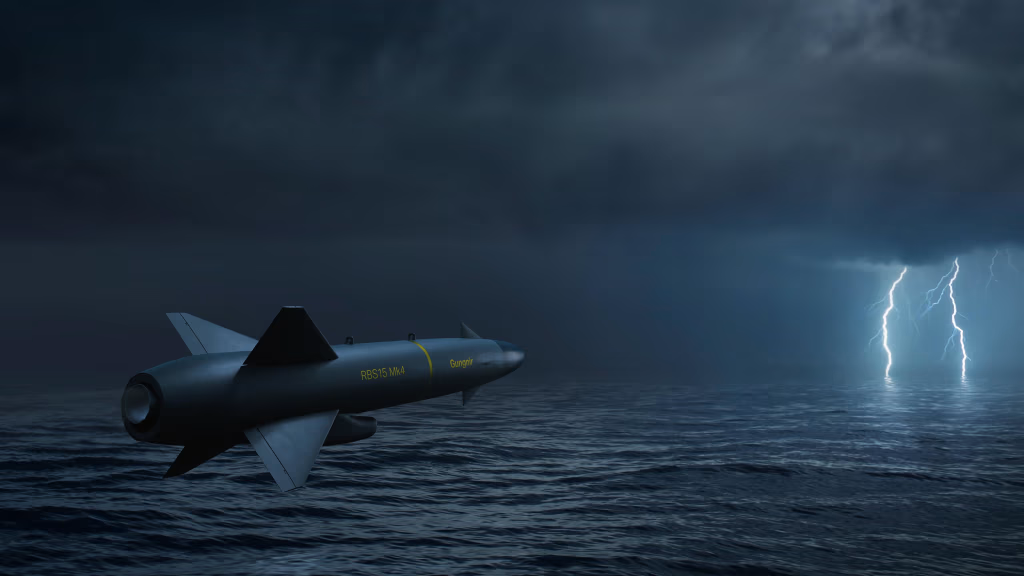
Saab Showcases RBS-15 Missile as a Key Weapon for Modern Precision Warfare

Saab Showcases RBS-15 Missile at a time when global defence strategies are rapidly evolving to address complex and highly contested battle environments. The Swedish aerospace and defence major has released a promotional video that highlights the advanced strike capabilities of its RBS-15 missile system. Through a carefully designed simulated scenario, Saab demonstrates how the missile can be used to neutralise critical elements of sophisticated air defence networks and high-value naval targets. The presentation underlines Saab’s focus on multi-domain operations and precision strike capabilities that are increasingly important in modern warfare.
Thank you for reading this post, don't forget to subscribe!Saab’s Message Through the Demonstration
The promotional video is not just a technical display but a strategic message. Saab uses the scenario to show how the RBS-15 missile fits into future conflict situations where air, sea, and land forces must work together seamlessly. The video highlights coordinated attacks, shared targeting information, and precision engagement, all of which reflect how modern militaries plan operations today.
By showcasing the missile’s ability to strike key surveillance radars, air defence launchers, and advanced naval platforms, Saab positions the RBS-15 as a system designed to operate against well-protected and technologically advanced opponents. The focus is clearly on flexibility, accuracy, and survivability in hostile environments.
Understanding the RBS-15 Missile Family
The RBS-15 is a long-range missile system that has been in service for decades. First introduced in 1984, it was originally developed as an anti-ship missile. Over the years, Saab has continuously upgraded the system to keep pace with changing threats and operational needs. Today, the missile is known not only for its anti-ship role but also for its effective land-attack capability.
The latest version, the RBS-15 Mk4 Gungnir, represents the next generation of this missile family. Saab describes Gungnir as a complete system solution rather than just a missile. It is designed to be integrated across different platforms, allowing armed forces to use the same weapon system from aircraft, ships, and land-based launchers. This approach reduces complexity and improves operational coordination.

Multi-Platform Launch Capability in Focus
One of the most striking aspects of the demonstration is the emphasis on multi-platform launch capability. In the simulated scenario, six RBS-15 missiles are launched almost simultaneously from different platforms. Two are fired from a Visby-class corvette at sea, two from truck-mounted ground launchers, and two from JAS 39 Gripen fighter aircraft.
This coordinated launch highlights the missile’s adaptability and the ability of forces to conduct joint operations across domains. Such flexibility allows commanders to choose the most suitable launch platform based on the situation, terrain, and threat level. It also complicates the defender’s task, as attacks can come from multiple directions and platforms at the same time.
Targeting Advanced Air Defence Systems
A key element of the video is the simulated strike on a high-value air defence target. One of the Gripen-launched missiles is shown hitting a radar identified as the 91N6 surveillance and tracking radar. This radar is a core component of the Russian S-400 Triumf air defence system and is responsible for long-range detection and tracking.
By targeting such a radar, the scenario demonstrates how the RBS-15 could be used to weaken or disable an advanced air defence network. Without effective radar coverage, air defence systems lose much of their effectiveness, creating opportunities for follow-on operations by air and naval forces. The video also shows the destruction of a surface-to-air missile launcher, reinforcing the idea of systematically degrading defensive capabilities.
Naval Targets and Littoral Operations
In addition to air defence assets, the demonstration includes strikes against naval targets. These targets are represented as Chinese Type 052D destroyers, which are modern surface combatants equipped with advanced sensors and weapons. The inclusion of such targets highlights the RBS-15’s continued relevance in naval warfare, particularly in coastal and littoral regions.
Littoral operations are becoming increasingly important as many strategic areas of interest are located near coastlines. The RBS-15’s long range, sea-skimming flight profile, and precision guidance make it well-suited for such environments. Saab’s presentation suggests that the missile can play a key role in denying access to hostile naval forces and protecting friendly sea lanes.
Saab Showcases RBS-15 Missile as Designed for Networked Warfare
Another important theme in the showcase is networked warfare. Modern conflicts rely heavily on shared information, sensors, and communication networks. The RBS-15 Mk4 Gungnir is designed to operate within such a network, receiving targeting data from various sources and adapting to changing conditions during flight.
This capability is crucial when dealing with advanced opponents who use electronic warfare, decoys, and layered defences. By being part of a connected system, the missile can increase its chances of reaching the target and completing the mission successfully. Saab’s emphasis on this aspect reflects current military thinking around integrated and resilient combat systems.
Saab Showcases RBS-15 Missile and Its Strategic Importance for Modern Forces
Saab’s demonstration of the RBS-15 missile comes at a time when many countries are reassessing their defence capabilities. The ability to conduct precision strikes against both naval and land targets is seen as a key requirement for modern armed forces. Missiles that can be launched from multiple platforms offer greater flexibility and cost-effectiveness compared to platform-specific weapons.
The fact that Sweden ordered the RBS-15 Mk4 Gungnir in 2017 shows confidence in the system’s future relevance. Saab’s continued investment in upgrades and demonstrations suggests that the company sees strong potential for the missile in both national defence and international markets.

Saab Showcases RBS-15 Missile While Evolving to Meet Future Threats
Over the decades, the RBS-15 has evolved from a traditional anti-ship missile into a versatile, multi-role weapon system. Saab’s latest showcase reinforces this evolution by highlighting its ability to operate in complex, high-intensity conflict scenarios. The focus on advanced air defence suppression, coordinated multi-platform launches, and networked operations shows how the missile is being positioned for future battlefields.