


Indian Railways LNG-Diesel DEMU Train Marks New Era of Green Rail Transport

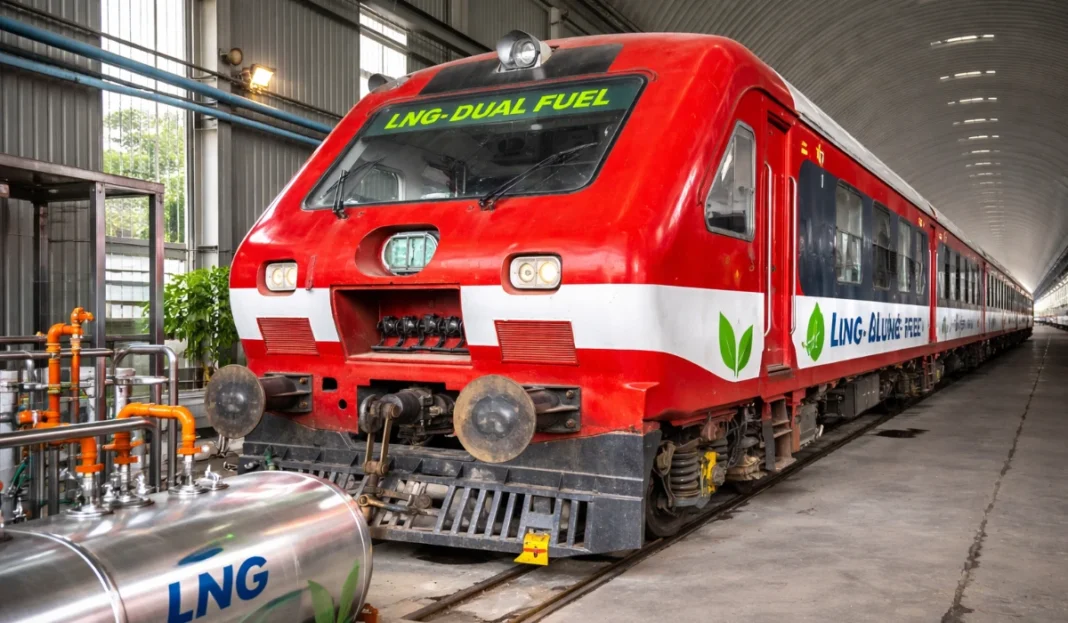
Indian Railways LNG-Diesel DEMU Train has become a reality with the successful operationalisation of the country’s first dual-fuel Diesel Electric Multiple Unit (DEMU) train. This historic step represents a major milestone in India’s journey towards cleaner and more sustainable transportation. By using Liquefied Natural Gas (LNG) along with diesel, Indian Railways is reducing both fuel costs and harmful emissions while maintaining reliable passenger services.
This achievement reflects the growing commitment of Indian Railways to adopt innovative technologies that align with national clean energy goals and environmental protection efforts.

A Landmark Move in Sustainable Railways
Indian Railways has been working on multiple fronts to cut carbon emissions and increase energy efficiency. The introduction of the LNG-Diesel DEMU train is part of this larger vision. The dual-fuel technology allows trains to run using a combination of diesel and LNG, with LNG replacing a significant portion of diesel consumption.
This approach is especially important for non-electrified routes, where diesel trains are still widely used. Instead of waiting for full electrification, Indian Railways has chosen a practical solution that delivers immediate environmental and economic benefits.
First Deployment at Sabarmati, Ahmedabad
The first LNG-Diesel DEMU train has been operationalised at Sabarmati in Ahmedabad. Under this project, the driving power cars of a 1,400 horsepower DEMU train were converted to operate on a dual-fuel system.
The modification enables the train to substitute nearly 40 per cent of conventional diesel with LNG. Despite this change, there is no compromise in speed, performance, or safety. The conversion demonstrates that existing rolling stock can be upgraded to cleaner technologies without the need for complete replacement.

Successful Trials Build Confidence
Before being introduced for regular service, the converted power cars underwent extensive field trials. These trials covered more than 2,000 kilometres under different operating conditions.
Railway officials reported that the system performed smoothly throughout the testing phase. There were no major technical issues, and the train maintained stable operations. Following the successful trials, the train was approved for regular passenger service.
This smooth transition from testing to daily operations shows that LNG-based propulsion is not just experimental but ready for practical use.
Lower Emissions and Cleaner Air
One of the biggest advantages of the LNG-Diesel dual-fuel system is its positive environmental impact. LNG burns cleaner than diesel, producing lower levels of carbon dioxide, nitrogen oxides, and particulate matter.
By reducing harmful emissions, the LNG-Diesel DEMU train helps improve air quality along railway corridors and nearby communities. This is particularly important in densely populated areas where pollution from transport sources is a major concern.
The move also supports India’s broader climate commitments by lowering the overall carbon footprint of rail operations.
Cost Savings and Energy Security
Apart from environmental benefits, the new system offers strong economic advantages. LNG is generally cheaper than diesel, and substituting 40 per cent of diesel with LNG leads to noticeable fuel cost savings.
For a large network like Indian Railways, even small percentage reductions in fuel expenses can translate into substantial financial benefits. Over time, widespread adoption of dual-fuel technology could significantly reduce operating costs.
Using LNG also helps diversify the energy mix and reduce dependence on conventional petroleum fuels, strengthening the country’s energy security.
Boost for Innovation and Local Capability
The success of the Indian Railways LNG-Diesel DEMU Train highlights the growing technical capabilities within the country. It demonstrates that Indian engineers and railway workshops can design, test, and implement advanced fuel technologies.
This achievement encourages further research and development in alternative propulsion systems such as hydrogen, biofuels, and hybrid technologies. It also creates opportunities for collaboration with domestic and international technology providers.
Pathway for Wider Adoption
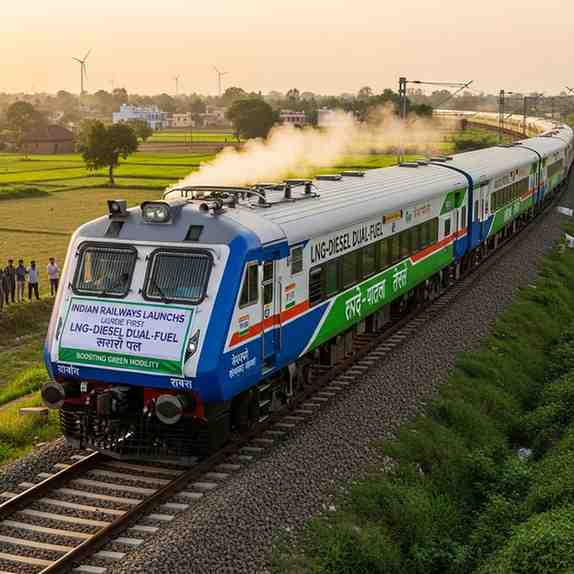
With the first train now running successfully, Indian Railways is expected to explore expanding this technology to more DEMU and other diesel-powered trains. Non-electrified sections of the network are likely to be key candidates for future conversions.
Scaling up the dual-fuel system can deliver faster environmental benefits compared to waiting for complete electrification, which requires large investments and time.
Moving Towards a Greener Rail Network
The operationalisation of the LNG-Diesel DEMU train marks an important step in transforming Indian Railways into a cleaner and more energy-efficient transport system. It shows that practical, cost-effective solutions can play a big role in reducing emissions and improving sustainability.
As Indian Railways continues to adopt such innovations, passengers and the environment both stand to benefit. The success of this project sends a strong message that the future of rail transport in India is not only efficient but also environmentally responsible.