


IOAA 2026: India Wins Five Medals

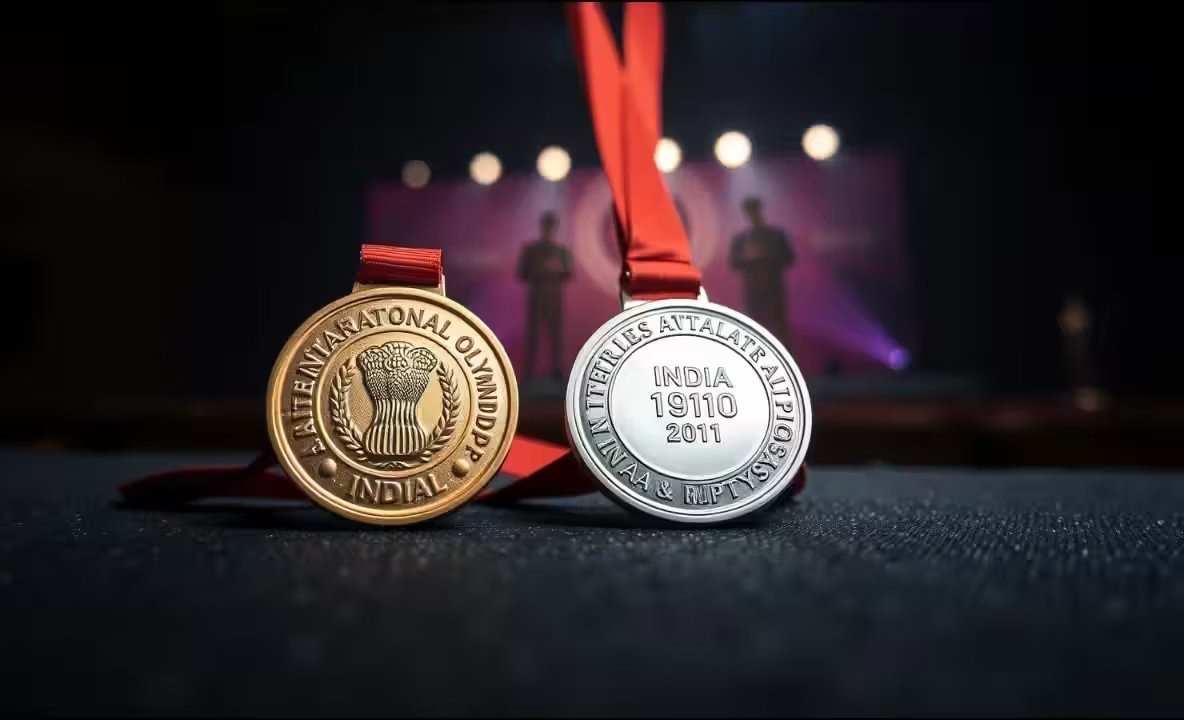
IOAA 2026 brought a strong result for India as the country won four gold medals and one silver medal at the 19th International Olympiad on Astronomy and Astrophysics. The competition was held in Hanoi, Vietnam, from September 25 to October 5, 2026. All five members of the Indian team won medals, giving India a 100 per cent medal success rate at the international competition.
Thank you for reading this post, don't forget to subscribe!International Olympiad on Astronomy and Astrophysics
The International Olympiad on Astronomy and Astrophysics, commonly known as IOAA, is a global competition for school students interested in astronomy and astrophysics. The event tests students through different types of problems related to space science and the study of the universe.
The competition includes theoretical questions as well as observational and data-analysis tasks. Students are required to apply scientific knowledge, mathematical skills and problem-solving abilities to understand different astronomical situations.
The 2026 edition brought together young participants from several countries and provided an international platform for students to demonstrate their knowledge of astronomy and astrophysics.
India Wins Four Gold Medals
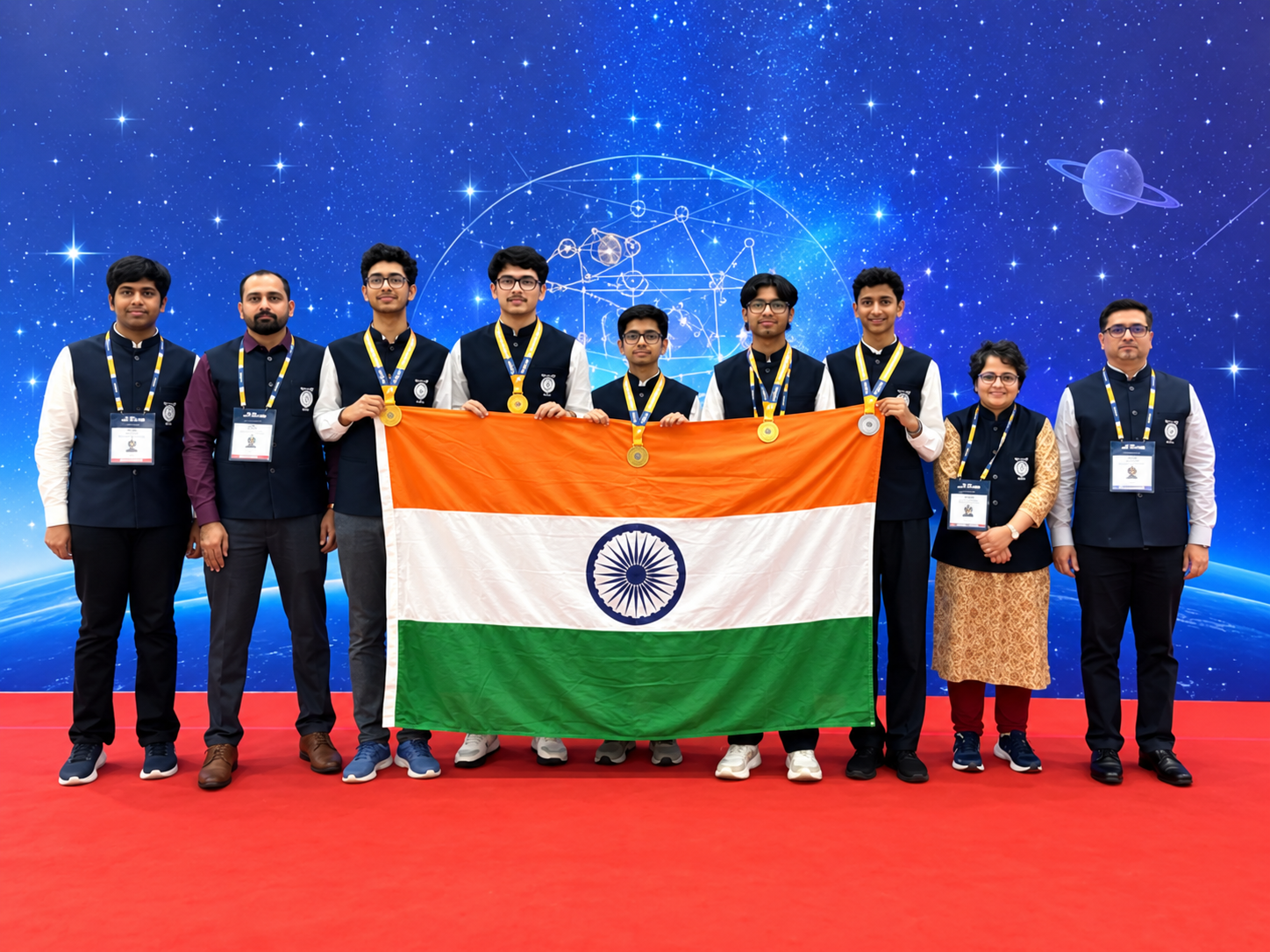
India delivered a strong performance in Hanoi, with four students winning gold medals. The gold medal winners were Pranjal Dixit from Hyderabad, Sumant Gupta from Delhi, Akshat Srivastava from Gurugram and Arnav Sehrawat from Faridabad.
Their performance helped India secure a prominent position in the final medal standings. The result also highlighted the growing participation of Indian students in international science competitions.
Harshil Amitkumar Patel from Vadodara won the fifth medal for India, securing a silver medal. With four gold and one silver, every member of the five-member Indian team returned with an individual medal.
307 Students from 64 Countries Participate
The 19th IOAA was the largest edition of the competition so far. A total of 307 students from 64 countries took part in the event held in Hanoi.
The large participation made the 2026 competition an important international gathering for young students interested in astronomy and space science. It also gave participants an opportunity to compete with students from different parts of the world.
India finished jointly in third place in the overall medal tally along with Vietnam. Iran and South Korea recorded five gold medals each, placing them ahead of India in the gold medal count.
Indian Team Guided by Two Professors
The Indian team was accompanied by Prof. Bhaswati Mookerjea of the Tata Institute of Fundamental Research in Mumbai and Prof. Sanved Kolekar of the Indian Institute of Astrophysics in Bengaluru.
The participation of experts from leading Indian research institutions provided academic guidance to the students during the international competition. Both institutions are associated with scientific research and higher learning in areas connected with astronomy, astrophysics and related fields.
India’s Strong Performance in Science Olympiads
The IOAA result was part of a wider strong performance by Indian students in international science competitions in 2026. India participated in five senior-level science Olympiads covering Mathematics, Physics, Chemistry, Biology and Astronomy.
Across these five competitions, 24 Indian participants won either gold or silver medals. This means that every Indian participant across the five senior-level science Olympiad teams secured a top-level medal.
The performance in astronomy added another important result to India’s achievements in international science competitions this year.
Growing Interest in Astronomy and Space Science
Astronomy continues to attract interest among young students as space research becomes an increasingly important area of science and technology. India’s expanding space activities and scientific research have also created greater public interest in subjects connected with planets, stars, galaxies, satellites and the wider universe.
International competitions such as IOAA provide students with an opportunity to explore these subjects beyond regular classroom learning. They also encourage students to develop analytical thinking and apply scientific concepts to real astronomical problems.
India’s Five-Medal Performance
The 2026 IOAA result gave India four gold medals and one silver medal from five participants. Pranjal Dixit, Sumant Gupta, Akshat Srivastava and Arnav Sehrawat won gold, while Harshil Amitkumar Patel secured silver.
With all five Indian participants winning medals, the Hanoi edition became another notable achievement for India in international science competitions. The result also adds to India’s strong showing across the five senior-level science Olympiads held in 2026.