
India Allows EU Banks Branch Expansion Under Landmark Trade Agreement

India Allows EU Banks Branch Expansion as part of the newly concluded India–European Union Free Trade Agreement (FTA), marking an important step in strengthening economic ties between the two sides. Under this arrangement, India has agreed to allow European Union banks to open up to 15 new branches over a period of four years. The decision reflects India’s carefully balanced approach to opening its financial sector while ensuring that domestic stability, regulatory oversight, and national interests remain protected.
Thank you for reading this post, don't forget to subscribe!This development is being viewed as a major milestone in India–EU relations, especially in the services and investment domain. It signals India’s willingness to gradually expand market access in sensitive sectors, while also creating new opportunities for global financial institutions to participate in one of the world’s fastest-growing economies.
A Calibrated Opening of India’s Financial Sector
India’s financial sector has traditionally been opened in a gradual and measured manner. Rather than allowing unrestricted entry, the country has followed a step-by-step process that aligns with domestic regulatory capacity and economic priorities.
The commitment to permit up to 15 EU bank branches over four years fits within this framework. It ensures that foreign banks can expand their presence, but in a controlled way. This approach helps India monitor the impact of increased foreign participation and adjust policies if required.
Several major European banks already operate in India, including Deutsche Bank, BNP Paribas, and Societe Generale. These institutions provide a range of services such as corporate banking, investment banking, trade finance, and wealth management. The new provision allows them and other EU banks to deepen their footprint, expand services, and reach more clients across the country.
What Branch Expansion Means for the Economy
The opening of additional EU bank branches is expected to bring multiple benefits to India’s financial ecosystem. Increased competition can lead to better service quality, improved product offerings, and more efficient banking practices. International banks often bring advanced technology, global best practices, and specialized expertise, which can raise overall standards in the sector.
For Indian businesses, especially those engaged in international trade, a stronger presence of EU banks could mean easier access to cross-border financing, trade credit, and foreign exchange services. This can help exporters and importers manage transactions more smoothly and at lower cost.
At the same time, Indian regulators will continue to supervise these banks under existing laws and prudential norms. This ensures that financial stability is maintained and that foreign banks operate on a level playing field with domestic institutions.

Foreign Direct Investment Commitments
Beyond branch expansion, the India–EU FTA includes wider commitments on foreign direct investment (FDI) in financial services. India has offered 100 per cent FDI in the insurance sector and 74 per cent FDI in banking services.
These commitments are consistent with India’s broader reform agenda aimed at attracting long-term foreign capital. Higher FDI limits can encourage global investors to bring funds, technology, and managerial expertise into the country.
In the insurance sector, full foreign ownership can help expand coverage, introduce innovative products, and strengthen risk management practices. In banking, the 74 per cent FDI limit provides significant scope for foreign participation while ensuring that Indian interests continue to have an important stake.
Balancing Openness with Safeguards
While India has offered greater access to EU banks, it has also ensured that strong safeguards remain in place. The commerce ministry has emphasized that India has secured important carve-outs for national security and sensitive policy areas.
Certain sectors, such as legal services, continue to remain protected. This allows India to retain policy space in areas that are closely linked to domestic regulation, public interest, and strategic considerations.
In addition, the FTA includes a bilateral safeguard mechanism. If tariff reductions under the agreement result in a sudden surge of EU imports that harm domestic industries, India can temporarily raise duties up to the Most Favoured Nation (MFN) level. Such safeguard measures can be applied for two years and may be extended up to a maximum of four years after review.
This mechanism provides reassurance that India can respond if domestic producers face serious difficulties due to increased competition.
Rules of Origin and Fair Trade
Another important aspect of the agreement is the inclusion of strict rules of origin. These rules determine whether a product qualifies for preferential tariff treatment under the FTA.
The agreement excludes minimal processes such as packaging, labelling, or simple assembly from qualifying as sufficient transformation. This prevents third-country goods from entering India through the EU merely by undergoing minor processing.
By enforcing clear and strict rules of origin, India aims to ensure that the benefits of the FTA are limited to genuine products made within the EU, thereby protecting domestic industries from unfair competition.
Intellectual Property and Policy Autonomy
On intellectual property rights, the government has clarified that the India–EU FTA does not require India to change or dilute its existing IP laws. This is significant, particularly for sectors such as pharmaceuticals, where access to affordable medicines is a major public policy concern.
India retains full authority to frame and implement IP policies in line with national priorities and public interest. This assurance helps maintain a balance between encouraging innovation and ensuring access to essential goods.
Review and Future Adjustments
The agreement includes a provision for periodic review by a joint committee. The first general review will take place within five years of the agreement coming into force, followed by reviews every five years thereafter.
This review mechanism allows both sides to assess how the agreement is functioning, examine trade and investment trends, and make adjustments if necessary. Such flexibility is important in a rapidly changing global economic environment.
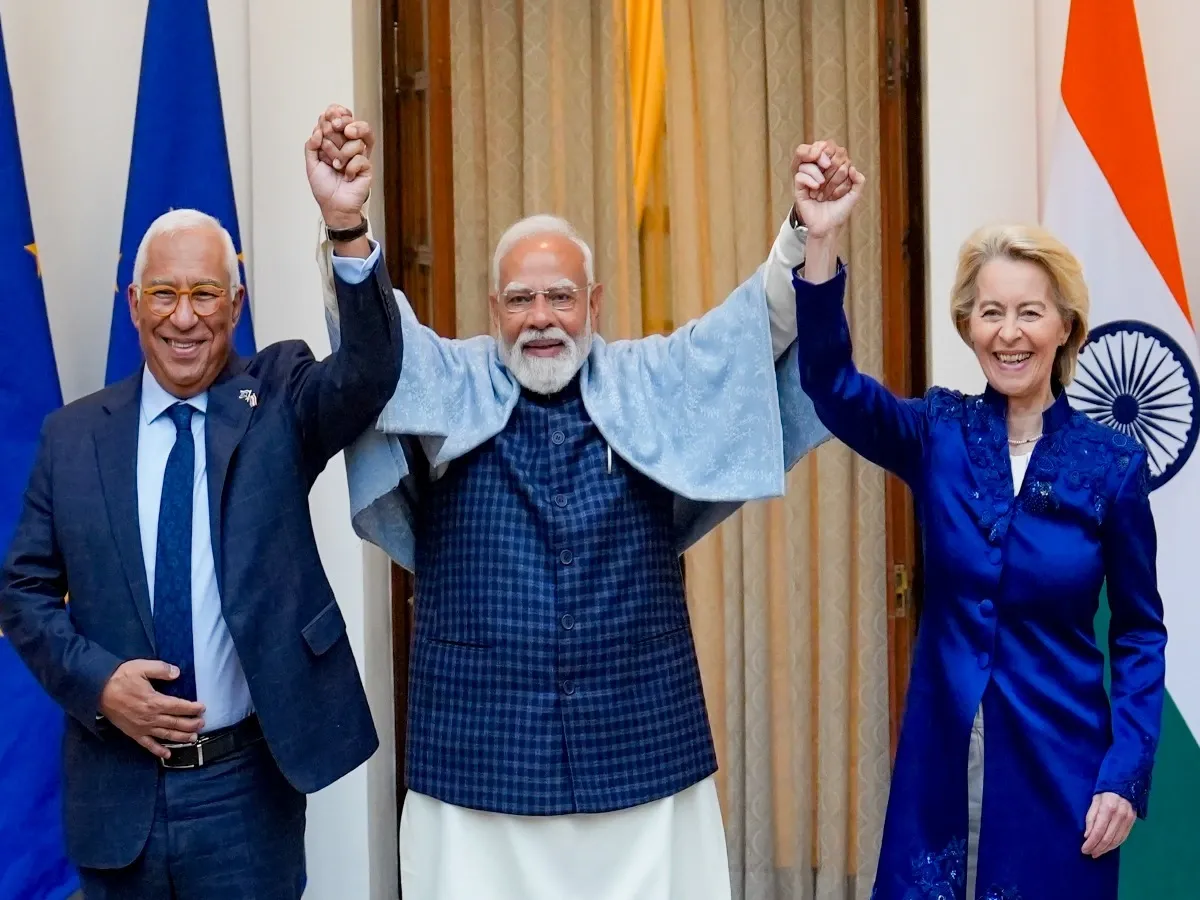
Strengthening India–EU Economic Partnership as India Allows EU Banks Branch Expansion
The decision to allow limited branch expansion for EU banks reflects growing trust and cooperation between India and the European Union. It demonstrates India’s willingness to engage more deeply with global partners while maintaining control over key policy areas.
For the EU, the agreement opens doors to one of the world’s largest and most dynamic markets. For India, it supports goals of attracting investment, improving financial services, and integrating with global financial systems.
As the provisions of the FTA are implemented over time, the impact of greater EU bank presence, higher FDI, and improved market access will become clearer. What is already evident, however, is that India’s approach remains steady and strategic opening up where benefits are strong, and protecting interests where caution is required.