

IOAA-Jr 2026: Indian Students Win Five Medals

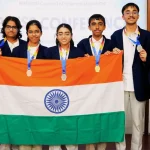
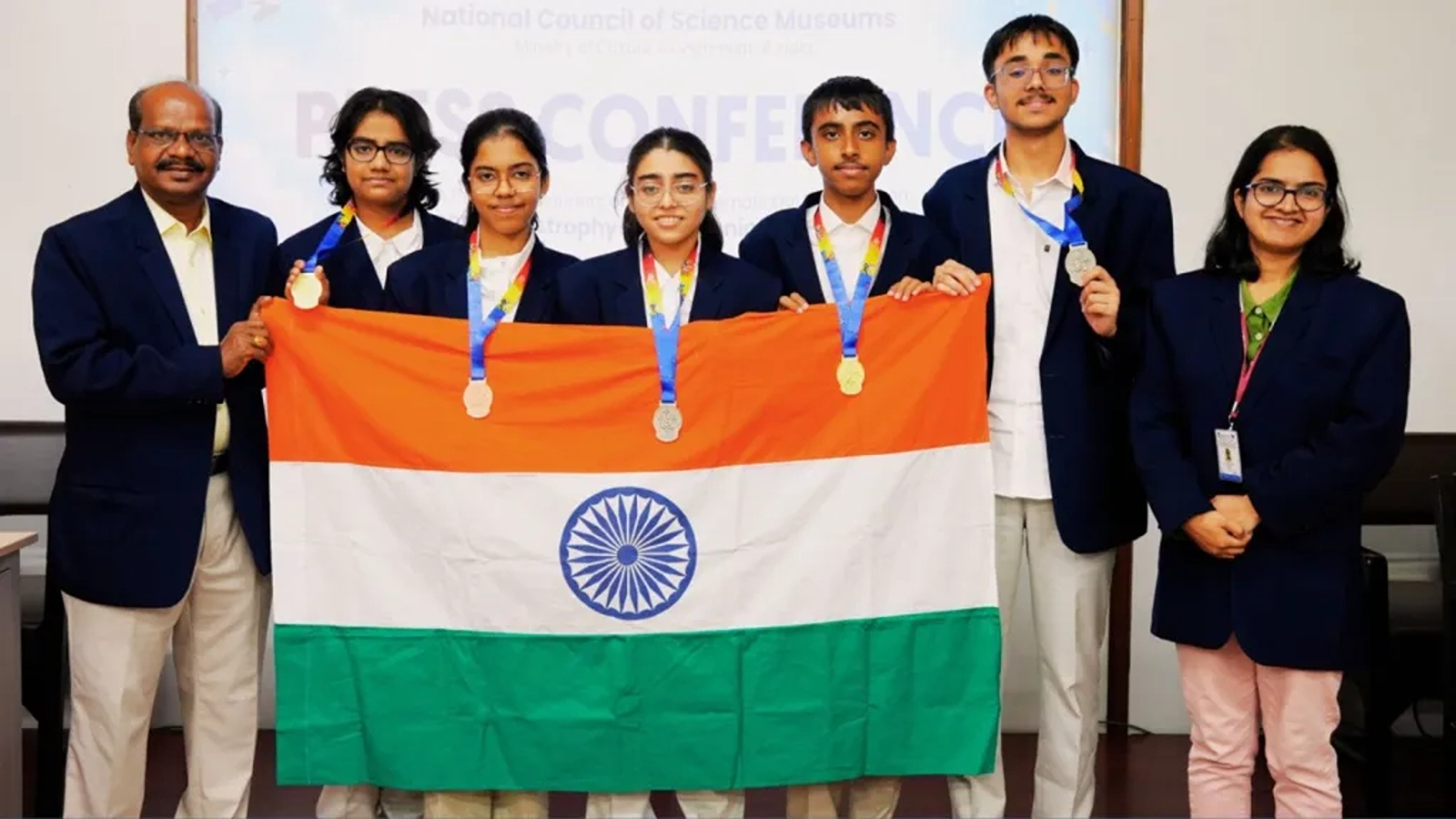
IOAA-Jr 2026 brought great recognition to India as five Indian students won medals at the 5th International Olympiad on Astronomy and Astrophysics for Juniors. The international competition was held in Ubon Ratchathani, Thailand, from 1 to 8 November 2026. The Indian team won two gold medals, two silver medals and one bronze medal, showing the scientific knowledge and talent of young students from the country.
India participated in the competition with a five-member student team. A total of 104 students from 25 countries took part in the international event. The competition provided an opportunity for young students to demonstrate their knowledge of astronomy, space science and astrophysics.

India Wins Two Gold Medals at IOAA-Jr 2026
The Indian team achieved an impressive result by securing two gold medals at the international competition. Siddharth Laxmisha and Swara Srujal Patel were the two students who won gold medals for India.
Siddharth Laxmisha represented Aditya Vidyashram Residential School in Puducherry. Swara Srujal Patel represented the School of Excellence in Gujarat.
Their achievements brought recognition to their schools and highlighted the growing interest in astronomy and scientific learning among Indian students.
Winning a gold medal at an international science competition requires a strong understanding of scientific concepts, problem-solving skills and the ability to apply knowledge to different situations. Their performance demonstrated the preparation and dedication of the young participants.
Indian Students Who Won Silver and Bronze Medals
Apart from the two gold medals, Indian students also secured two silver medals and one bronze medal.
Aarna Chaplot and Krish Bhaskar won silver medals. Aarna Chaplot is from Maa Bharti Senior Secondary School in Kota, Rajasthan, while Krish Bhaskar represented KS International Academy in Bagar, Rajasthan.
Akshara Gulab Ambone won the bronze medal. She represented Lords Public School in Maharashtra.
The five medal winners represented different educational institutions and states across India. Their achievements showed how students from different parts of the country are developing an interest in science, astronomy and space-related subjects.
About the International Olympiad on Astronomy and Astrophysics for Juniors
The International Olympiad on Astronomy and Astrophysics for Juniors (IOAA-Jr) is an international science competition designed for young students interested in astronomy and astrophysics.
The competition gives students an opportunity to learn about the universe, planets, stars, galaxies and other objects in space. It also encourages scientific thinking, observation and problem-solving abilities.
The first edition of the junior competition was organised for students below the age of 16. From the second edition, the age eligibility was reduced to students below 15 years.
The junior competition provides an international platform for young learners to interact with students from different countries and share their knowledge of space science.
104 Students from 25 Countries Participated
The 5th IOAA-Jr 2026 was organised in Ubon Ratchathani, Thailand. It brought together 104 students representing 25 countries.
The participation of students from different nations made the event an important international platform for scientific learning and cooperation.
Astronomy is a subject that requires students to understand both theoretical knowledge and practical observations. International competitions such as IOAA-Jr encourage young learners to explore scientific questions beyond their regular classroom lessons.
India’s five-member team performed successfully and returned with medals in all three categories: gold, silver and bronze.
Role of the National Council of Science Museums (NCSM)
The National Council of Science Museums (NCSM) played an important role in facilitating India’s participation in IOAA-Jr 2026. It supported the students’ preparation and helped organise their participation in the international competition.
NCSM Director General K. S. Murali congratulated the medal winners and appreciated their dedication, scientific ability and perseverance.
The National Council of Science Museums was established in 1978. It is an autonomous scientific organisation under the Ministry of Culture, Government of India.
Its main purpose is to promote science education and scientific awareness among people, particularly students and young learners.
NCSM operates science museums and centres across the country. These institutions provide opportunities for students to understand scientific ideas through exhibitions, demonstrations, interactive activities and educational programmes.
NCSM and Mobile Science Exhibition Programme
One of the important activities of NCSM is its Mobile Science Exhibition programme. Under this programme, specially equipped buses travel to rural and remote areas to bring science education closer to students.
These buses contain different science exhibits and learning materials. Students can explore scientific principles through practical demonstrations and interactive displays.
The programme is particularly useful for children who may not have easy access to large science museums or advanced educational facilities.
Through such activities, NCSM encourages curiosity, creativity and scientific thinking among students from different communities.
Growing Interest in Astronomy and Space Science in India
India’s success at IOAA-Jr 2026 reflects the growing interest of young students in astronomy and space science. In recent years, space exploration has become an important area of scientific learning, with developments in satellite technology, planetary research and space missions attracting public attention.
India’s space programme, led by the Indian Space Research Organisation (ISRO), has also inspired students to learn more about the universe.
Missions such as Chandrayaan-3 and Aditya-L1 have increased awareness about lunar exploration and solar research. These developments have encouraged more young learners to explore subjects related to physics, astronomy and space technology.
International science competitions also help students develop confidence and connect with young researchers from other countries.
The five medals won by Indian students at IOAA-Jr 2026 highlight the importance of scientific education, proper guidance and opportunities for young talent. Their achievements have brought international recognition to India and encouraged more students to explore the exciting world of astronomy and astrophysics.