



ISRO Radar Centre Comes to Assam

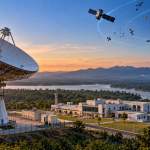
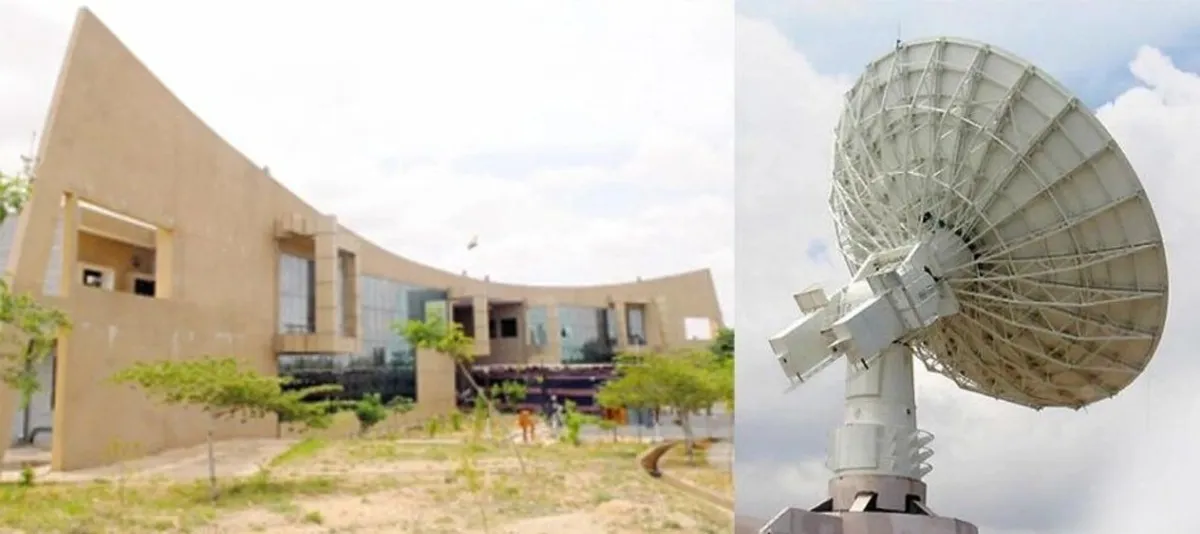
ISRO Radar Centre is being established at Chandrapur near Guwahati, Assam, as part of India’s growing effort to monitor objects in space and protect satellites. The foundation stone for the advanced radar research facility was laid on September 21, 2026. The facility is being developed under ISRO’s Project NETRA, which focuses on space situational awareness and the tracking of objects in Earth orbit.
Thank you for reading this post, don't forget to subscribe!ISRO Radar Centre to Strengthen Space Tracking
The new facility at Chandrapur will add to India’s ability to detect and track objects moving around Earth. This includes active satellites, inactive spacecraft, rocket bodies and fragments of space debris.
ISRO has identified a site of about 67 acres for the radar facility. Its Annual Report 2025–26 states that the Memorandum of Transfer for the land was completed in November 2023, while final registration was completed on November 7, 2025.
The Assam government had allocated land at Chandrapur for the NETRA project. State government documents have also referred to an allocation of 200 bighas for the project, which is broadly consistent with the approximately 67-acre site identified by ISRO.
What Is Project NETRA?
Project NETRA stands for Network for Space Object Tracking and Analysis. ISRO started the programme to improve India’s ability to observe and understand objects in orbit.
The programme includes radar-based tracking, optical telescopes and a central control system. ISRO’s Space Situational Awareness Control Centre, known as NETRA, was formally inaugurated in Bengaluru in December 2020.
The Bengaluru centre acts as a hub for space situational awareness activities. It processes information from observation facilities, supports orbit determination and maintains information about objects being tracked in space.
The system can also support conjunction analysis, which means checking whether two space objects could come dangerously close to each other.
Why Space Debris Tracking Matters
The number of satellites and other objects around Earth has increased significantly as space activity has expanded. Along with operational satellites, orbit also contains inactive spacecraft, spent rocket stages and fragments created by break-ups or collisions.
These objects can travel at very high speeds. Even a relatively small piece of debris can damage a satellite if it strikes it.
Space situational awareness therefore helps operators understand where objects are located and how their orbits are changing. Early information about a possible close approach can allow satellite operators to assess the situation and, when required, plan an avoidance manoeuvre.
For India, this capability is increasingly important as the country operates satellites for communication, navigation, Earth observation, weather monitoring and scientific research.
Radar and Optical Systems Work Together
Space tracking can use different types of observation systems. Radar can detect objects by sending radio signals and analysing the returning signals. Optical telescopes can observe objects using reflected sunlight.
Each method has different strengths. Radar can be useful for tracking objects when optical observation is difficult, while telescopes can provide additional information about objects that can be observed from the ground.
ISRO’s NETRA programme includes both radar and optical observation capabilities. The organisation is also working with the Indian Institute of Astrophysics to establish a NETRA optical telescope facility at Hanle in Ladakh.
The Chandrapur radar facility will therefore become part of a wider network rather than operating as an isolated tracking station.
Chandrapur Facility Adds to India’s Space Infrastructure
The choice of Chandrapur near Guwahati gives Assam a new role in India’s space-related research infrastructure. The facility is being developed by ISRO’s Space Situational Awareness programme and is linked with ISTRAC, ISRO’s Telemetry Tracking and Command Network.
The project is also part of a broader expansion of India’s scientific infrastructure outside the country’s traditional space centres.
The development comes at a time when India’s space sector is expanding through new satellite missions, commercial space activities and increased private-sector participation. As the number of Indian and international spacecraft operating around Earth grows, tracking and space safety systems are becoming more important.
Radar Centre and Space Safety
The main purpose of the Chandrapur facility is connected with space safety rather than launching spacecraft. Its role will be to provide better information about objects already present in orbit.
Such information can help scientists and satellite operators determine the position and movement of space objects. It can also contribute to research on space debris, satellite safety and the long-term use of Earth’s orbital environment.
ISRO’s existing NETRA control centre already supports activities such as close-approach analysis, collision-avoidance alerts and prediction of atmospheric re-entry of some objects. It also supports research into space debris and related space-environment issues.
Assam’s Growing Science and Technology Role
The project adds to Assam’s developing science and technology infrastructure. The state has been working with national institutions on projects connected with scientific research and technology.
The Chandrapur facility is particularly significant because it connects Assam with India’s expanding space programme. The project also comes as ISRO continues research in areas such as space weather, atmospheric science, satellite observation and advanced radar technologies.
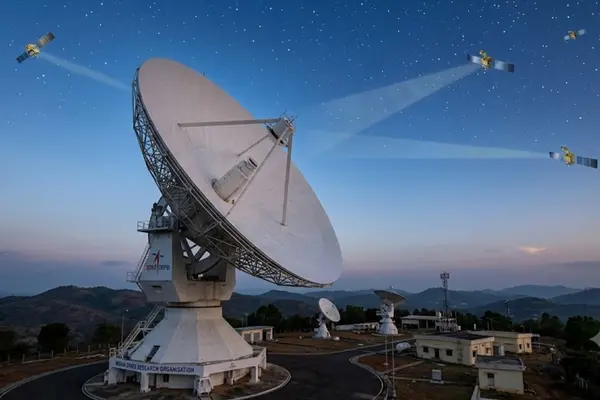
In August 2026, ISRO published research on unusual stratospheric ozone enhancement over the North Bay of Bengal based on observations from India’s radar network and balloon-borne experiments. The study involved several Indian scientific institutions and highlighted the wider use of radar technology in atmospheric and space research.
Next Stage of the Chandrapur Project
With the foundation stone now laid, construction and installation work will form the next stages of the Chandrapur project. The facility is expected to add advanced radar observations to India’s existing space surveillance network.
The project will work alongside the NETRA control centre in Bengaluru and other observation facilities, including the planned optical telescope facility at Hanle. Together, these systems are intended to improve India’s ability to observe satellites, debris and other objects in orbit as the country’s space activities continue to expand.