Maharashtra Leprosy Notifiable Disease: State Strengthens Fight for a Leprosy-Free Future

In a decisive step toward eradicating one of the world’s oldest known diseases, Maharashtra has declared leprosy a “notifiable disease”, mandating that all diagnosed cases be reported to health authorities. This landmark move, effective October 30, 2025, aims to enhance early detection, ensure complete treatment, and prevent disabilities caused by delayed diagnosis. The initiative places Maharashtra at the forefront of India’s renewed campaign to eliminate leprosy transmission by 2027.
Thank you for reading this post, don't forget to subscribe!Maharashtra Leprosy Notifiable Disease: A Public Health Imperative
The “Maharashtra Leprosy Notifiable Disease” declaration represents a major shift in disease surveillance and accountability. Leprosy also known as Hansen’s disease remains a significant health challenge despite being curable for decades. Caused by Mycobacterium leprae, it primarily affects the skin, peripheral nerves, eyes, and mucous membranes.
While India officially eliminated leprosy as a public health problem in 2005 (defined as fewer than 1 case per 10,000 population), pockets of high endemicity persist, particularly in Maharashtra, Bihar, Uttar Pradesh, and Chhattisgarh. Maharashtra alone reported 7,863 new cases and 13,010 patients currently under treatment as of September 2025 one of the highest in the country.
By making leprosy a notifiable condition, the government is ensuring that no case slips through the cracks of the healthcare system. Every confirmed diagnosis will now trigger a structured response involving timely treatment, contact tracing, and follow-up.
Maharashtra Leprosy Notifiable Disease: Legal Notification and Scope
According to the Health Department’s official order, all healthcare providers whether from the public, private, NGO, or corporate sector are now legally required to report confirmed cases of leprosy to designated health authorities. This includes government hospitals, medical colleges, private clinics, non-profits, and academic institutions.
The notification is backed by provisions of the Epidemic Diseases Act and other public health regulations, giving it a strong legal foundation. It aims to streamline data flow, reduce diagnostic delays, and standardize follow-up across all administrative levels from district health offices to state leprosy cells.
Maharashtra Leprosy Notifiable Disease: Reporting Workflow and Timelines
Under the new system, every confirmed case of leprosy must be reported within two weeks of diagnosis. The information is to be submitted to the District Health Office, the Assistant Director (Health Services Leprosy), and relevant municipal health authorities.
The standardized notification process will:
- Facilitate prompt registration of patients for free multidrug therapy (MDT).
- Ensure monitoring of treatment adherence and prevent dropouts.
- Enable contact tracing and early intervention to curb further spread.
- Improve district-level and state-level data accuracy, essential for policy planning and international reporting.
This integrated reporting chain ensures that the state can act swiftly, preventing small clusters of infection from developing into larger outbreaks.
Maharashtra’s Leprosy Burden and Elimination Goals
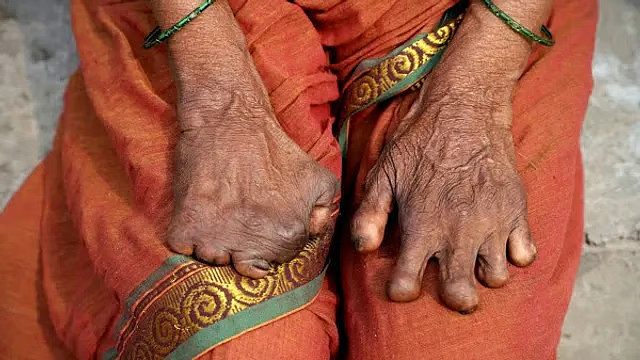
Leprosy continues to pose both a medical and social challenge in Maharashtra. Many patients still present late, often after nerve damage or deformities have already set in conditions that are entirely preventable with early treatment.
The state government’s mission, “Leprosy-Free Maharashtra by 2027,” sets ambitious but achievable goals:
- Zero local transmission of leprosy.
- Elimination of visible deformities in children.
- Comprehensive rehabilitation for affected individuals.
- Community awareness campaigns to combat lingering stigma and misinformation.
Health officials emphasize that success will depend on grassroots-level vigilance, regular screening, and public participation.
Empowering Health Workers and Local Systems
Frontline health staff, including Accredited Social Health Activists (ASHAs) and multi-purpose health workers, have been directed to actively identify and screen close contacts of every new case. Eligible contacts will be offered single-dose rifampicin prophylaxis (SDR-PEP), a WHO-endorsed preventive measure shown to reduce infection risk among exposed individuals.
In addition, follow-up visits will ensure complete treatment adherence and early detection of complications. The health department plans to use digital case-tracking tools to minimize data loss and enhance transparency.
Public Advisory and Awareness Measures
Authorities have urged citizens not to panic about the notification, clarifying that it is primarily a surveillance and prevention measure, not a sign of resurgence. Leprosy is fully curable, and treatment is free of cost at all government health facilities.
People are encouraged to seek immediate medical attention if they notice symptoms such as:
- Pale or reddish skin patches with loss of sensation.
- Numbness or tingling in hands or feet.
- Weakness in muscles or clawed fingers/toes.
- Loss of eyebrows or eyelashes.
Public awareness campaigns are being intensified across rural and urban Maharashtra through community radio, local health camps, and educational drives. Schools and Panchayat Raj institutions are also being roped in to spread awareness that early treatment prevents both disability and transmission.
Expert Opinions: A Needed Step for Early Intervention
Public health experts have hailed the move as timely and essential. Dr. Meenakshi Deshmukh, a senior dermatologist from Nagpur, noted,Similarly, social activists working with leprosy survivors have stressed the importance of coupling surveillance with anti-stigma campaigns. Many patients delay seeking treatment due to fear of discrimination a challenge the government’s outreach programs must address head-on.

Way Forward: Building a Leprosy-Free Maharashtra
The declaration of Maharashtra Leprosy Notifiable Disease marks a critical milestone in India’s fight against neglected tropical diseases. However, experts caution that notification alone will not be enough. Sustained investment in training, diagnostics, and rehabilitation will be vital to meet the 2027 elimination target.
The next steps include:
- Strengthening community-based case detection and contact screening.
- Expanding prophylaxis programs and ensuring uninterrupted MDT supply.
- Promoting digital health reporting systems for real-time data sharing.
- Addressing social stigma through inclusive campaigns led by local champions.
With coordinated action, transparent reporting, and public cooperation, Maharashtra’s initiative could serve as a model for other states, ensuring that no person suffers preventable disability or exclusion due to this ancient but curable disease.