




Maia 200 AI Chip: Microsoft Unveils Next-Generation Processor to Challenge Nvidia’s Dominance

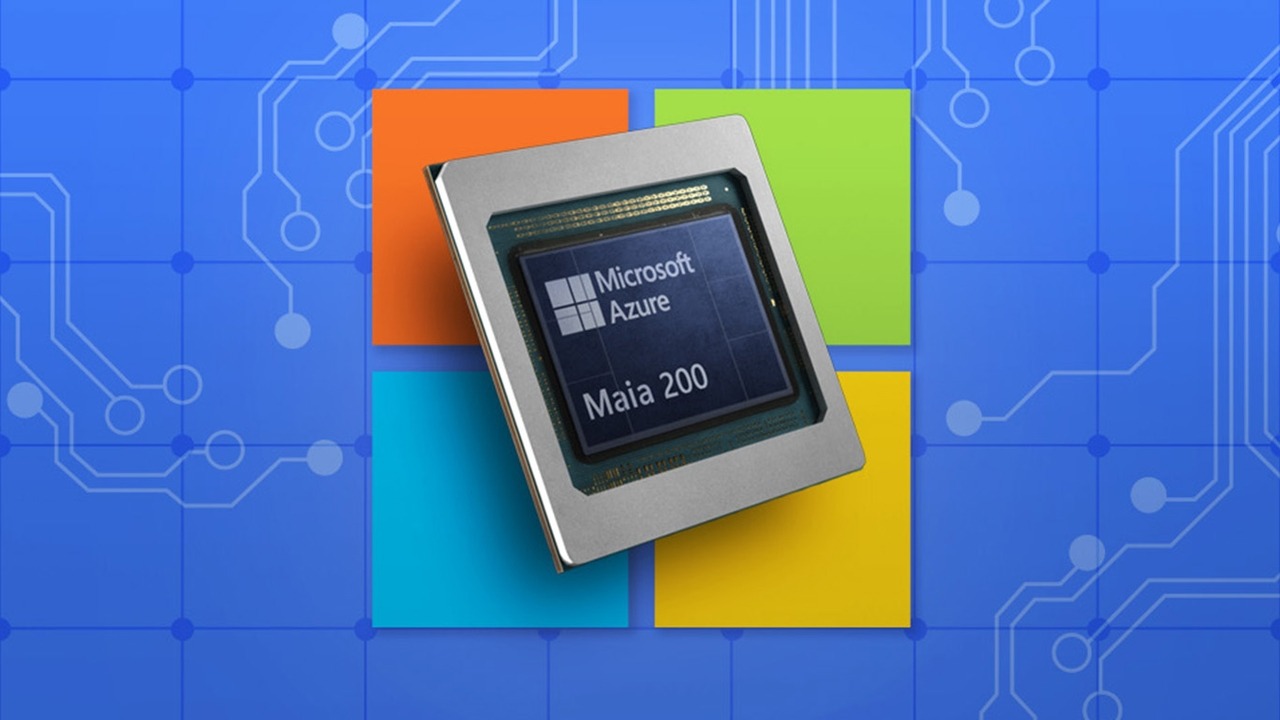
Maia 200 AI Chip is now at the center of Microsoft’s latest push to strengthen its position in the fast-growing artificial intelligence hardware market. With the unveiling of its second-generation in-house AI processor, Microsoft is sending a clear message: it wants more control over how AI systems are built, powered, and optimized inside its data centers. Alongside the new chip, the company has also introduced a software stack designed to make development easier and reduce dependence on Nvidia’s widely used ecosystem.
Thank you for reading this post, don't forget to subscribe!This move comes at a time when global demand for AI computing power is exploding. Cloud providers are racing to build faster, more efficient, and more cost-effective infrastructure. Microsoft’s Maia 200 represents an important step in that race.
Microsoft’s Growing Focus on Custom AI Hardware
Microsoft first entered the custom AI chip space in 2023 with the original Maia processor. That launch marked a shift from relying almost entirely on third-party hardware to building specialized chips in-house. The Maia 200 continues this strategy and shows that Microsoft is serious about long-term investment in AI silicon.
By developing its own chips, Microsoft gains better control over performance, power efficiency, and cost. It can also design hardware that is closely matched to the needs of its cloud services, including Azure AI, large language models, and enterprise applications.
The company has confirmed that Maia 200 will begin operating this week in a Microsoft data center located in Iowa. A second deployment is planned for Arizona in the near future. These initial rollouts will allow Microsoft to test the chip at scale and gradually integrate it into production workloads.
Why Cloud Companies Want Their Own Chips
Nvidia currently dominates the AI accelerator market. Its graphics processing units (GPUs) power a large portion of today’s AI training and inference workloads. However, Nvidia’s hardware is expensive, and demand often exceeds supply.
To reduce these challenges, cloud giants such as Microsoft, Google, and Amazon Web Services are designing their own processors. Custom chips give them greater bargaining power, more predictable supply, and the ability to fine-tune hardware for specific tasks.
Google’s Tensor Processing Units (TPUs) and Amazon’s Trainium and Inferentia chips are examples of this trend. Microsoft’s Maia family now joins this growing list. Over time, these in-house chips could significantly reduce the industry’s dependence on a single vendor.
Software as Important as Hardware
One of Nvidia’s biggest strengths is not just its chips, but its software platform called CUDA. CUDA has been around for many years and is deeply embedded in AI development workflows. Thousands of libraries, tools, and models are built around it.
Microsoft understands that strong hardware alone is not enough. Developers need tools that are easy to use and widely supported. That is why the company has introduced a new software stack alongside Maia 200.
A key part of this stack is Triton, an open-source programming framework that helps developers write efficient code for AI accelerators. OpenAI has made major contributions to Triton, which increases its credibility and adoption potential.
Triton aims to provide similar capabilities to CUDA, but in an open and flexible way. By supporting Triton, Microsoft hopes to make it easier for developers to run their models on Maia 200 without being locked into Nvidia’s ecosystem.
Manufacturing and Process Technology
Maia 200 is manufactured by Taiwan Semiconductor Manufacturing Company (TSMC), the world’s leading chip foundry. The chip uses advanced 3-nanometre process technology, the same level of manufacturing used for Nvidia’s upcoming high-end chips.
This advanced process allows more transistors to be packed into a smaller area, improving performance and energy efficiency. For data centers, this means more computing power within the same physical and power limits.
Using cutting-edge manufacturing also signals Microsoft’s commitment to keeping its chips competitive with the best in the market.
Memory Design and Performance Approach
Instead of relying solely on the latest generation of high-bandwidth memory, Maia 200 uses an older memory generation but balances this by adding large amounts of SRAM directly on the chip.
SRAM is faster than traditional memory, though more expensive and space-consuming. By integrating more SRAM, Microsoft aims to reduce data movement and speed up response times.
This design choice is particularly important for real-time AI tasks such as chatbots, voice assistants, and interactive applications. Faster access to frequently used data can make these systems feel more responsive and reliable.
Similar design strategies are being used by specialized AI chip companies like Cerebras Systems and Groq, suggesting a broader industry shift toward architectures optimized for low-latency performance.
How Maia 200 Fits Into Microsoft’s AI Strategy
Microsoft has invested heavily in AI across multiple layers, from hardware to software to applications. The company is a major backer of OpenAI and integrates AI features into products like Windows, Office, and Azure.
Maia 200 strengthens the foundation of this ecosystem. By controlling more of the infrastructure, Microsoft can better optimize costs and performance for its AI services. This could eventually translate into more affordable AI offerings for customers.
The chip also gives Microsoft more flexibility. Instead of competing head-to-head with Nvidia in selling hardware, Microsoft can focus on using Maia 200 internally to power its cloud, while still offering Nvidia GPUs to customers who need them.

Implications for Developers and Businesses with Maia 200 AI Chip
For developers, the rise of alternative AI chips means more choices. Instead of being tied to a single hardware and software platform, they can target multiple backends using open tools like Triton.
For businesses, this competition could lead to lower cloud computing costs over time. As cloud providers rely less on expensive third-party chips, they may pass some of the savings on to customers.
It also encourages faster innovation. When several companies push their own designs, new ideas in chip architecture and system optimization emerge more quickly.
A New Phase in the AI Hardware Race
The introduction of Maia 200 highlights how AI hardware competition is entering a new phase. It is no longer just about who has the fastest GPU. It is about who can build the best combination of chips, software, and cloud services.
Microsoft’s approach focuses on balance: competitive performance, open software tools, and tight integration with its cloud platform. While Nvidia remains a powerful force, the growing presence of custom chips like Maia 200 suggests a more diverse and dynamic future for AI computing.
As deployments expand and software support improves, Maia 200 could become a key part of Microsoft’s AI infrastructure, helping shape how large-scale artificial intelligence is built and delivered in the years ahead.