


Oil India Gas Discovery in Krishna-Godavari Basin

Oil India Gas Discovery was announced by Oil India Limited (OIL) on 23 October 2026 in the shallow offshore Krishna-Godavari Basin, off India’s eastern coast. The discovery was made in the Matsyapuri formation through the Godavari-1 well in the KG-DSF/GSKW/2018 block. Initial testing confirmed natural gas production along with condensate, a light liquid hydrocarbon found with natural gas. The discovery could provide useful information for future exploration and development in the region.
Oil India Gas Discovery in the Matsyapuri Formation
Oil India Limited made the discovery in a part of the Matsyapuri formation that had not been appraised before. Appraisal work helps companies understand the size and production potential of a known hydrocarbon discovery.

The Godavari-1 well was drilled to study the formation and check its ability to produce gas. According to the reported results, hydrocarbons were confirmed at depths between 2,024 and 2,027 metres.
OIL is the sole operator of the KG-DSF/GSKW/2018 block. The discovery adds to the company’s exploration activities in India’s offshore energy sector. Further testing is important because results from one section of a well may differ from those in other sections of the same geological formation.
Godavari-1 Well Records Natural Gas Production
Production testing at the Godavari-1 well began on 16 October 2026. Initial tests showed a natural gas production rate of approximately 100,000 standard cubic metres per day. The well also recorded a maximum continuous flow rate of 200,000 standard cubic metres per day during testing.
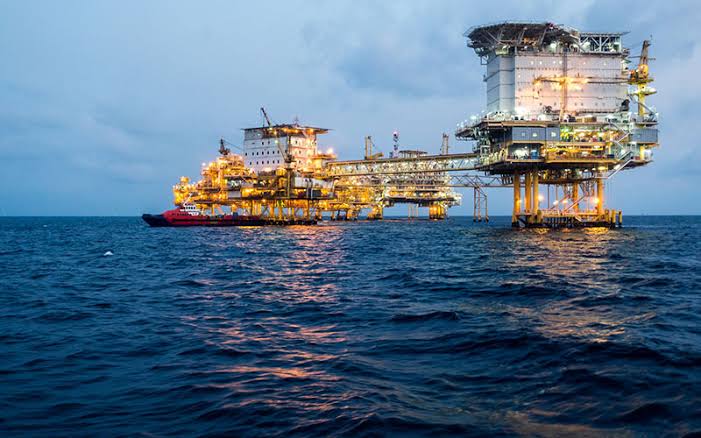
The test results also showed condensate production of around 170 barrels per day. The condensate had an API gravity of 55.8 at 60°F, while the wellhead pressure was reported at 1,815 pounds per square inch (psi).
These measurements help engineers understand the type of hydrocarbons present and how fluids move from the underground formation into the well. The reported production rates are test results and should not automatically be treated as confirmed long-term commercial production.
As of 23 October 2026, preparations were under way to test the next higher zone in the Matsyapuri formation. The results of additional tests can help determine whether the other section also contains hydrocarbons that can flow to the surface.
What Is the Krishna-Godavari Basin?
The Krishna-Godavari Basin is a major sedimentary basin along India’s eastern coast. It is associated with the Krishna and Godavari river deltas and extends offshore into the Bay of Bengal.
Sedimentary basins develop when layers of sediment build up over long periods. Under suitable conditions of pressure, temperature and geological structure, organic material buried within these layers can form oil and natural gas.
The Krishna-Godavari Basin contains both onshore and offshore areas and is an important region for hydrocarbon exploration in India. Oil and gas companies study its underground rock formations to identify resources and assess whether they can be developed safely and economically.
The KG-DSF/GSKW/2018 block is classified as a Discovered Small Field block. Such blocks are part of efforts to explore and develop smaller hydrocarbon discoveries that may not have been fully developed earlier.
Understanding the Gas and Condensate Test Results
The figures reported from the Godavari-1 well provide several details about its performance.
Standard cubic metres per day measure the volume of gas produced over a 24-hour period, adjusted to specified standard conditions of temperature and pressure. This allows production figures to be compared more consistently.
Condensate is a liquid hydrocarbon that can be recovered from certain natural gas reservoirs. It can have commercial value, depending on its quality, quantity and the cost of recovery.
API gravity is a scale used to describe the relative density of petroleum liquids. A higher API gravity generally indicates a lighter liquid. The reported value of 55.8 therefore indicates that the condensate from the well is relatively light.
Wellhead pressure measures the pressure at the surface equipment connected to the well. It is one of several factors engineers consider when assessing flow behaviour and planning further tests.
These measurements are useful for understanding the well, but additional geological, engineering and economic studies are needed before the long-term development potential can be established.
Why the Discovery Matters for India’s Energy Sector
Natural gas is used in power generation, fertiliser production, industrial processes, cooking fuel and several other applications. Domestic discoveries can contribute to India’s efforts to develop its own energy resources and reduce dependence on imported supplies, although the impact of an individual discovery depends on its final recoverable reserves and commercial viability.

The Oil India Gas Discovery also highlights the role of offshore exploration in identifying potential energy resources. Offshore projects require specialised equipment, detailed geological studies and careful safety planning. Before a field can move into full development, companies generally need to assess reservoir size, expected production, infrastructure requirements and environmental considerations.
The next phase of testing at Godavari-1 is therefore important. Information from additional zones can improve understanding of the Matsyapuri formation and support decisions about possible future development.
Key Details of the Oil India Gas Discovery
| Detail | Information |
|---|---|
| Company | Oil India Limited (OIL) |
| Announcement date | 23 October 2026 |
| Well | Godavari-1 |
| Formation | Matsyapuri |
| Block | KG-DSF/GSKW/2018 |
| Location | Krishna-Godavari Basin, offshore eastern India |
| Hydrocarbon found | Natural gas and condensate |
| Tested gas rate | Approximately 100,000 standard cubic metres per day initially |
| Maximum continuous gas flow reported | 200,000 standard cubic metres per day |
| Condensate production | Approximately 170 barrels per day |
| Next step | Testing another zone in the Matsyapuri formation |
The discovery provides new information about the hydrocarbon potential of the Krishna-Godavari Basin. Further testing and technical assessment will help clarify the resource’s development prospects and its possible contribution to India’s domestic energy supply.