
IPRD 2026: Indian Navy Hosts Indo-Pacific Dialogue

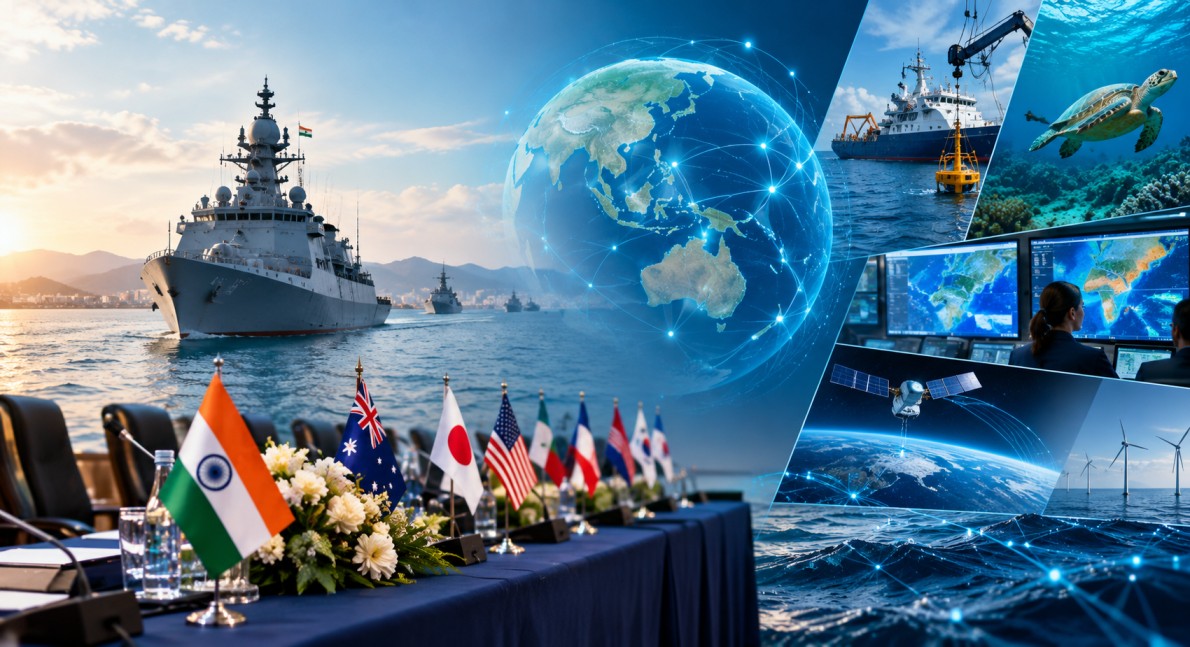
IPRD 2026 is scheduled to take place in New Delhi from 3 to 5 November 2026, with the Indian Navy hosting this major international maritime dialogue. The theme of the event is “Science, Technology and Academic Cooperation in the Indo-Pacific”. The conference will bring together policymakers, maritime experts, scientists, academics and technology specialists to discuss shared challenges and explore ways to improve cooperation across the Indo-Pacific region.
The Indo-Pacific is an important region for international trade, shipping, marine resources and security. The dialogue aims to encourage practical cooperation in ocean science, maritime technology, research and the protection of important maritime systems.

What Is the Indo-Pacific Regional Dialogue?
The Indo-Pacific Regional Dialogue (IPRD) is the Indian Navy’s main strategic maritime dialogue. It provides a platform for people from different countries and professional backgrounds to discuss developments affecting the maritime region.
The event focuses on understanding common challenges and identifying areas where countries can work together. These discussions can cover ocean research, climate risks, new technologies, maritime security and the responsible management of ocean resources.
The National Maritime Foundation, an Indian institution that works on maritime research and strategic policy discussions, is involved in organising the 2026 dialogue.
The conference is intended to connect scientific knowledge with policy decisions. By bringing researchers and decision-makers together, it aims to encourage solutions that can support maritime safety, cooperation and long-term regional stability.
Theme of IPRD 2026
The theme of IPRD 2026 is “Science, Technology and Academic Cooperation in the Indo-Pacific”. It highlights the growing role of scientific research, advanced technology and education in addressing maritime challenges.
Oceans face several connected pressures, including climate change, pollution, extreme weather and increasing demand for marine resources. At the same time, countries need reliable information about shipping routes, coastal infrastructure and activity at sea.
Science and technology can help improve understanding of these challenges. Academic partnerships can also support the exchange of knowledge, joint research projects and the training of specialists.
The dialogue will explore five main areas, covering ocean science and climate resilience, maritime technologies, ocean governance, maritime awareness, and academic cooperation.
Ocean Science and Climate Resilience
One focus area is oceanographic science and climate resilience. Oceanography is the study of the physical, chemical and biological features of oceans.
Research in this field helps scientists understand ocean currents, marine ecosystems, changing temperatures and other processes that affect coastal communities and maritime activity.
Climate resilience refers to the ability to prepare for, withstand and recover from climate-related risks. Rising sea levels, coastal flooding and severe storms can affect ports, shipping operations and coastal infrastructure.
Cooperation in ocean research can help countries share scientific information and improve their ability to prepare for these risks. Better data and joint research may also support the protection of marine environments.
Maritime Technology and Dual-Use Applications
Another major focus is the development of transformative maritime technologies. These include tools and systems that improve the collection of ocean data, navigation, communication and the monitoring of maritime activity.
Some technologies have both civilian and military uses. This is known as a dual-use application. For example, satellite-based observation and advanced sensors can support environmental research and commercial shipping while also helping authorities understand activity at sea.
The dialogue will provide an opportunity to discuss the benefits, risks and responsible use of such technologies. Cooperation in research and innovation can help countries improve their capabilities while addressing concerns about security and access to critical systems.
Ocean Governance and Maritime Resilience
Ocean governance refers to the rules, institutions and agreements used to manage ocean activities and resources. It includes issues such as maritime safety, marine conservation, the use of ocean resources and cooperation between countries.
Many maritime challenges cross national boundaries. Pollution can spread across waters, fishing activity can affect shared ecosystems, and disruptions to shipping routes can influence international trade.
Collaborative approaches can help countries exchange information and coordinate their responses to common problems.
Maritime resilience is also important. Ports, shipping networks and other maritime systems need to prepare for natural disasters, technical failures and security threats. The dialogue will explore ways to strengthen these systems and improve cooperation during disruptions.
Maritime Awareness and Protection of Critical Infrastructure
Maritime situational awareness means collecting and analysing information about activities at sea. It helps authorities build a clearer picture of ships, maritime movements and possible risks.
This information is important for protecting critical maritime infrastructure, including ports, communication links and other facilities that support maritime activity.
Disruptions to these systems can affect trade, transport and the movement of essential goods. Better information-sharing and suitable monitoring technologies can help authorities identify risks and respond more effectively.
IPRD 2026 will examine how countries can improve maritime awareness and strengthen the protection of important infrastructure across the region.
Academic Cooperation and Research Networks
The fifth focus area is academic networks, research and human-capital development. Universities, research institutions and maritime organisations can work together to study ocean-related problems and develop new solutions.
Joint research projects allow experts to share knowledge, compare findings and improve scientific methods. Training programmes can also help develop skilled professionals in oceanography, marine technology, maritime policy and related fields.
Building stronger academic networks is important because many maritime challenges require knowledge from several disciplines. Scientific research, engineering, environmental studies and policy analysis can all contribute to better decisions.
Why IPRD 2026 Matters
The Indo-Pacific is central to global shipping and trade, making maritime cooperation important for countries across the region. Scientific research, reliable technology and stronger communication can help address shared challenges while supporting safer and more resilient maritime systems.
IPRD 2026 will provide a platform to discuss these issues through five connected areas: oceanographic science and climate resilience; maritime technologies and their dual-use applications; ocean governance and maritime resilience; maritime awareness and infrastructure protection; and academic cooperation.
The dialogue is scheduled for 3-5 November 2026 in New Delhi. Its central goal is to encourage practical cooperation between experts, researchers and policymakers working on the future of the Indo-Pacific maritime region.