



TNBC Blood Test Research Gets ICMR Funding

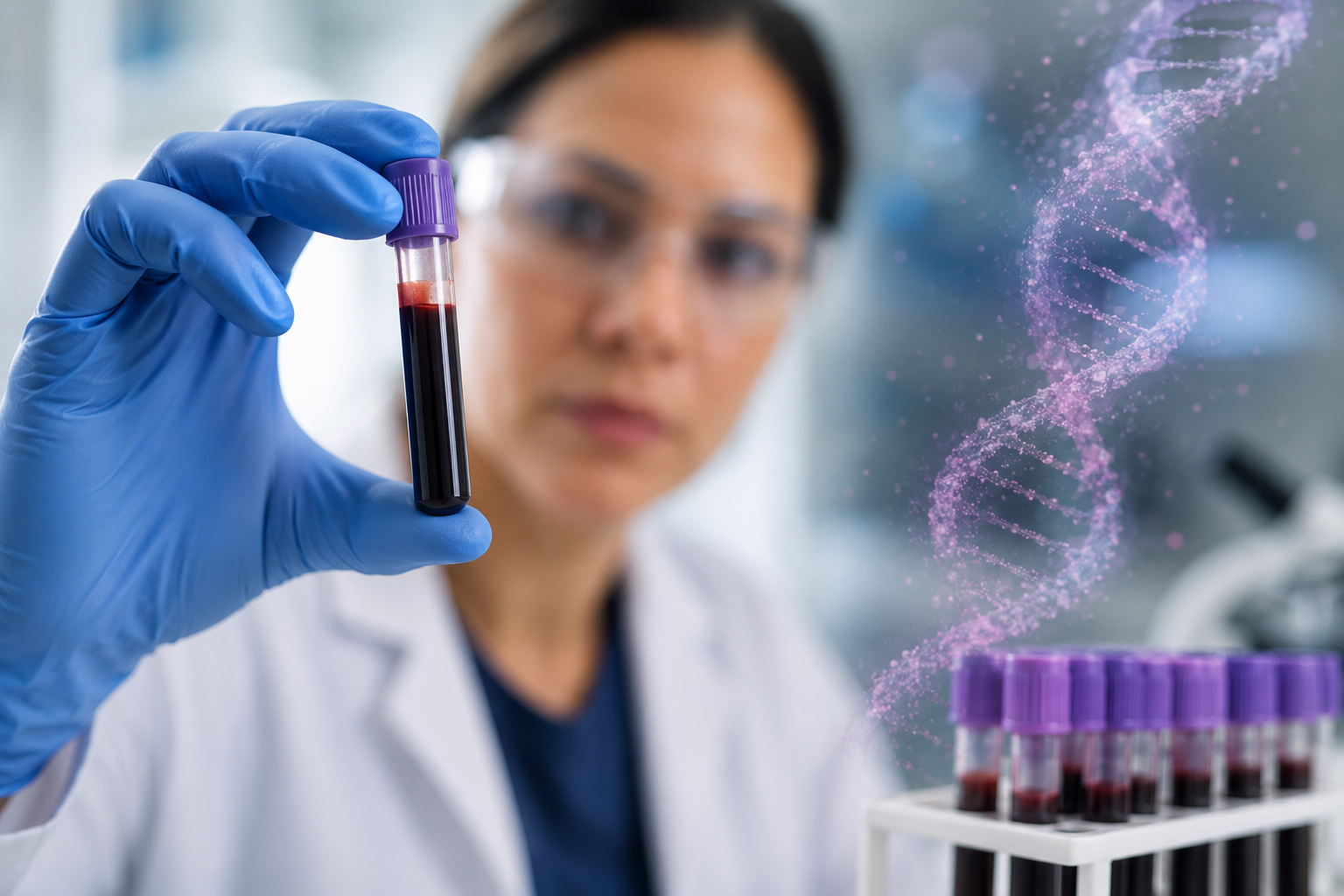
TNBC blood test research is gaining attention in India as scientists at GITAM (Deemed to be University) in Visakhapatnam, Andhra Pradesh, work to develop a blood test for the early detection of triple-negative breast cancer (TNBC). The project has received funding of more than ₹2 crore from the Indian Council of Medical Research (ICMR). The three-year research project aims to identify specific biological markers in blood that could help doctors detect this type of breast cancer at an early stage.
The research is being carried out under ICMR’s Follow-on Nischayak Anveshan Extramural Grants programme. Researchers plan to study tiny particles and genetic material present in blood samples to identify possible signs of the disease. If successful, the research could support the development of a kit-based diagnostic test in the future.

What Is Triple-Negative Breast Cancer?
Triple-negative breast cancer is a type of breast cancer in which tumour cells test negative for three important receptors: oestrogen receptors, progesterone receptors and human epidermal growth factor receptor 2 (HER2).
These receptors can influence the growth of some breast cancers and help doctors select suitable treatments. However, TNBC does not have these receptor characteristics, which means that treatments targeting oestrogen receptors, progesterone receptors or excess HER2 are not suitable for this subtype.
TNBC is an important area of cancer research because identifying the disease early can help doctors assess patients and plan appropriate treatment. Researchers are therefore looking for new methods that may detect the disease before it progresses.
The ICMR-funded project at GITAM aims to identify blood-based biological markers that could help detect early-stage TNBC. Such a method may offer another approach to diagnosis if future research confirms that the test is accurate and reliable.
ICMR Funds Research Worth More Than ₹2 Crore
The Indian Council of Medical Research is India’s leading organisation for the formulation, coordination and promotion of biomedical research. It supports scientific studies that aim to improve the understanding, prevention, diagnosis and treatment of diseases.
The GITAM project has been sanctioned under ICMR’s Follow-on Nischayak Anveshan Extramural Grants programme. The project will run for three years and has received funding of more than ₹2 crore.
Extramural grants support biomedical research conducted by researchers and institutions outside ICMR’s own institutes. Through such funding, the organisation encourages scientific teams to investigate health problems and develop possible solutions.
Professor Rama Rao Malla from the Department of Life Sciences at GITAM is the principal investigator of the project. His team will investigate biological material found in blood serum to identify potential markers associated with early-stage TNBC.
How Will the TNBC Blood Test Work?
The proposed TNBC blood test will focus on identifying biological markers in blood serum. Serum is the liquid part of blood that remains after clotting. Researchers will study samples collected from women with early-stage TNBC and compare them with samples from healthy women.
The team aims to find differences between the two groups that may help identify the presence of cancer. Two important areas of investigation are exosomes and microRNAs.
Role of Exosomes
Exosomes are extremely small, membrane-covered particles released by cells. They carry biological material, including proteins and nucleic acids, from one cell to another.
These particles may contain information about the cells from which they originate. Researchers are studying whether exosomes found in blood serum can provide useful clues about cancer.
In this project, scientists will examine exosomes in blood samples to identify material that may be linked to early-stage TNBC. If particular patterns are consistently associated with the disease, they could become useful candidates for developing a diagnostic test.
Importance of MicroRNA Biomarkers
MicroRNAs are small molecules of ribonucleic acid (RNA) that help regulate gene activity. They do not directly produce proteins but influence how genes are expressed.
Changes in certain microRNAs may be associated with different diseases, including cancer. Scientists are investigating whether specific microRNAs carried by exosomes can help distinguish women with early-stage TNBC from healthy individuals.
The research team will analyse these molecules to identify possible biomarkers. A biomarker is a measurable biological feature that can provide information about a condition or disease.
Finding reliable biomarkers is an important step towards developing a blood test that may help doctors identify TNBC at an early stage.
Use of Sequencing and Digital PCR
The researchers will use sequencing and digital polymerase chain reaction (digital PCR) to study the microRNAs found in blood samples.
Sequencing helps scientists examine genetic material and identify particular molecular patterns. It can help researchers determine which microRNAs may be worth investigating further.
Digital PCR is a laboratory technique used to detect and measure specific nucleic acid targets. It divides a sample into many small reactions, allowing researchers to estimate the amount of a particular genetic target present.
By combining these methods, the team aims to identify candidate microRNAs that could serve as biomarkers for TNBC. The selected markers will need further evaluation to determine whether they can reliably distinguish patients with early-stage cancer from healthy individuals.
Machine Learning May Help Identify Cancer Patterns
The project also plans to use machine learning to analyse the research findings. Machine learning is a form of artificial intelligence that allows computer systems to identify patterns in data and use them to make predictions.
Researchers intend to train a machine-learning model using information obtained from the blood samples. The model will be developed to distinguish women with early-stage TNBC from healthy individuals based on the identified biological markers.
This approach may help scientists examine complex data and identify combinations of markers that are difficult to assess using a single measurement.
However, a model developed during research must be carefully tested using appropriate samples before it can be considered suitable for medical use. Its accuracy, reliability and ability to work across different patient groups will need to be established.
GITAM and Cancer Research Institutions Join Hands
The project involves researchers and medical institutions that will contribute scientific expertise and patient samples.
Mahatma Gandhi Cancer Hospital & Research Institute and GITAM Institute of Medical Sciences and Research will provide samples for the study. These samples will help researchers compare the biological characteristics of women with early-stage TNBC and healthy women.
The co-investigators from GITAM School of Science include P. Kiranmayi, P. Vasudevaraju, A. Krishna Chaitanya and M. Srivenkatesh. K. Viswa Kalyan represents GITAM Institute of Medical Sciences and Research, while V. Muralikrishna is associated with Mahatma Gandhi Cancer Hospital & Research Institute.
The involvement of research and medical institutions is important because developing a diagnostic test requires laboratory analysis as well as access to suitable patient samples.

Future Goal: A Kit-Based Blood Test
The main goal of the three-year project is to identify suitable biomarkers and use the findings to develop a kit-based test for early-stage TNBC.
A kit-based test could eventually provide a more practical way to detect the selected biomarkers in blood samples. However, the project is still in the research and development stage. The proposed test is not yet an established diagnostic method.
Before it can be used in routine healthcare, researchers will need to establish its accuracy, reliability and safety through appropriate validation studies. Further evaluation will also be necessary to understand how well the test performs in different groups of patients.
If the research produces successful results, it could contribute to the development of new diagnostic approaches for triple-negative breast cancer. It may also add to the wider scientific understanding of how exosomes and microRNAs can be used in cancer research.
The ICMR-funded initiative highlights the role of biomedical research in exploring new ways to identify diseases. By combining blood-based biomarkers, laboratory techniques and machine learning, the GITAM team hopes to develop a useful approach to the early detection of TNBC.