



Ashoke Sen Wins 2026 Oskar Klein Medal

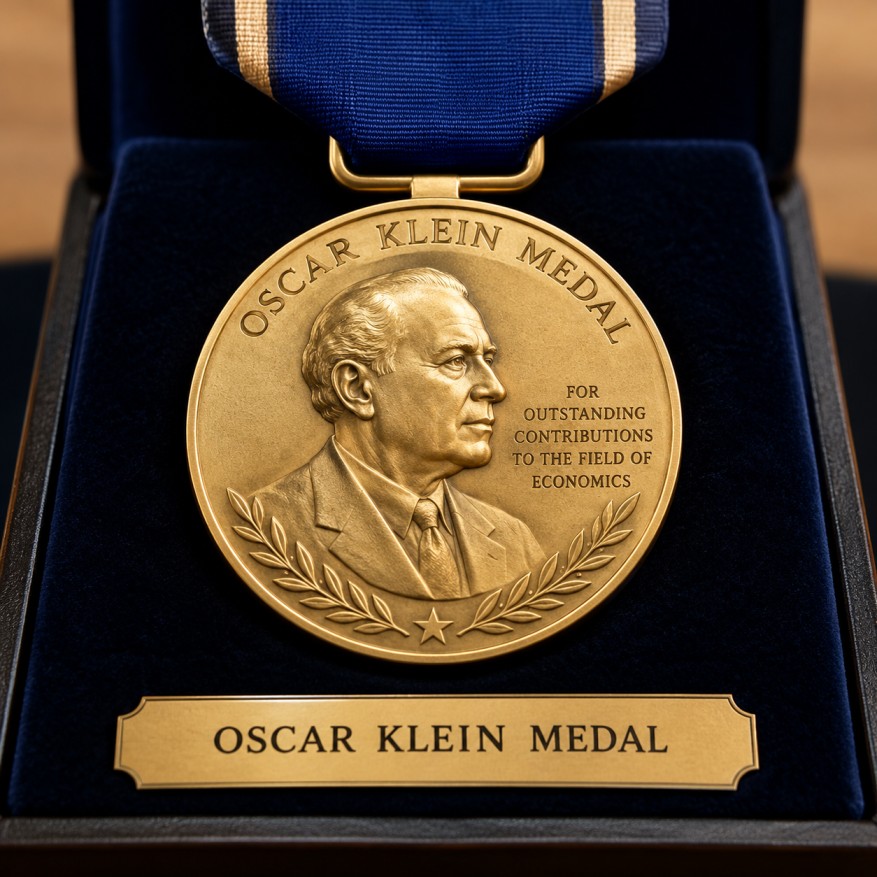
Ashoke Sen received the 2026 Oskar Klein Medal on 22 October 2026, becoming the first Indian physicist to receive this prestigious honour. The medal recognises his important contributions to theoretical physics, particularly string theory, black hole physics and the study of fundamental forces. It is awarded annually by Stockholm University and the Nobel Committee for Physics of the Royal Swedish Academy of Sciences.
Sen’s achievement brings international recognition to India’s scientific research community. His work over more than four decades has helped physicists explore some of the most difficult questions about the nature of the universe, gravity and the basic building blocks of matter.

What Is the Oskar Klein Medal?
The Oskar Klein Medal is named after Oskar Klein, a Swedish theoretical physicist known for his contributions to modern physics. The award recognises outstanding scientific work in theoretical physics.
The 2026 medal was presented to Ashoke Sen in recognition of his contributions to string theory and related areas of research. These fields help scientists explore how gravity and quantum physics may fit into a common theoretical framework.
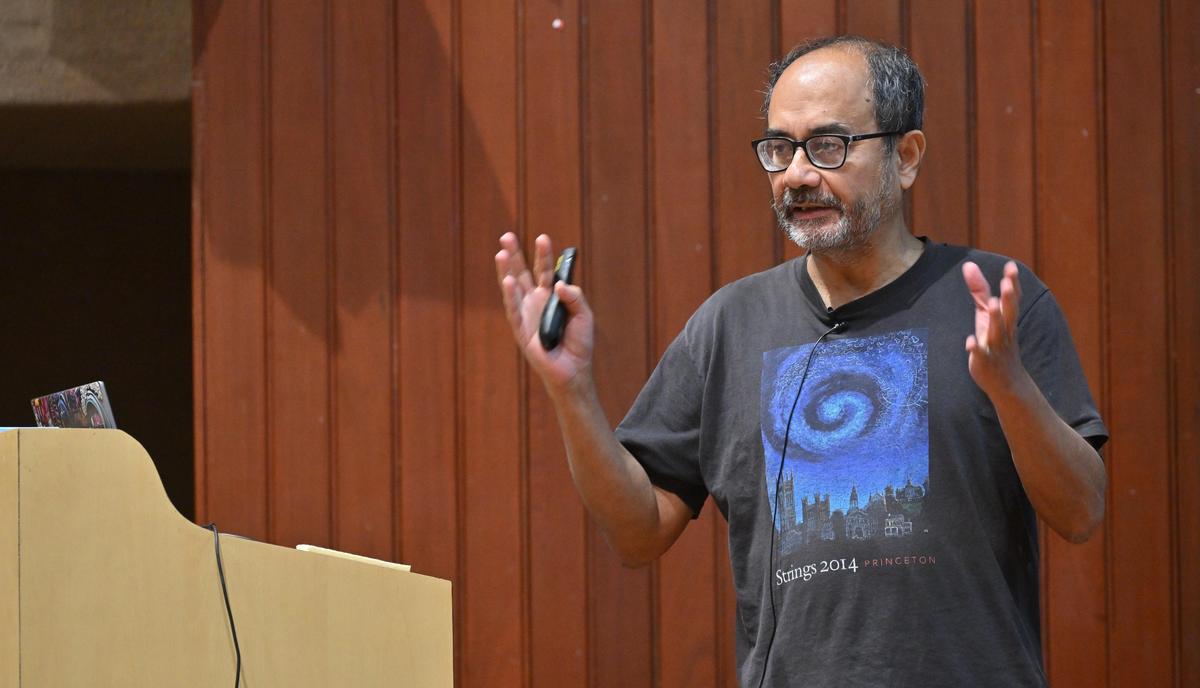
On 22 October 2026, Sen also delivered the Oskar Klein Memorial Lecture at the AlbaNova Centre of Stockholm University. His lecture was titled “Gravity from Strings and Strings from Gravity”.
The lecture reflected a central question in modern theoretical physics: how ideas from string theory can help explain gravity, and how the study of gravity can provide new insights into string theory.
Who Is Ashoke Sen?
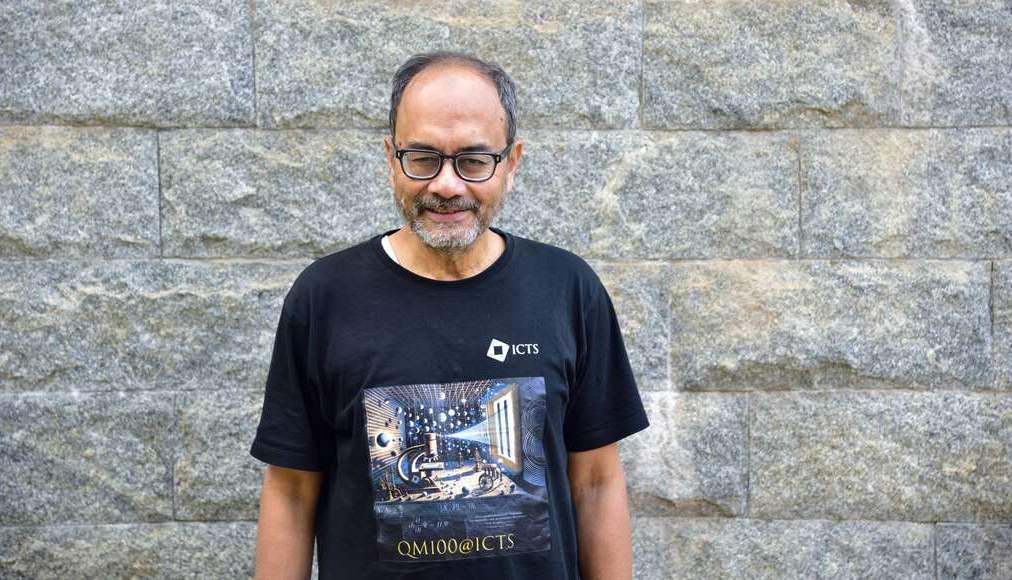
Ashoke Sen is an Indian theoretical physicist who has made major contributions to string theory. He serves as the ICTS-Infosys Madhava Chair Professor at the International Centre for Theoretical Sciences (ICTS) in Bengaluru.
His research focuses on understanding the mathematical structures behind fundamental physics. Unlike experimental physics, which often involves testing ideas through laboratory measurements, theoretical physics develops mathematical models to explain how nature works.
Sen has spent more than four decades studying questions about the fundamental laws of the universe. His work has influenced research into black holes, quantum gravity and the relationships between different descriptions of physical systems.
His international recognition also highlights the contribution of Indian scientists to research that seeks to explain the deepest questions in physics.
What Is String Theory?
String theory is a theoretical framework that describes the basic building blocks of nature as tiny, one-dimensional objects called strings rather than treating all fundamental particles as point-like objects.
According to the theory, different patterns of vibration of these strings correspond to different particles. Researchers study string theory because it offers a possible way to describe gravity within a framework that also includes ideas from quantum physics.
However, string theory remains a theoretical area of research. It has not been experimentally confirmed as a complete description of nature.
Ashoke Sen’s work has helped scientists understand the mathematical properties of string theory and the relationships between different versions of the theory.
Sen’s Work on S-Duality
One of Sen’s important contributions involves a concept known as S-duality. In certain physical theories, S-duality connects a description that works at strong coupling with another description that works at weak coupling.
Coupling describes the strength of interactions between particles or fields. When a theory has strong coupling, calculations may be difficult to carry out directly. A related weak-coupling description can sometimes provide a different way to understand the same physics.
These relationships help researchers study theories that would otherwise be difficult to analyse. Sen’s work on dualities has become an important part of research in string theory and related areas.
Understanding Black Hole Entropy
Ashoke Sen has also contributed to research on black hole entropy. A black hole is an object whose gravity is so strong that, beyond a boundary called the event horizon, light cannot escape.
In physics, entropy is related to the number of microscopic states that can correspond to the same overall physical system. Black holes have entropy, and the Bekenstein–Hawking formula connects this entropy to the area of the event horizon.
A major challenge for theoretical physicists is to explain this result using the microscopic properties of the underlying theory. Sen’s research has helped scientists count possible microscopic states for certain classes of black holes in string theory.
This work connects gravity, quantum physics and the statistical description of physical systems.
Other Major Awards Received by Ashoke Sen
The Oskar Klein Medal adds to several major honours received by Sen during his career.
In 2012, he received the Breakthrough Prize in Fundamental Physics for his contributions to string theory. In 2014, he received the Dirac Medal, which recognises outstanding contributions to theoretical physics and is named after physicist Paul Dirac.
These awards reflect the international importance of his research. On 24 October 2026, the Office of the Principal Scientific Adviser to the Government of India congratulated Sen on receiving the Oskar Klein Medal.
Why His Research Matters
Theoretical research often takes many years to develop and may not lead to immediate practical applications. However, it can change how scientists understand the universe and guide future investigations.
Research on string theory, black holes and quantum gravity explores questions that cannot be fully answered by ordinary theories of matter and gravity alone. Work in these areas may help scientists develop a deeper understanding of the relationship between quantum mechanics and Einstein’s theory of general relativity.
Ashoke Sen’s 2026 Oskar Klein Medal recognises his role in advancing these ideas. His achievement also highlights the importance of long-term scientific research and India’s contribution to international efforts to understand the fundamental laws of nature.