


Oscar Whitfield Wins Young Wildlife Photography Award

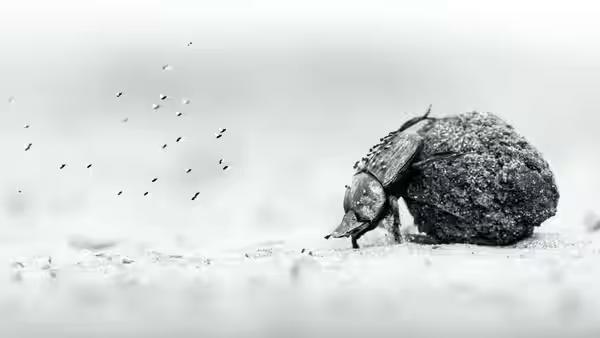
Oscar Whitfield, a 14-year-old British wildlife photographer living in Zimbabwe, was named Young Wildlife Photographer of the Year 2026 on 14 October 2026. He won the award with a black-and-white photograph titled “Labour of Love”, which shows a dung beetle pushing a ball of dung. The image was taken in Zimbabwe, where Whitfield lay on the ground to photograph the small insect at eye level.
The winning photograph highlights the beauty of wildlife that people may often overlook. Instead of focusing on a large or rare animal, Whitfield captured a small beetle performing a natural activity. The image shows how patience, careful observation and a creative approach can turn an ordinary moment in nature into an award-winning photograph.

The award is part of the Wildlife Photographer of the Year competition, organised by the Natural History Museum in London. The 2026 edition attracted a record number of entries from around the world.
About the Wildlife Photographer of the Year Competition
The Wildlife Photographer of the Year competition is an international photography event that celebrates images of animals, plants and the natural world. It is organised by the Natural History Museum in London, United Kingdom.
The competition provides photographers with an opportunity to share images that show wildlife behaviour, natural habitats and the relationship between living things and their environment. Photographs may capture dramatic animal encounters, rare species, everyday behaviour or the effects of environmental changes.
The 2026 competition received 65,403 entries from 121 countries and territories, making it a record year for submissions. This wide participation reflects the global interest in wildlife photography and the importance of documenting nature.
The competition includes an overall adult award and a young photographer award. The young category encourages children and teenagers to develop their photography skills while learning to observe wildlife and appreciate the natural world.
The 2026 edition marked the competition’s 62nd year, continuing its long history of bringing wildlife photography to an international audience.
“Labour of Love”: The Winning Photograph
Oscar Whitfield’s winning image is titled “Labour of Love”. It features a dung beetle pushing a ball of dung across the ground. The photograph was taken in Zimbabwe and uses a black-and-white style to draw attention to the beetle and its activity.
Whitfield photographed the insect from ground level, positioning his camera at the beetle’s eye level. This viewpoint allows viewers to look closely at a small animal that might otherwise be missed while walking through nature.
Taking wildlife photographs at such a close level can require patience and careful positioning. Photographers must observe the animal without disturbing its natural behaviour and wait for a suitable moment to capture the image.
The black-and-white approach also gives the photograph a distinct appearance. Without colour, details such as shape, texture, light and shadow become more noticeable.
The image demonstrates that wildlife photography does not always require travelling to distant forests or searching for large animals. Even a small insect can tell an interesting story when photographed with care and attention.
A Historic Moment for Black-and-White Wildlife Photography
The 2026 competition recorded a notable result because both the adult and young overall winners were recognised for black-and-white photographs. According to the supplied report, this was the first time in the competition’s 62-year history that both overall winners were awarded for monochrome images.
Black-and-white photography removes colour from an image and places greater emphasis on contrast, texture, shape and lighting. In wildlife photography, this approach can help viewers focus on an animal’s movements and physical features.
Colour photographs can show the natural appearance of an animal and its surroundings, while black-and-white images may create a different visual effect. Neither approach is automatically better; the choice depends on the subject and the photographer’s intention.
In Whitfield’s image, the monochrome style helps draw attention to the dung beetle and the ball it is pushing. The photograph also encourages viewers to look closely at the role of small creatures in the natural world.
What Are Dung Beetles?
Dung beetles are insects that feed partly or entirely on animal dung. Many belong to the subfamily Scarabaeinae within the beetle family Scarabaeidae.
Different dung beetle species use dung in different ways. Some shape it into balls and roll it away, while others bury dung beneath the soil or use it in underground chambers. The ball-rolling behaviour shown in Whitfield’s photograph is one of the best-known activities associated with these insects.
Dung may seem like waste, but it contains organic matter and nutrients that can be reused within an ecosystem. Dung beetles help move this material through the environment by burying it or placing it underground.
Their activities can support nutrient recycling and soil processes. By moving dung away from the surface, they also help return organic material to the ground, where it can contribute to soil health.
These insects are therefore part of the natural processes that keep ecosystems functioning. Their behaviour shows how even small animals can have an important role in the environment.
Why Wildlife Photography Matters
Wildlife photography helps people observe animals and their behaviour without needing to encounter them directly. It can document species, habitats and ecological relationships while making the natural world more accessible to a wider audience.
Photographs can also draw attention to animals that are often overlooked. Small insects, for example, may not receive the same attention as elephants, tigers or other large animals, even though they play important roles in ecosystems.
International competitions such as Wildlife Photographer of the Year encourage photographers to record nature with creativity and care. Their images can help audiences understand animal behaviour and develop greater interest in biodiversity and conservation.
Photography alone cannot protect wildlife, but it can support awareness by showing people what exists in nature and why it matters. Responsible wildlife photography also requires respect for animals and their habitats, avoiding actions that may disturb or harm them.
Oscar Whitfield’s Achievement and Global Recognition
Winning the Young Wildlife Photographer of the Year 2026 award is a major achievement for 14-year-old Oscar Whitfield. His photograph stood out among entries submitted from countries and territories around the world.
The success of “Labour of Love” also shows the value of careful observation. Whitfield focused on a small creature and captured a behaviour that has an important place in nature.
His achievement comes in a competition that received 65,403 entries from 121 countries and territories in 2026. The record participation demonstrates the broad international interest in photographing and understanding wildlife.
Through this award, Whitfield’s photograph brings attention to dung beetles, their natural behaviour and the wider importance of small creatures in ecosystems. It also highlights how young photographers can contribute to the appreciation of the natural world through thoughtful images.