


Plan Bee Saves Elephants

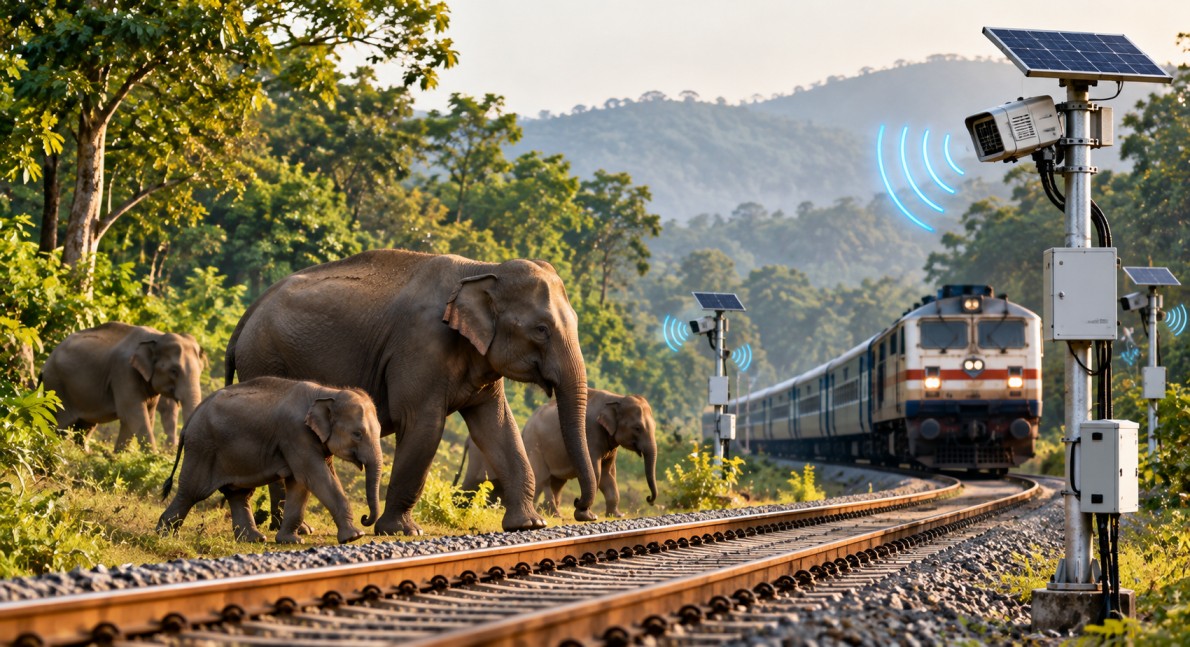
Plan Bee is part of a wider technology-based effort by Indian Railways to prevent elephant-train collisions in the Northeast. Between January and September 2026, the Northeast Frontier Railway (NFR) reported that timely interventions helped prevent potential collisions involving 255 elephants across its Alipurduar, Lumding, Rangiya and Tinsukia divisions. The effort combines AI-based detection, speed restrictions, patrolling, forest department coordination and sound-based deterrence.
Thank you for reading this post, don't forget to subscribe!255 Elephants Protected in Nine Months
According to NFR, the 255 cases were recorded across four divisions. Lumding recorded the highest number with 122 elephants, followed by Alipurduar with 106. Tinsukia recorded 15 cases, while Rangiya recorded 14.
These interventions are important because several railway routes in Assam and neighbouring areas pass through elephant habitats and movement corridors. When elephants approach railway lines, even a short warning can give train crews and railway officials time to slow or stop trains and allow the animals to move safely.
NFR has increased monitoring and communication in vulnerable areas to respond quickly when elephant movement is detected. The railway is also working closely with forest officials because wildlife movement can change according to season, food availability and local habitat conditions.
How Plan Bee Works
Plan Bee is a sound-based deterrent developed for railway locations where elephants frequently approach the tracks. The system uses amplified sounds associated with honeybees to discourage elephants from moving towards railway lines.
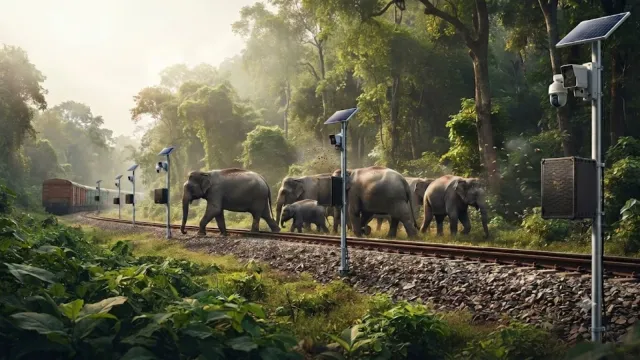
The idea is based on the known behaviour of elephants, which can avoid areas where they sense bees because bee stings can affect sensitive parts of their bodies, including the eyes, ears and trunk.
The system does not physically block elephants. Instead, it attempts to influence their movement before they reach the railway track. It is therefore being used together with other safety measures rather than as a single solution.
AI Detects Elephant Movement
A major part of the newer approach is the AI-based Intrusion Detection System (IDS). Indian Railways developed the system to detect elephant movement near tracks using Distributed Acoustic Sensing technology.
The system uses optical fibre along railway routes as a sensing medium. Changes in vibrations and acoustic patterns can help identify movement close to the track. When the system detects a possible elephant intrusion, alerts can be sent to loco pilots, station masters and control rooms.
As of February 2026, the IDS was operational over 141 route kilometres on vulnerable sections of the Northeast Frontier Railway. Indian Railways has also sanctioned IDS works covering 1,158 route kilometres across eight railway zones at a total cost of about ₹208 crore.
The technology is designed to support human decision-making. It gives railway staff an early warning, while train crews and control-room teams take the necessary operational action.
Speed Restrictions Add Another Safety Layer
Technology is being supported by changes in train operations. NFR imposes temporary or night-time speed restrictions in locations where elephant movement has been reported.
Lower train speeds can provide drivers with more time to react if an elephant or herd is detected near the track. Railway personnel also conduct additional patrols in vulnerable areas and provide warning signs to alert train crews.
These steps are especially useful at night, when elephants may cross railway lines while visibility for train crews is limited.
Underpasses and Habitat-Sensitive Measures
Indian Railways is also using physical infrastructure to reduce the need for elephants to cross active railway tracks.
Underpasses and ramps are being constructed at identified locations to provide safer routes for wildlife. Fencing is also used at selected vulnerable locations to discourage animals from entering railway areas.
Railway authorities have further cleared vegetation and edible material close to tracks in some locations. The aim is to reduce conditions that could attract elephants towards the railway corridor.
The Ministry of Environment, Forest and Climate Change has identified 77 critical railway stretches where elephant mortality needs stronger attention. A national workshop in March 2026 also recommended 705 mitigation structures, showing that the issue is being addressed through a wider national strategy.
Assam Remains an Important Area
The Northeast is particularly important for elephant conservation because railway lines pass through several forest landscapes and elephant corridors.
In Assam, the government and railway authorities are also working on infrastructure solutions. One example is the sensitive Azara-Kamakhya railway section, which intersects the Rani-Garbhanga-Deepor Beel elephant corridor. The Environment Ministry said a 3.5-kilometre section is planned to be elevated to allow safer elephant movement.
This approach shows that preventing collisions is not only about warning trains. Changing railway infrastructure can also help animals cross their traditional movement routes more safely.
Gajraj AI Adds Another Technology Layer
Another technology-based project being used for elephant protection is Gajraj AI in Tamil Nadu. The system uses technologies such as thermal imaging and monitoring tools to identify elephants near railway tracks.
Reports in August 2026 said the system had facilitated nearly 9,500 safe elephant crossings on its monitored stretch without an elephant fatality since its operation.
The experience from such projects is adding to India’s wider use of technology for reducing human-wildlife conflict around railway infrastructure.
Food Waste Can Also Attract Elephants
Railway authorities are also focusing on a less technological but important issue: food waste.
NFR has been sensitising train crews, railway employees, pantry staff and passengers against throwing food waste near railway tracks. Discarded food can attract elephants and other wild animals towards railway areas, increasing the risk of encounters with trains.
This means passenger behaviour can also contribute to wildlife safety. NFR has said that awareness programmes and coordination with forest officials will continue along vulnerable routes.
Technology and Conservation Work Together
The latest measures show how Indian Railways is combining technology with traditional railway safety practices. AI-based alerts can detect movement, Plan Bee can discourage elephants from approaching tracks, speed restrictions can give train crews more reaction time, and underpasses can provide alternative routes.
Indian Railways has also expanded the use of artificial intelligence and digital systems in other areas of railway safety. In July 2026, the government reported that AI and technology-based systems were being used for real-time monitoring, automated alerts and improved accident prevention across the railway network.
For elephant corridors, the challenge remains particularly complex because railway lines often cross established wildlife movement routes. The continuing use of detection systems, wildlife infrastructure, operational restrictions and cooperation with forest departments is therefore becoming an important part of railway safety in the Northeast.