

Shenzhou-24 Mission: Pakistan’s First Astronaut to Fly

Shenzhou-24 Mission is an important development in international space cooperation between China and Pakistan. China is scheduled to launch the Shenzhou-24 spacecraft on November 25, 2026, carrying Pakistani payload specialist Muhammad Zeeshan Ali. His participation will make him the first Pakistani to travel to space and the first foreign astronaut to visit China’s Tiangong space station. The mission is part of China’s growing space programme and its cooperation with other countries.
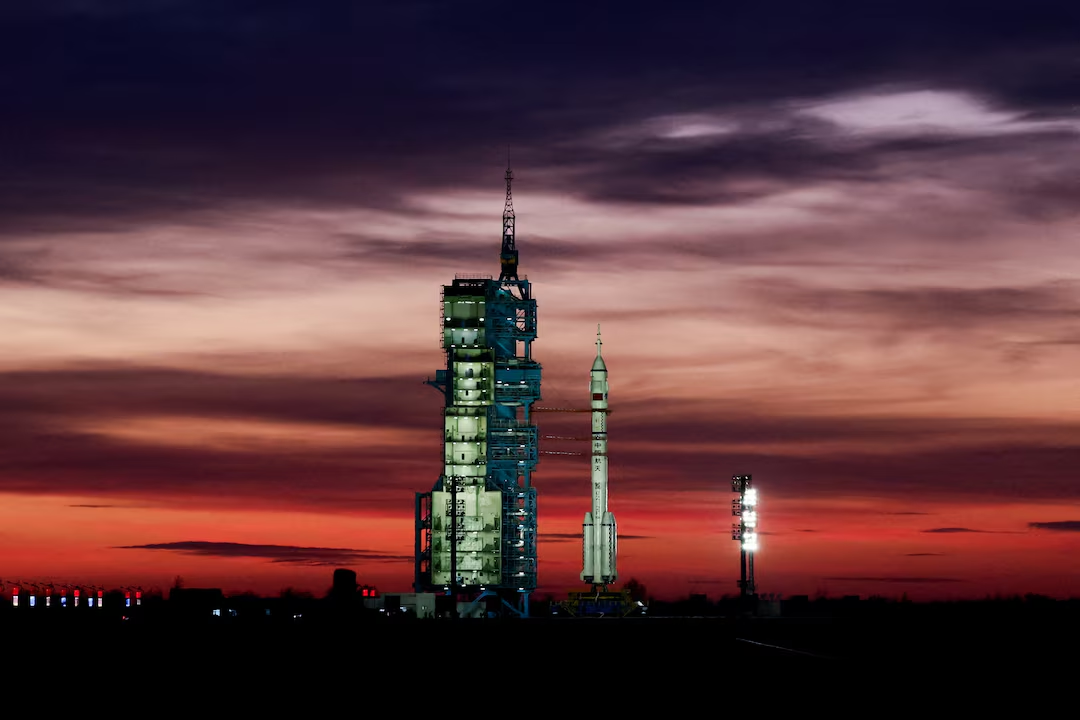
The spacecraft is scheduled to lift off at 8:18 a.m. Beijing time from the Jiuquan Satellite Launch Center in northwest China. The mission will use a Long March-2F rocket to transport its three-member crew to the Tiangong space station.

Pakistan’s First Astronaut to Travel to Space
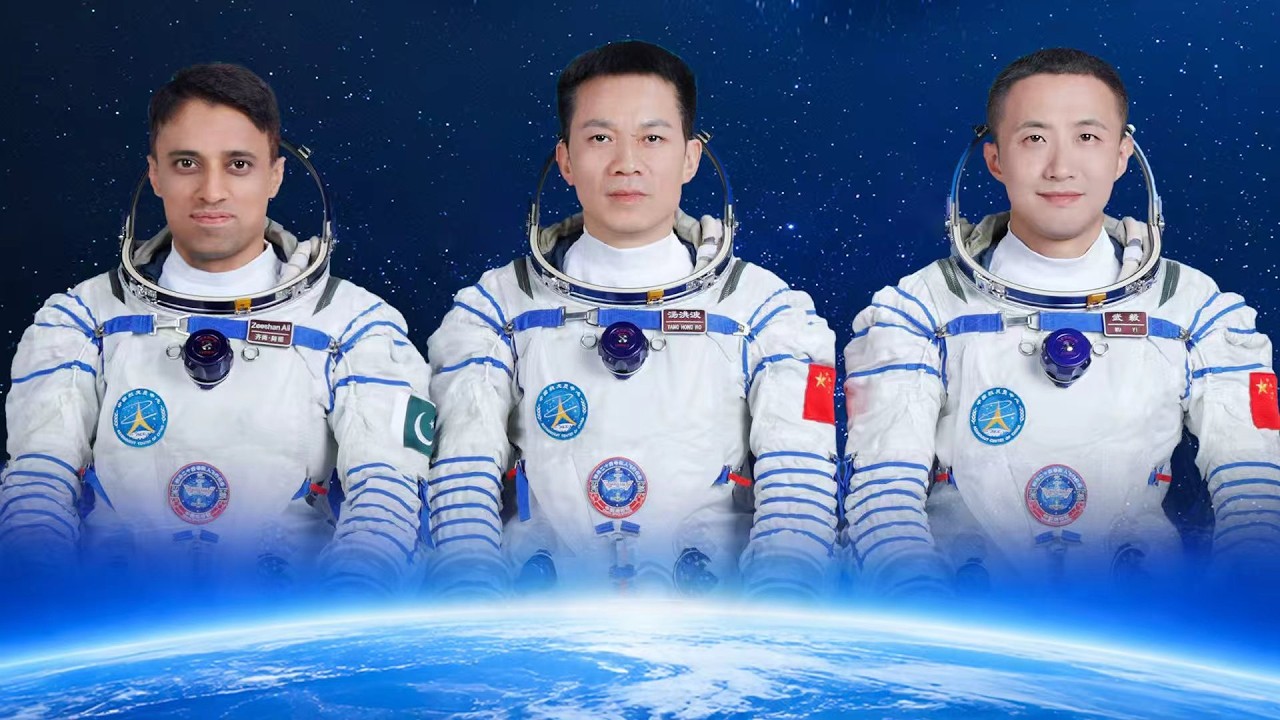
Muhammad Zeeshan Ali will become the first Pakistani to travel to space through this mission. He will participate as a payload specialist and conduct activities related to the mission’s scientific work.
His participation is part of the space cooperation between China and Pakistan under their bilateral partnership, which also includes cooperation through China’s Belt and Road Initiative.
The mission is an important opportunity for Pakistan to participate in human spaceflight activities. It also represents China’s effort to expand international cooperation in space research and scientific development.
Three-Member Crew of the Shenzhou-24 Mission
The Shenzhou-24 spacecraft will carry three crew members. The team includes commander Tang Hongbo, flight engineer Wu Yi and Pakistani payload specialist Muhammad Zeeshan Ali.
On November 24, 2026, the China Manned Space Agency (CMSA) announced that the crew members were in good condition and preparations for the launch had been completed.
The astronauts will travel to the Tiangong space station, where they will carry out scientific activities and work alongside the existing station crew. The mission will also include an in-orbit crew rotation with astronauts from Shenzhou-23.
Mission Objectives and Scientific Experiments
The Shenzhou-24 mission is the 41st flight mission of China’s crewed space programme. It will focus on scientific research, technology testing and activities related to the continued operation of the Tiangong space station.
During the mission, astronauts are expected to conduct around 90 scientific experiments and technology tests. These activities will cover different areas of space research and help scientists understand how equipment and materials perform in the space environment.
Muhammad Zeeshan Ali is expected to spend approximately one week aboard the Tiangong space station. After completing his scheduled activities, he will return to Earth with two members of the Shenzhou-23 crew.
The mission will also support the regular exchange of astronauts and scientific work aboard China’s space station.
China’s Tiangong Space Station and Its Structure
China’s Tiangong space station is an important part of its independent human spaceflight programme. It has a T-shaped structure consisting of three main modules: Tianhe, Wentian and Mengtian.
The Tianhe module serves as the central living and control section of the station. The Wentian and Mengtian modules are laboratory sections used for scientific research and experiments.
The station also has robotic arms that support astronauts during external operations. The robotic arms attached to the Tianhe and Wentian modules can be connected to form a manipulator approximately 15 metres long. It helps astronauts carry out maintenance and other activities outside the station.
Long March-2F Rocket and Astronaut Safety
The Shenzhou-24 spacecraft will be launched using China’s Long March-2F rocket. This rocket is specially designed to support China’s crewed space missions.
It includes an advanced fault-monitoring and diagnosis system to identify technical problems during flight. The system is designed to support emergency escape procedures and improve astronaut safety.
China’s Shenzhou spacecraft series has also undergone several technological developments. Earlier spacecraft, from Shenzhou-2 to Shenzhou-6, had orbital modules with independent propulsion, solar power and control systems. This independent-flight capability was removed from Shenzhou-7 onwards as the programme developed.
China’s Growing International Space Cooperation
The Shenzhou-24 mission represents an important step in China’s international space cooperation. Pakistan’s participation as a payload specialist provides an opportunity for the country to become involved in human spaceflight and scientific research.
China has continued to develop its space station, launch vehicles and research facilities as part of its long-term space programme. The participation of an international astronaut also brings greater attention to the Tiangong space station.
With scientific experiments, astronaut exchange activities and international cooperation, the Shenzhou-24 mission is an important event in China’s space programme in November 2026.