




Emotional Intelligence: Meaning, Importance and Benefits in Daily Life

Emotional Intelligence is the ability to understand, manage, and use emotions in a positive way. It helps a person control feelings, make better decisions, build strong relationships, and handle stress effectively. In today’s world, emotional intelligence is considered one of the most important life skills because success depends not only on knowledge but also on how well we manage emotions.
Thank you for reading this post, don't forget to subscribe!The famous philosopher Aristotle once said, “Anybody can become angry, that is easy; but to be angry with the right person, to the right degree, at the right time, for the right purpose, and in the right way, that is not easy.” This quote explains the true meaning of emotional intelligence.
The term Emotional Intelligence (EI) was introduced by researchers Peter Salovey and John Mayer in 1990. Later, it became widely popular after Daniel Goleman published his book Emotional Intelligence. According to experts, emotional intelligence means the ability to recognize our own emotions and the emotions of others, use these emotions wisely, and manage them properly.
In simple words, emotional intelligence helps us stay calm, think clearly, and respond wisely instead of reacting emotionally.
What is Emotional Quotient (EQ)?
Emotional Quotient (EQ) is the measurement of emotional intelligence. Just like IQ measures intellectual ability, EQ measures how well a person understands and handles emotions.
A person with high EQ usually:
- Understands personal feelings clearly
- Controls anger and stress
- Shows empathy toward others
- Communicates effectively
- Builds healthy relationships
Main Elements of Emotional Intelligence
According to Daniel Goleman, emotional intelligence has five major elements.
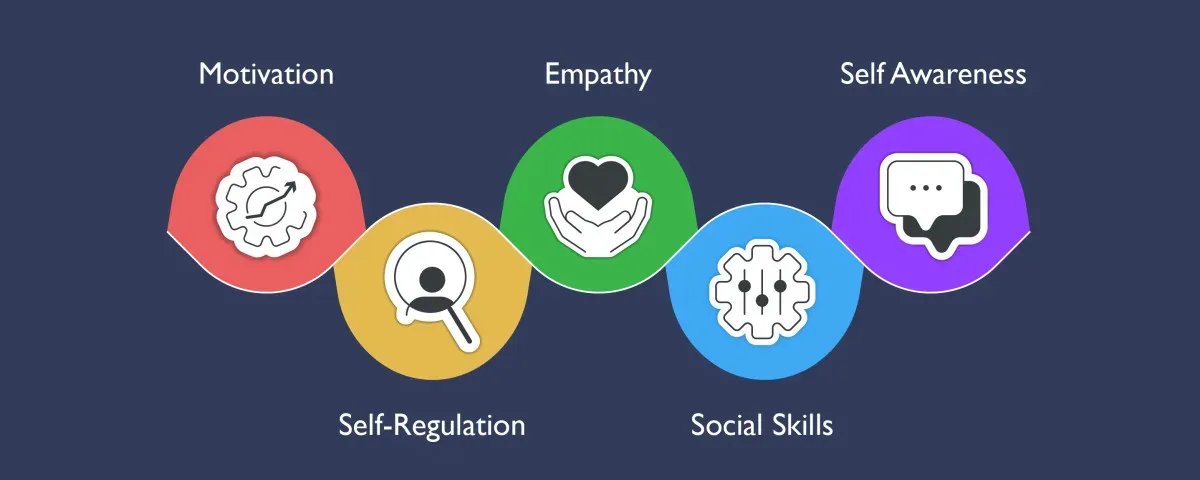
1. Self-Awareness
Self-awareness means understanding your emotions and knowing how they affect your thoughts and behavior.
For example, if you feel angry, self-awareness helps you realize why you are angry and how that anger may affect your actions.
A self-aware person:
- Knows strengths and weaknesses
- Understands emotional triggers
- Makes thoughtful decisions
2. Self-Regulation
Self-regulation means controlling emotions instead of letting emotions control you.
This does not mean hiding emotions. It means expressing them in a healthy and balanced way.
A person with good self-regulation:
- Thinks before speaking
- Avoids sudden reactions
- Stays calm under pressure
3. Internal Motivation
Internal motivation is the personal desire to achieve goals without always needing external rewards.
Such people remain focused even during difficult times. They continue working with hope and confidence.
Motivated people often show:
- Commitment
- Optimism
- Hard work
- Resilience
4. Empathy
Empathy means understanding the feelings and emotions of other people.
An empathetic person can see situations from another person’s point of view. This improves relationships and communication.
Empathy helps in:
- Building trust
- Reducing conflicts
- Supporting others emotionally
5. Social Skills
Social skills refer to the ability to communicate and interact well with others.
People with strong social skills can build networks, solve conflicts, and work effectively in teams.
Good social skills include:
- Active listening
- Clear communication
- Teamwork
- Leadership
Four Areas of Emotional Intelligence
According to the ability model of Salovey and Mayer, emotional intelligence has four important areas:
1. Perceiving Emotions
This means identifying emotions in yourself and others through expressions, tone, and body language.
2. Using Emotions
Emotions can guide thinking and help improve focus, creativity, and decision-making.
3. Understanding Emotions
This means understanding why emotions happen and how they change over time.
4. Managing Emotions
This means handling emotions in a healthy way to achieve personal and professional goals.
Emotional Intelligence vs IQ
Many people think intelligence alone decides success. But that is not always true. Both IQ and EQ are important.
IQ (Intelligence Quotient) measures mental abilities such as:
- Problem-solving
- Logical reasoning
- Memory
- Mathematical ability
- Learning speed
EQ (Emotional Quotient) measures emotional abilities such as:
- Understanding feelings
- Managing stress
- Controlling reactions
- Building relationships
- Communication
Difference Between EQ and IQ
| Basis | EQ | IQ |
|---|---|---|
| Meaning | Emotional ability | Intellectual ability |
| Focus | Feelings and relationships | Logic and reasoning |
| Helps in | Social life and leadership | Academic performance |
| Measures | Emotional control | Mental capability |
A person with high IQ may solve complex problems quickly. But without EQ, that person may struggle in teamwork, leadership, or communication.
That is why many experts say both EQ and IQ together lead to success.
Importance of Emotional Intelligence
Emotional intelligence is useful in every area of life, including school, family, workplace, and society.
Better Decision Making
When emotions are balanced, people make better decisions. Emotional intelligence prevents decisions based only on anger, fear, or stress.
Stress Management
Life often brings pressure and challenges. Emotional intelligence helps people stay calm and manage stress effectively.
Improved Communication
Understanding emotions improves communication. People express ideas more clearly and avoid unnecessary conflict.
Strong Relationships
EQ helps build trust, respect, and healthy relationships with family, friends, and colleagues.
Better Leadership
Good leaders understand team emotions, motivate people, and solve conflicts wisely.
Importance of Emotional Intelligence in Civil Services
Emotional intelligence is especially important for civil servants because they work with people from different backgrounds and handle sensitive issues.
Today, civil servants face many challenges such as:
- Economic inequality
- Digital divide
- Political pressure
- Corruption
- Social conflicts
- Globalization
- Cybercrime
- Migration and security issues
In such situations, emotional intelligence becomes essential.
Policy Implementation
Civil servants must understand public emotions and social problems. This helps them create and implement better policies.
Motivating Teams
An emotionally intelligent officer can inspire subordinates and improve teamwork.
Handling Pressure
Government work often involves stress and responsibility. EQ helps officers remain calm during crises.
Innovation and Change
Emotionally intelligent officers are more open to new ideas and creative solutions.
Public Communication
Good communication helps explain policies clearly and build public trust.
Work-Life Balance
EQ helps civil servants maintain balance between personal and professional life.
How to Improve Emotional Intelligence
The good news is that emotional intelligence can be developed over time.
Practice Self-Evaluation
Spend time understanding your emotions and reactions.
Ask yourself:
- Why am I feeling this way?
- What triggered this emotion?
Observe Others
Watch how others react in different situations. This improves empathy.
Improve Communication
Learn to express thoughts clearly and respectfully.

Control Reactions
Pause before reacting emotionally. Think about the consequences.
Learn from Experience
Life experiences teach emotional maturity. Mistakes also help improve emotional understanding.
Participate in Group Activities
Many schools and organizations improve EQ through:
- Team exercises
- Workshops
- Seminars
- Communication training
As people grow older and gain more experience, emotional intelligence often improves naturally.
Emotional Intelligence is a powerful skill that helps people succeed in both personal and professional life. It teaches us to understand emotions, control reactions, and build healthy relationships. In a fast-changing world, emotional intelligence is as important as academic knowledge. A person who can balance both IQ and EQ is more likely to achieve success, happiness, and long-term growth.
FAQs on Emotional Intelligence
1. What is Emotional Intelligence?
Emotional Intelligence is the ability to understand, manage, and control your own emotions while also understanding the emotions of others.
2. Why is Emotional Intelligence important?
Emotional Intelligence is important because it helps in better communication, decision-making, stress management, and building strong relationships.
3. What is the difference between EQ and IQ?
EQ measures emotional abilities like empathy and self-control, while IQ measures intellectual abilities like reasoning, memory, and problem-solving.
4. Can Emotional Intelligence be improved?
Yes, Emotional Intelligence can be improved through self-awareness, practice, communication, and life experiences.
5. What are the main elements of Emotional Intelligence?
The five main elements are self-awareness, self-regulation, motivation, empathy, and social skills.
6. How does Emotional Intelligence help in daily life?
It helps people stay calm, handle stress, solve conflicts, and maintain healthy personal and professional relationships.
7. Why is Emotional Intelligence important for leaders?
Leaders with high Emotional Intelligence can understand team members better, motivate them, and handle difficult situations wisely.
8. Is Emotional Intelligence more important than IQ?
Both are important. IQ helps in learning and problem-solving, while EQ helps in managing emotions and relationships.