



Pay Commission in India: Salary Revision for Government Employees

Pay Commission is one of the most important systems for central government employees in India. It helps decide salaries, pensions, allowances, and other benefits for lakhs of employees and pensioners. Whenever the government forms a new Pay Commission, people eagerly wait for updates because its recommendations directly affect monthly income and retirement benefits.
Thank you for reading this post, don't forget to subscribe!In India, government employees play a major role in administration, education, healthcare, defense, railways, and many other sectors. To ensure these employees get fair salaries according to rising living costs, the government forms a Pay Commission from time to time. This body studies inflation, market conditions, and employee needs before recommending salary changes.
In 2026, the 8th Pay Commission has become a major topic of discussion among employees and pensioners. Many are waiting to know how much salary increase may happen and when the new pay structure will be implemented.
What is Pay Commission?
The Pay Commission is a committee formed by the Central Government to review and recommend changes in the salary structure of government employees. It works under the Department of Expenditure, which comes under the Ministry of Finance in India.
Its main purpose is to ensure government employees receive proper salaries according to economic conditions and inflation. The commission studies salary levels, allowances, pension systems, and service conditions.
Pay Commissions are generally formed every 10 years.
The first Pay Commission was established in 1946, before India became independent. Since then, India has formed seven Pay Commissions.
The 7th Pay Commission was formed in 2014, and its recommendations came into effect in 2016. At present, central government employees and pensioners receive salaries and pensions based on this commission’s recommendations.
It is important to note that the government is not legally required to accept all recommendations of the Pay Commission. It may accept, reject, or modify them.
Why is Pay Commission Needed?
The Pay Commission is necessary for many reasons.
1. Salary Revision
Prices of goods and services keep increasing over time. Food, transport, rent, education, and healthcare become more expensive. Because of this, employee salaries also need revision.

The Pay Commission reviews existing salaries and recommends fair increases.
2. Protection Against Inflation
Inflation reduces the purchasing power of money. For example, ₹1,000 today buys less than what it bought 10 years ago.
The Pay Commission helps balance this effect by recommending salary increases and allowances.
3. Better Employee Motivation
Government employees work in important sectors like defense, education, railways, police, and healthcare. Fair salaries improve motivation and work efficiency.
When employees feel valued, productivity often improves.
4. Impact on Public Finance
Salary revision affects government spending in a big way. Since lakhs of employees receive revised salaries, the total financial burden becomes huge.
That is why the government carefully studies recommendations before implementation.
5. Influence on Other Sectors
The recommendations of the Central Pay Commission often influence:
- State government salary structures
- Public sector units
- Some private companies
Many organizations use central government salary revisions as a benchmark.
6. Social Equality
The Pay Commission also tries to reduce unfair salary gaps between different employee levels.
This helps create better pay balance across departments.
History of Pay Commissions in India
India has had seven Pay Commissions so far:
| Pay Commission | Year Formed | Key Highlights |
|---|---|---|
| 1st Pay Commission | 1946 | Focus on basic salary structure |
| 2nd Pay Commission | 1957 | Revised wage system |
| 3rd Pay Commission | 1970 | Included allowances |
| 4th Pay Commission | 1983 | Major salary restructuring |
| 5th Pay Commission | 1994 | Large salary increase |
| 6th Pay Commission | 2006 | Introduced grade pay |
| 7th Pay Commission | 2014 | Introduced pay matrix |
Now attention is shifting toward the 8th Pay Commission.
Major Recommendations of the 7th Pay Commission
The 7th Central Pay Commission brought major changes.
Minimum Salary
The minimum salary for central government employees was fixed at ₹18,000 per month.
This was a major increase compared to the earlier pay structure.
Maximum Salary
The highest salary recommendations were:
- ₹2,25,000 per month for Apex Scale
- ₹2,50,000 per month for Cabinet Secretary and equivalent posts
Pay Matrix System
One major reform was replacing the old Pay Band + Grade Pay system with the Pay Matrix.
This made salary progression easier to understand.
The Pay Matrix shows:
- Basic pay
- Level of employee
- Annual increment progression
This system improved transparency.
Annual Increment
The annual increment rate remained 3%.
This means employees usually get a 3% increase in basic pay every year.
Pension Reforms
The commission reviewed issues related to the National Pension System (NPS).
Many employees raised concerns about pension security and grievance handling. The commission suggested stronger grievance mechanisms and better pension management.
What is Dearness Allowance (DA)?
Dearness Allowance (DA) is extra money paid to government employees and pensioners to help them manage inflation.
When inflation rises, daily life becomes expensive. DA helps reduce this burden.
DA is revised regularly based on inflation data.
It is calculated using the All-India Consumer Price Index (AICPI).
The DA percentage depends on price rise over time.
How DA Works
Suppose an employee’s basic salary is ₹30,000.
If DA is 55%, then:
DA = 55% of ₹30,000 = ₹16,500
Total salary becomes:
₹30,000 + ₹16,500 + other allowances
This makes DA a very important salary component.
Current DA Update in 2026
As of 2026, central government employees are closely watching DA revisions under the 7th Pay Commission.
DA revisions happen twice a year:
- January
- July
The government reviews inflation data before announcing the revised DA.
Rising inflation in food, transport, and household expenses has increased employee expectations for higher DA.
8th Pay Commission: Current Update in 2026
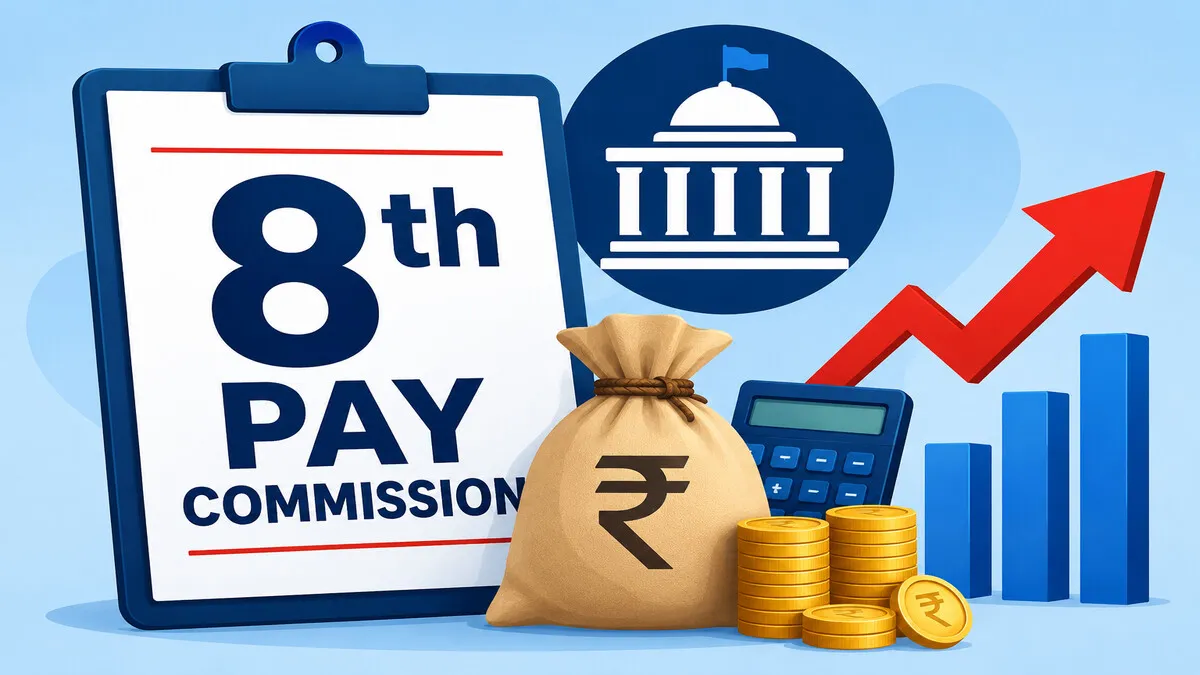
The 8th Pay Commission is one of the most discussed topics in 2026.
Since the 7th Pay Commission came into effect in 2016, many expect the next commission around 2026–2027, following the usual 10-year cycle.
Employees and pensioners are asking:
- When will the 8th Pay Commission be formed?
- How much salary hike will happen?
- Will minimum salary increase to ₹40,000 or more?
Although the government has not fully implemented new pay recommendations yet, discussions are growing.
Experts believe the 8th Pay Commission may focus on:
- Better salary structure
- Pension reforms
- Higher fitment factor
- Inflation-adjusted allowances
- Improved retirement benefits
A key discussion is the fitment factor.
The fitment factor is used to calculate revised basic pay.
Under the 7th Pay Commission, the fitment factor was 2.57.
Many employee unions are demanding a higher factor under the 8th Pay Commission, possibly 2.86 or more.
If approved, salaries could rise significantly.
Example:
If current basic pay = ₹18,000
Using fitment factor 2.86:
Revised basic pay ≈ ₹51,480
This explains why employees are closely following 8th Pay Commission news.
Challenges Faced by Pay Commission
The Pay Commission faces many challenges while making recommendations.
Economic Conditions
If the economy slows down, government revenue may decrease.
This affects the ability to provide large salary increases.
Fiscal Pressure
Salary hikes increase government expenditure.
The government must balance:
- Salary expenses
- Development spending
- Debt management
- Welfare schemes
This creates financial pressure.
Inflation and Cost of Living
Inflation affects all employees.
The commission must ensure salaries remain enough for a decent standard of living.
Income Differences
Large salary gaps between junior and senior employees create inequality.
The commission must maintain fairness.
Sector-Specific Demands
Different departments have different needs.
For example:
- Defense personnel face risk
- Healthcare workers handle emergencies
- Teachers shape education
- Railway staff manage transport safety
Balancing all these demands is difficult.
Pension Burden
Retired employees also depend on government support.
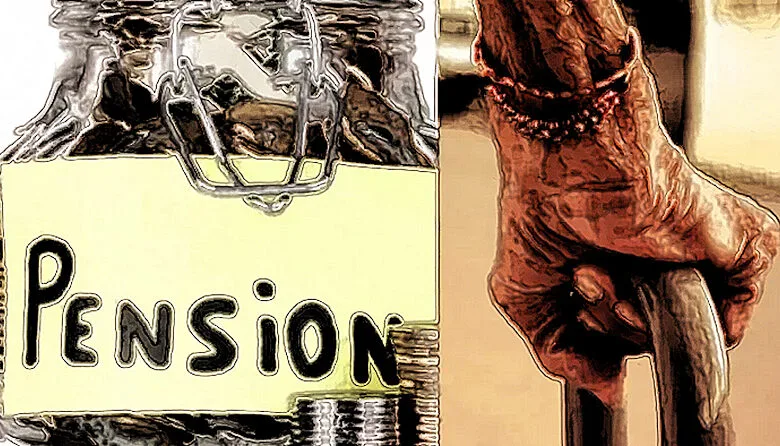
As pensioner numbers rise, pension expenditure increases.
This becomes a major challenge.
Importance of Pay Commission for India
The Pay Commission is not only about salary increases. It also affects the economy.
Higher salaries can increase:
- Consumer spending
- Savings
- Tax collection
- Economic activity
When millions of employees receive higher salaries, spending on goods and services often rises, helping businesses and markets.
At the same time, the government must ensure financial discipline.
That is why the Pay Commission remains a very important policy mechanism in India.
The future 8th Pay Commission will play a major role in shaping the financial well-being of central government employees and pensioners in the coming years. Its recommendations may bring major changes in salaries, DA, pension systems, and overall employee benefits.
FAQs
Q1. What is Pay Commission in India?
The Pay Commission is a committee formed by the Government of India to review and recommend salary, allowances, pension, and benefits for central government employees and pensioners.
Q2. How often is Pay Commission formed?
Usually, a new Pay Commission is formed every 10 years to revise salary structures based on inflation and economic conditions.
Q3. How many Pay Commissions have been formed in India?
India has formed seven Pay Commissions so far. The current salary system is based on the 7th Pay Commission.
Q4. What is the minimum salary under the 7th Pay Commission?
The minimum basic salary under the 7th Pay Commission is ₹18,000 per month for central government employees.
Q5. What is Dearness Allowance (DA)?
Dearness Allowance (DA) is extra money paid to government employees and pensioners to help manage the impact of inflation and rising living costs.
Q6. What is the 8th Pay Commission?
The 8th Pay Commission is the upcoming salary revision commission expected to review and recommend new pay structures for central government employees and pensioners.
Q7. When will the 8th Pay Commission be implemented?
Many experts expect the 8th Pay Commission to be implemented around 2026–2027, though official implementation depends on government decisions.
Q8. What is fitment factor in Pay Commission?
The fitment factor is a multiplier used to calculate revised basic pay. Under the 7th Pay Commission, the fitment factor was 2.57.