



Vande Mataram Bill 2026: Rajya Sabha Passes Amendment

Vande Mataram Bill 2026 became a major topic in Parliament after the Rajya Sabha passed the Prevention of Insults to National Honour (Amendment) Bill, 2026 on 29 July 2026. The amendment expands the scope of the Prevention of Insults to National Honour Act, 1971, by extending legal protection to Vande Mataram, India’s national song, alongside the national anthem Jana Gana Mana. The new provisions also introduce penalties for intentionally preventing or disrupting the singing of Vande Mataram, making it an important legislative development related to India’s national symbols.
Thank you for reading this post, don't forget to subscribe!Rajya Sabha Approves the Amendment Bill
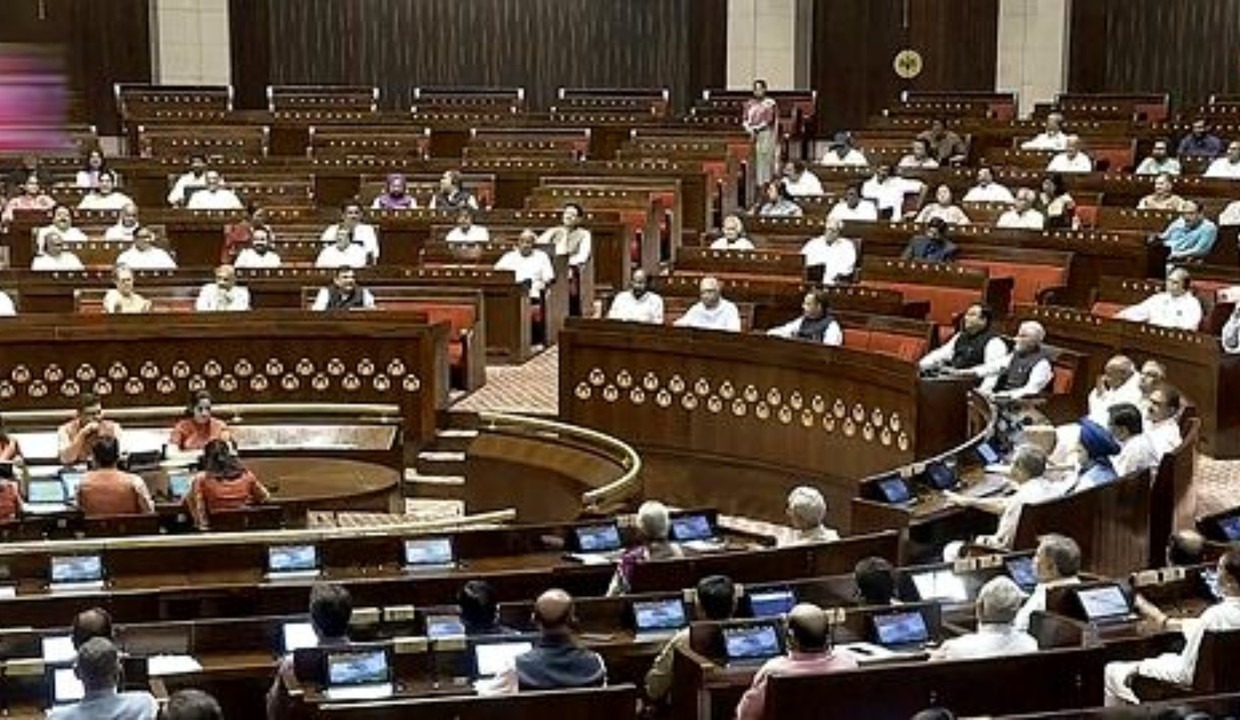
The amendment Bill was passed in the Rajya Sabha after a discussion in the House.
It was introduced by Minister of State for Home Affairs Nityanand Rai on 24 July 2026. On 29 July 2026, the House approved the Bill through a voice vote.
During the proceedings, nearly all opposition members staged a walkout before the Bill was passed.
With its approval in the Rajya Sabha, the amendment marks a significant step in updating the existing law related to the protection of India’s national symbols.
What Is the Prevention of Insults to National Honour Act, 1971?
The Prevention of Insults to National Honour Act, 1971 is a central law that protects important national symbols from deliberate acts of disrespect.
The Act currently covers:
- The National Flag
- The Constitution of India
- The National Anthem
The law provides legal action against individuals who intentionally insult or disrespect these national symbols.
The 2026 amendment expands the Act by including Vande Mataram within its legal framework.
Legal Protection for Vande Mataram
The biggest change introduced by the amendment is the extension of legal protection to Vande Mataram.
Under the new provisions, any person who intentionally:
- Prevents the singing of Vande Mataram, or
- Disturbs an assembly while the song is being sung,
may face:
- Imprisonment for up to three years
- A fine
- Or both
The amendment creates a separate offence specifically for intentional disruption of the national song during its performance.
According to the Bill, Vande Mataram will receive statutory recognition alongside Jana Gana Mana under the amended law.
Understanding Vande Mataram
Vande Mataram is one of India’s most well-known patriotic songs.
It was written by Bankim Chandra Chattopadhyay and first appeared in his novel Anandamath, published in 1882.
Over time, the song became closely associated with India’s freedom movement and inspired many people during the struggle for independence.
Although Vande Mataram is recognised as India’s national song, it is different from the country’s national anthem.
Both hold important places in India’s cultural and historical heritage.
Difference Between the National Song and National Anthem
Many people often confuse Vande Mataram with Jana Gana Mana, but they serve different official roles.
- Jana Gana Mana is the National Anthem of India.
- It was officially adopted on 24 January 1950.
On the other hand:
- Vande Mataram is recognised as the National Song.
- It has great historical and cultural importance but has not been designated as the national anthem.
The latest amendment provides additional legal recognition for the national song under the existing statute.
Parliamentary Procedure
The Bill followed the normal parliamentary process before being passed in the Rajya Sabha.
After its introduction on 24 July 2026, members discussed the proposed amendments before the House considered the legislation.
The Bill was finally approved through a voice vote, a parliamentary procedure in which members express their support or opposition verbally instead of recording individual votes.
This method is commonly used when the Chair determines that there is sufficient agreement in the House.
Mandatory Playing During Official Events
Another important provision included in the amendment relates to official events in State Legislative Assemblies.
According to the Bill, Vande Mataram will be played during official functions held in state assemblies.
This provision forms part of the wider effort to strengthen the official recognition of the national song during government events.
The exact implementation of these provisions will follow the legal and administrative procedures laid down after the legislation comes into force.
Introduced During the 150th Anniversary Commemoration
The amendment was introduced during the 150th-anniversary commemorations of Vande Mataram.
The anniversary recognises the long historical journey of the song since it became one of the most influential patriotic compositions in India’s modern history.
The timing of the Bill reflects the government’s decision to mark this important milestone by expanding legal recognition for the national song.
The anniversary has also led to various cultural programmes and discussions highlighting the song’s contribution to India’s freedom movement and national identity.

Significance of the Amendment
The amendment adds a new chapter to the legal protection of India’s national symbols. By bringing Vande Mataram under the Prevention of Insults to National Honour Act, 1971, the legislation broadens the scope of the existing law. It also introduces specific penalties for intentionally disrupting the singing of the national song and provides statutory recognition alongside Jana Gana Mana. As the legislation moves through the remaining constitutional process, it remains an important development in the ongoing evolution of laws related to India’s national heritage and official symbols.