

Ancient Solar Eclipse Refines Earth’s Rotation

Ancient Solar Eclipse records from China have helped scientists improve estimates of how Earth rotated thousands of years ago. A total solar eclipse observed on 17 July 709 BCE at the court of the Lu Duchy has provided new information about Earth’s historical rotation. Researchers corrected an error of about eight kilometres in the mapped location of ancient Qufu, allowing them to reconstruct the eclipse more accurately. The research was published in The Astrophysical Journal Letters.
The study shows how historical documents can support modern scientific research. By comparing ancient written records with astronomical calculations, scientists can learn more about changes in Earth’s rotation, the timing of past eclipses and possible signs of historical solar activity.

The Total Solar Eclipse of 709 BCE
The solar eclipse occurred on 17 July 709 BCE in ancient China. It was observed at the court of the Lu Duchy and recorded in the Spring and Autumn Annals, an important historical Chinese chronicle.
The record states that the Sun was totally eclipsed. The chronicle was compiled around 200 to 300 years after the event, meaning the account was written by people who lived long after the original observation.
Despite the time gap, the record is important because it is regarded as the earliest explicit written account of a total solar eclipse that can be securely dated.
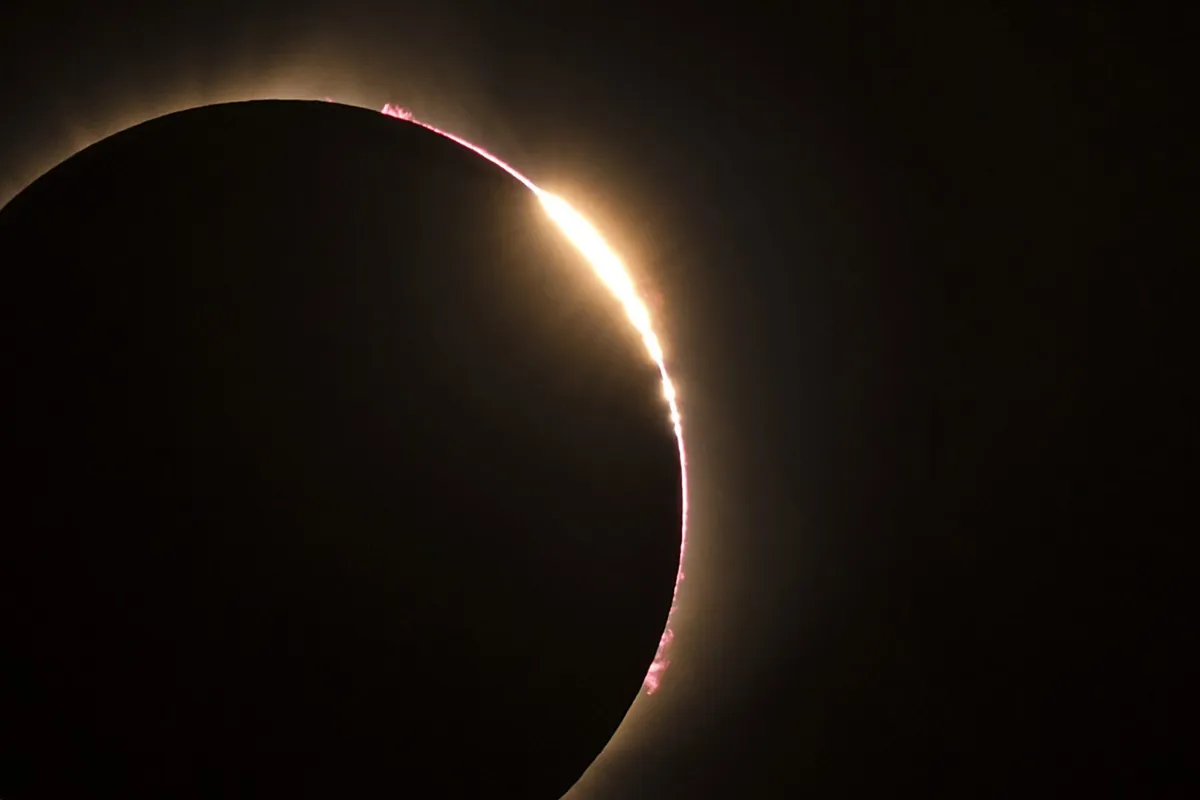
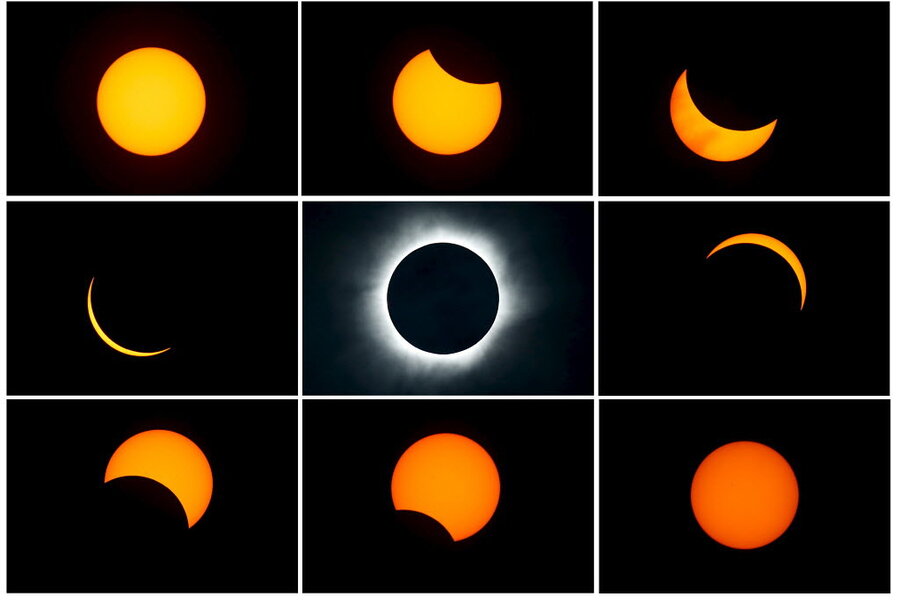
A total solar eclipse occurs when the Moon passes between Earth and the Sun and completely covers the Sun’s bright disc from an observer’s viewpoint. During totality, the sky can become noticeably darker, and the Sun’s outer atmosphere may become visible.
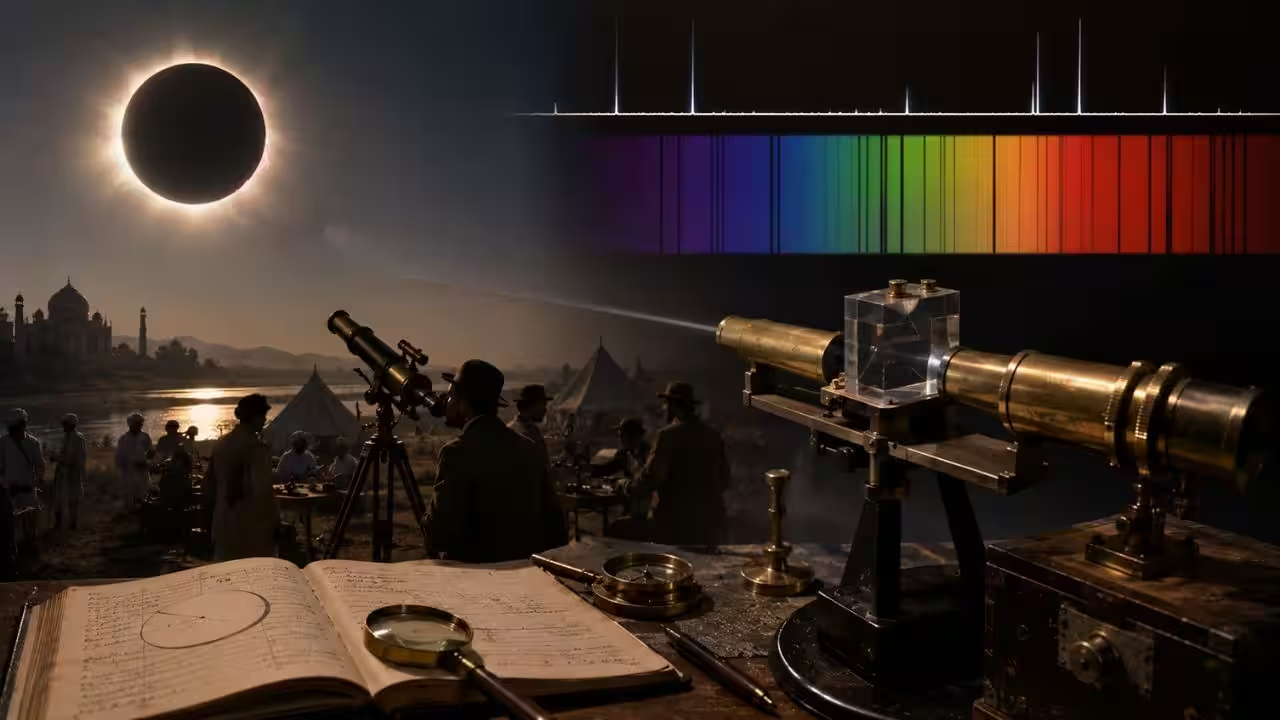
Historical descriptions of eclipses are valuable to astronomers because they provide information about where and when these events were observed. Scientists can compare such accounts with calculations based on the movements of Earth, the Moon and the Sun.
How Researchers Corrected the Location of Ancient Qufu
One important part of the research involved correcting the mapped location of ancient Qufu, a historic city associated with the Lu Duchy. Researchers identified an error of approximately eight kilometres in its mapped location.
Although this distance may seem small, it can affect calculations of an ancient eclipse’s visibility. The path of a total solar eclipse is relatively narrow, so an error in the observer’s location can change the predicted view of the event.
By correcting the location, researchers were able to improve their reconstruction of the eclipse. This helped them establish more accurate limits for calculations related to Earth’s historical rotation.
The study demonstrates why accurate geographical information matters when scientists examine ancient astronomical records. Even a small location error can affect the interpretation of observations made thousands of years ago.
What Is Delta T?
Delta T, written as ΔT, is a measure of the difference between time based on Earth’s actual rotation and a uniform time scale used in astronomical calculations.
Earth does not rotate at exactly the same rate all the time. Its rotation can change because of several natural processes, including tidal friction, movements within Earth’s interior and changes in how mass is distributed across the planet.
Astronomers use ΔT to connect time measured through Earth’s rotation with a more uniform time scale. This helps them calculate where the Sun, Moon and planets appeared in the sky at a particular moment in history.
For the eclipse of 709 BCE, the revised reconstruction places ΔT between 20,264 and 21,204 seconds.
This range helps researchers understand the possible difference between Earth’s rotational time and a uniform time scale at that point in history. The updated estimate also improves calculations of when and where the eclipse could have been seen.
Why Did Earth Rotate Faster in the Past?
Earth’s rotation has gradually slowed over very long periods, although its rotational speed can also vary over shorter periods.
One important reason for the long-term slowdown is tidal friction caused by the Moon’s gravitational pull. The Moon’s gravity produces tides in Earth’s oceans. As Earth rotates, friction associated with these tides transfers some rotational energy away from Earth.
Over time, this process slows Earth’s rotation. As a result, a day was slightly shorter around 2,700 years ago than it is today.
However, the slowdown is not perfectly steady. Other processes can temporarily speed up or slow down Earth’s rotation. Scientists therefore study historical records and modern measurements to understand both long-term trends and shorter changes.
Ancient eclipse observations provide useful evidence because they allow researchers to compare predicted astronomical positions with descriptions of what people actually observed.
The Possible Description of the Solar Corona
Another historical source, the Hanshu, also known as the Book of Han, contains a description of the same eclipse. A later passage describes the eclipsed Sun as being “completely yellow above and below”.
Some researchers have considered whether this description could refer to the solar corona. The corona is the Sun’s outer atmosphere and extends far beyond its visible surface.
Normally, the bright light from the Sun makes the corona difficult to see without specialised instruments. During a total solar eclipse, the Moon blocks the Sun’s bright disc, allowing the corona to become visible to the unaided eye.
However, the interpretation of the ancient description remains uncertain. The Hanshu passage was written centuries after the eclipse, so it is not a direct record made at the time of the event. Its wording may preserve information about the eclipse, but scientists must be careful when interpreting it as evidence of the corona.
The passage nevertheless shows how ancient texts can raise scientific questions that researchers can investigate using modern methods.
What the Eclipse May Reveal About Solar Activity
The ancient eclipse has also been discussed in connection with research into historical solar activity.
The Sun’s activity changes over time. It can be observed through features such as sunspots, solar flares and changes in the solar atmosphere. These changes follow patterns, but the Sun can also experience extended periods of unusually low activity.
Researchers have considered whether the Sun was entering a more active phase after an extended period of low solar activity known as the Neo-Assyrian Grand Minimum or the Homer Grand Minimum.
Historical descriptions of eclipses may provide clues about what observers saw in the sky. However, an ancient description alone cannot establish the Sun’s activity level with certainty.
Scientists also use natural records, including radiocarbon measurements from tree rings, to investigate changes in solar activity over long periods. Combining these records with historical observations can help researchers build a broader picture of the Sun’s past behaviour.
The Role of Historical Chinese Texts in Modern Astronomy
The Spring and Autumn Annals and the Hanshu are important historical Chinese texts. Although they were written for historical purposes rather than modern scientific research, their astronomical descriptions can help researchers study past events.
Ancient people observed the sky for many reasons, including calendar-making, agriculture and the recording of important events. Some of these observations were preserved in written documents that survived for centuries.
Modern astronomers can compare the descriptions with calculations of the positions and movements of celestial bodies. When the records contain reliable dates and locations, they can help scientists test models of Earth’s rotation and the timing of historical eclipses.
The research team included Hisashi Hayakawa of Nagoya University and Mitsuru Sôma of the National Astronomical Observatory of Japan.
Their work highlights the value of combining historical research, geographical accuracy and astronomical calculations. Records created more than 2,700 years ago can still contribute to scientific understanding today.
Why This Research Matters Today
The study of the 709 BCE eclipse provides a useful example of how different fields of knowledge can work together. Historical documents preserve descriptions of events, while modern science provides tools to test and interpret those records.
More accurate estimates of Earth’s past rotation can improve the reconstruction of historical astronomical events. They also help researchers understand how Earth’s rotational speed has changed over time.
The study further shows that location accuracy is important when interpreting ancient observations. Correcting the position of Qufu by approximately eight kilometres helped researchers refine their calculations and establish a more useful range for ΔT.
By examining ancient eclipse records alongside other scientific evidence, researchers can continue to improve their understanding of Earth’s movement, the history of the Sun and the relationship between historical observations and modern astronomy.