



Belém Health Action Plan 2025: A New Global Framework for Climate and Health

The announcement of the Belém Health Action Plan 2025 is already shaping up to be a defining moment in the nexus of climate policy and public health. Developed in the lead-up to the 2025 Global Conference on Climate and Health (July 29-31, 2025, Brasília) and scheduled to be launched at COP30 (10-21 November 2025, Belém, Brazil), the Plan is designed to embed health at the very core of global climate action.
Thank you for reading this post, don't forget to subscribe!The Origins of the Belém Health Action Plan 2025
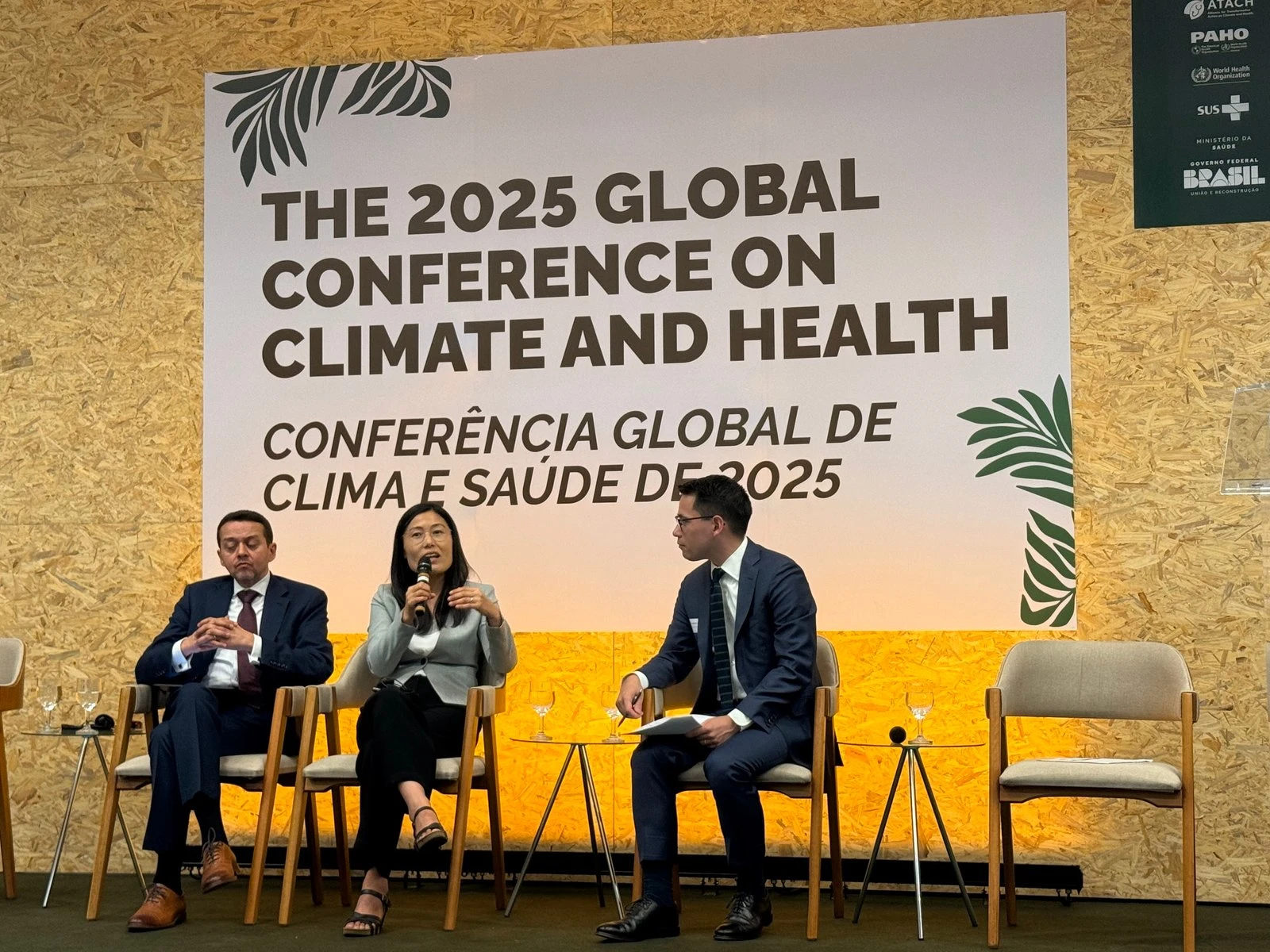
The 2025 Global Conference on Climate and Health served as a springboard: governments, health ministries, civil society organisations and technical experts gathered in Brasília to shape the draft of the Belém Health Action Plan.
At the Conference, one of the key outcomes was the reaffirmation that health must be elevated in climate negotiations and that the Belém Health Action Plan would provide the global roadmap.
The Plan identifies three broad “action-lines” (surveillance & monitoring; evidence-based policy strategy & capacity building; innovation & production) and emphasises cross-cutting priorities such as equity, climate justice, leadership and governance with social participation.
Thus, the Belém Health Action Plan 2025 is not just another policy document it is meant to be the global agenda-setter for how health systems adapt to climate change, how they are financed, and how they engage communities.
Why the Belém Health Action Plan 2025 Matters
In many past climate negotiations, health has remained peripheral to mitigation and adaptation debates. With the Belém Health Action Plan 2025, health is moving front and centre. As noted by the World Health Organization (WHO), health systems need to be climate-resilient and environmentally sustainable, meaning they must withstand climate shocks while contributing to broader sustainability goals.
In the Americas region, for instance, the Pan American Health Organization (PAHO) has highlighted alarming trends: escalating heat waves, floods, wildfires, vector-borne diseases and air-pollution-related illnesses. The Belém Health Action Plan 2025 offers a coordinated approach for health adaptation and climate justice in this context.
Furthermore, by coupling health, equity, social participation and innovation, the Plan signals that climate-health action cannot be siloed it must cut across sectors, levels of government, and civil society. This makes the Belém Health Action Plan 2025 a strategic milestone for aligning climate policy with human health and wellbeing.
Where India Could Fit in and What Was Missed
India’s absence from the Global Conference on Climate and Health in Brasília was a missed opportunity, particularly given India’s experience in integrating welfare, health and climate co-benefits. (One recent compendium noted: “India was not officially represented … The Belém Health Action Plan … will define the global climate-health agenda.”)
India’s flagship welfare programmes already offer practical models of health–climate integration. For example:
- The Pradhan Mantri Poshan Shakti Nirman (PM POSHAN) scheme feeds over 110 million children in around 1.1 million schools, promotes millets and traditional grains, thereby linking nutrition, food systems, agriculture, climate resilience and health.
- The Swachh Bharat Abhiyan improved sanitation and public health while reducing environmental contamination, promoting human dignity and sustainability.
- The Mahatma Gandhi National Rural Employment Guarantee Act (MGNREGA) environmental works restored ecosystems and bolstered rural livelihoods.
- The Pradhan Mantri Ujjwala Yojana (PMUY) enabled households to switch to clean cooking fuel, reducing air pollution and respiratory illnesses while cutting carbon emissions.
These schemes illustrate how “non-climate” policies can deliver co-benefits across health, environment and social development. Aligning such national experiences with the Belém Health Action Plan 2025 could offer India a leadership role in G20 and global climate-health fora.
Policy Lessons for the Belém Health Action Plan 2025 from India’s Experience
Political Leadership & Community Engagement
Strong political will matters. In India, the direct involvement of the Prime Minister and high-level cross-ministerial coordination helped make health-climate linkages visible to the public. Framing climate action as a health emergency boosts urgency and public support. At the same time, community engagement (e.g., school committees for PM POSHAN, grassroots sanitation drives under Swachh Bharat) turned programmes into cultural movements rather than top-down projects. The Belém Health Action Plan 2025 highlights social participation a clear echo of this lesson.
Institutional Integration & Local Empowerment
Rather than creating parallel or new institutions, successful Indian programmes leveraged existing machinery Accredited Social Health Activists (ASHAs), self-help groups, panchayats, municipal bodies. Embedding climate-health tasks in existing social and health frameworks ensures sustainability and reach. The Belém Health Action Plan 2025 likewise emphasises leadership, governance and social participation offering a favourable platform for this integration.
Challenges in Intersectoral Policy Implementation
Yet implementation gaps persist. In India, for example, the higher refill cost of LPG under PMUY and continuing poverty barriers limited scale-up. Siloed administration hampers coordination when policies transition from output-oriented to outcome-focused. The Belém Health Action Plan 2025 must guard against such implementation pitfalls by embedding measurable outcomes, financing and capacity building.
A Framework for Health-Anchored Climate Governance Aligned With the Belém Health Action Plan 2025
Drawing on India’s experiences, countries aligning with the Belém Health Action Plan 2025 may consider a three-pillar approach:
- Strategic prioritisation: Frame climate policy as a pressing health concern, politically championed to secure cross-sector engagement and public legitimacy.
- Procedural integration: Embed health impact assessments within all climate-relevant policies energy, agriculture, urban planning, water & sanitation so that health-climate co-benefits are designed in, not bolted on.
- Participatory implementation: Use health as a mobilising node local health workers, community health committees, schools can act as climate-health advocates. This links cleaner air, safer water, better nutrition with tangible health benefits, creating broader buy-in.
This governance framework resonates with the pillars of the Belém Health Action Plan 2025: surveillance & monitoring (pillar 1), evidence-based policy & capacity building (pillar 2), innovation & production (pillar 3).
The Road Ahead for the Belém Health Action Plan 2025
As the Plan moves from draft to launch at COP30, key questions remain: How will financing be secured for health-climate adaptation in low- and middle-income countries? How will social participation be operationalised so that marginalised populations truly benefit? How will countries ensure their health systems are climate-resilient and adapt to new threats (heatwaves, vector-borne diseases, air pollution)?
The Belém Health Action Plan 2025 proposes ambitious answers. The Challenge now is turning those commitments into national programmes, local action, measurable results and ensuring that countries with rich experience, like India, can contribute and benefit.
In this way, the Belém Health Action Plan 2025 may usher in a new era where health is not an after-thought to climate policy, but a central pillar of global climate governance and a driver of integrated development.